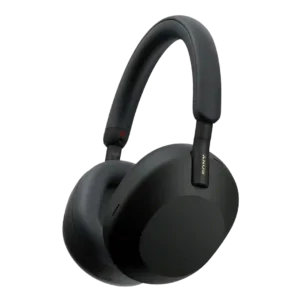
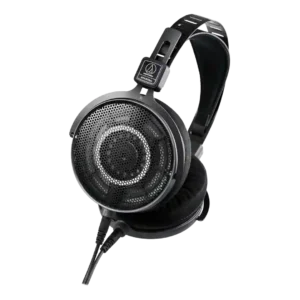
Sony WH-1000XM5 Premium Noise Canceling Headphones
Where It Has the Edge
- Travel friendliness is 4.6 vs 1.7. Travel friendliness benefited from comfort, ANC, battery, and analog fallback, but suffered from the larger non-folding case.

Scorata scores summarize analyzed review evidence on a 1–5 scale; they are not laboratory measurements or a simple average of customer star ratings. Feature scores summarize the reviews covering that feature. The overall score averages feature scores within each review, then combines review averages. When both expert and customer evidence are available, those two groups receive equal weight. Products can have different review coverage, so small score gaps do not establish a winner.
Recommendations prioritize important features for the category, with a score of at least 3.5, a gap of at least 0.25 points and at least two supporting reviews per product. Features with widely varying scores or broad connectivity contexts are excluded from recommendations. These safeguards do not establish statistical significance.
Quick verdict
The review evidence points to a tradeoff: Travel friendliness versus Sound quality and Soundstage width. Choose according to which strengths matter more to you; the overall score alone does not settle that choice.
Choose Sony WH-1000XM5 Premium Noise Canceling Headphones for Travel friendliness.
Choose Audio-Technica ATH-R70XA Headphones for Sound quality and Soundstage width.
Scores are out of 5. Missing scores mean missing review evidence, not a missing feature.
Sound quality was broadly good to excellent, especially with EQ, but reviewers disagreed on stock tuning and technical performance.
Reviewers broadly praise the ATH-R70xa for natural, detailed, clean open-back sound, with only one dissenting review calling it merely fine and not personally compelling.
Sound leakage was praised as very low, even at high volume.
Sound leakage is a consistent downside because the open-back design lets others hear the music.
Passive isolation was strong where reviewers noted improved physical blocking and seal-based attenuation.
Passive isolation is limited by the open-back design, making the headphones unsuitable for recording or noisy environments despite one reviewer finding outside sounds not too distracting.
Soundstage ranged from spacious and immersive to narrow or intimate depending on reviewer and comparison set.
Soundstage width is a consistent highlight, with reviewers describing the presentation as wide, spacious, airy, large, and open.
Frequency response accuracy was mixed: some praised clarity and balance, while others found stock tuning colored or bass-heavy.
Frequency response is mostly praised as neutral, flat, even, and suitable for critical listening, though one reviewer heard a warm-but-lean tonal balance.
Spatial audio was useful and sometimes immersive, but compatibility and service limitations kept it from being universal.
Spatial performance is praised for impressive imaging and positional cues, including mixing placement and gaming directionality.
Immersive audio quality was positive where reviewers described dimensional or awe-striking presentation.
Immersive audio impressions are positive, with reviewers describing an entrancing and surrounding presentation.
Bass drew mixed reactions: often fun, punchy, and energetic, but sometimes too boosted, muddy, or less refined.
Bass is the most divided sound attribute: some reviewers hear tight, extended, accurate lows, while others want more punch, richness, or sub-bass headroom.
Travel friendliness benefited from comfort, ANC, battery, and analog fallback, but suffered from the larger non-folding case.
Travel friendliness is poor because reviewers repeatedly say the open-back design is bad for commuting, public listening, and shared spaces.
Maximum volume was praised where reviewers said the headphones play loud without distortion.
One reviewer found resolution and clarity weaker at low levels, saying the headphone opens up more when played louder.
Connectivity options were viewed as versatile thanks to Bluetooth, analog cable use, and multipoint support.
Connectivity is limited to wired use; one review frames that as a drawback versus wireless options, while another appreciates having no wireless complexity.
Earcup padding was comfortable and plush for some reviewers but criticized for shallow fit, heat, compression, or wear.
The ear pads are generally described as soft, comfortable, breathable, and well padded, with one caveat that they can feel slightly shallow.
Case impressions were mixed: reviewers liked the quality and compartments but criticized the larger footprint.
Carry case feedback is mixed: one reviewer liked the soft carry case, while another wanted a harder protective case.
The headband adjustment was functional but less memorable than notched designs because it lacks repeatable settings.
Headband adjustability is inconsistent, with serious complaints about fit and the strap design alongside one reviewer who found adjustment easy.
Included accessories were viewed as simple but adequate, especially the case and included cables.
One review positively notes the included long lead as a useful standard accessory.
Instrument separation ranged from excellent and distinct to limited for critical listening, depending on reviewer expectations.
Instrument separation and imaging are repeatedly praised, especially for stereo placement, mix decisions, and hearing individual elements clearly.
The included factory cable drew a negative comparison against upgraded aftermarket cables.
Cable quality is mixed: reviewers like the useful length and dual cable in some contexts, but others criticize the split design, length, memory, and ergonomics.
Stability was mixed: secure for some movement, but small or narrow heads could experience shifting.
Stability depends on fit: one reviewer with a smaller head had slippage, while another found the light clamp still secure.
Treble was praised for clarity and detail in some reviews, but criticized elsewhere as muted, harsh, or masking-prone.
Treble is generally praised as clear, smooth, detailed, and not harsh, with caveats about slight restraint or peakiness in a few reviews.
Midrange clarity varied from clearer and more expressive after tuning to recessed or muddied by bass in stock sound.
Midrange clarity is usually a strength, with vocals and mids described as clear, present, and revealing, though one reviewer found the mids shouty and honky.
The sleeker, smoother exterior was praised where reviewers focused on styling and discreet modern design.
Aesthetics are generally praised as stylish, sleek, discreet, professional, or modern.
Overall recommendations were mostly positive, but several reviewers added tradeoffs around price, stock tuning, portability, or hinge risk.
Overall recommendations are mostly positive for critical listening, mixing, and mastering, but fit, bass needs, build expectations, and use case shape the verdict.
Premium feel was mixed: some liked the softness and finish, while others felt older or rival models felt more premium.
Premium feel is mixed: some reviewers praise the finish and feel, while another says the simple build lacks premium materials.
Durability over time raised concerns around padding wear and hinge reports despite some reviewers finding the frame solid.
One reviewer raises a clear durability concern, saying the light construction did not inspire confidence for longevity.
Design reactions were mixed: reviewers liked the modern look but criticized the non-folding redesign and less premium feel.
One reviewer praises the overall design as professional-looking and good-feeling.
Clamp comfort was generally positive for secure, light pressure, though some reviewers felt the fit was tighter than before.
Clamping force is praised as light and low-pressure, including for eyeglass users, while still staying usable on at least one reviewer’s head.
Comfort was often a major strength, especially for long sessions, but fit issues appeared for smaller heads, large ears, or heat-sensitive users.
Long-session comfort is a major strength thanks to the light build and soft contact points, though fit can be poor for smaller heads.
Low weight was a major comfort advantage and helped the XM5 feel lighter than many competitors.
Weight comfort is the strongest point of agreement: reviewers repeatedly describe the headphones as extremely light and easy to forget during wear.
Hinge durability was the most repeated build concern, with multiple reviewers calling it frail, risky, or unreliable.
One review criticizes the hinge/swivel area as weak and a source of rattles.
Build quality was polarizing: some found it flexible and durable, while others worried about plastic and hinge durability.
Build quality is sharply split, ranging from flimsy, rattly, and delicate to solid, sturdy, excellent, and well constructed.
Setup was described as straightforward through Sony’s app workflow.
Setup simplicity is praised because the wired, app-free design is plug-and-play.
Value was mixed: reviewers liked discounts and long-term usefulness but criticized the launch price and stronger alternatives.
Value is generally positive for sound quality and flagship-level pricing, though reviewers still note that the headphones are not cheap.
Reviewers valued the retained 3.5mm analog option, especially as a practical fallback for wired playback.
Android-related features were viewed positively where reviewers mentioned Fast Pair, LDAC access, or app compatibility.
Hi-res and enhancement features were useful but mixed: reviewers heard some benefit from DSEE or LDAC-dependent playback, but not always a major change.
The detachable cable system is convenient for some because it locks, removes, and routes either way, but others dislike the proprietary or over-complicated design.
One review criticizes the ear cup swivel for not rotating enough to help the fit and seal.
Feature depth is limited, with one review calling the features sparse despite a few useful extras.
Headband padding feedback is split between one complaint that the pad collapses into the metal and one praise for comfort.
The integrated microphone was repeatedly praised for calls and voice isolation in noisy environments.
LDAC was valued for higher-bitrate wireless audio, especially with Android, even though it was not enough for every codec-focused reviewer.
Portability was one of the biggest weaknesses because the headphones fold flat but not into a smaller shape.
Smudge resistance was mixed: matte finishes resisted fingerprints, while soft-touch material showed grease and sweat.
Streaming-service integration was limited because 360 Reality Audio did not work with all services.
Sustainability was viewed positively where reviewers mentioned recycled materials and packaging choices.
Touch controls were often intuitive and responsive, but some reviewers found them finicky or easy to misfire.
Transparency/ambient mode was useful and customizable, but reviewers disagreed on how natural it sounded versus Apple or Bose.
USB-C charging was useful, but reviewers criticized the lack of USB-C digital audio playback.
Volume output is a practical weakness because several reviewers note the 470-ohm load needs a capable amplifier and can be too quiet from weaker sources.
Water and sweat resistance was a weakness because reviewers repeatedly noted the lack of IP rating.
Wear detection auto-pause was generally praised as fast and convenient.
Noise cancellation was one of the strongest points across reviews, with repeated praise for travel, offices, commuting, and loud environments.
Reviewers noted low hiss or natural-feeling ANC, with several saying the cancellation avoided the invasive artifacts of older products.
ANC was described as preserving clarity better than older implementations rather than dirtying or masking the music.
Microphone noise reduction was a clear strength, with reviewers praising voice isolation and background-noise suppression.
Wind noise handling was praised in design and call contexts, especially for reducing wind-related disruption.
Advanced software features were praised for ANC customization and carried-over smart capabilities, though they rely on the app ecosystem.
The companion app was widely praised for depth and customization, with a few caveats around privacy or minor annoyances.
Bluetooth reliability was generally strong, with reviewers reporting stable connections and few or no dropouts.
Bluetooth 5.2 was treated as competent but no longer cutting edge when compared with newer headphones.
EQ customization was one of the most consistently praised features and often rescued or improved the sound signature.
Call microphone quality was one of the strongest upgrades, frequently described as clear, impressive, or best-in-class.
Smart listening features were generally praised, but Speak-to-Chat and adaptive switching could feel intrusive or overly sensitive.
Smart pause was usually praised for convenience, though one reviewer found related speech detection too sensitive.
Voice assistant support was considered convenient where reviewers noted hands-free or touch-activated assistants.
Auto-off behavior was viewed as useful for conserving battery when the headphones are removed and left idle.
Codec support was useful thanks to LDAC, AAC, and SBC, but reviewers criticized the limited modern codec set.
Multipoint was generally praised as seamless, reliable, or easy to enable.
Battery life was usually considered good to excellent for normal use, though some reviewers found it short versus newer or rival models.
Charging was consistently praised for fast top-ups that provide several hours of playback quickly.
Dolby Atmos/spatial support was mentioned positively as part of the XM5 feature set, though not always as a decisive advantage.
The left/right-independent cable routing is repeatedly treated as useful, clever, or cool.
Recycled-material construction and packaging were noted positively by reviewers who discussed sustainability.
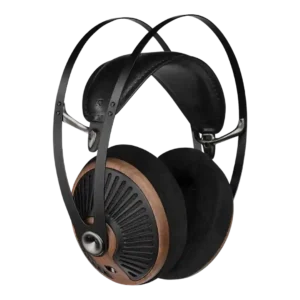
Choose the 105 Silva for beautiful, repairable construction, superb comfort, easy driveability, and an engaging spacious sound. Skip it if you need isolation, balanced connectivity, heavy sub-bass, or consistently smooth...
Pros: Design and Aesthetics, Overall recommendation
Cons: Noise isolation (passive), Connectivity options

Choose it if your workday revolves around calls and you want exceptional mic isolation, huge battery life, all-day comfort, and a slim travel-friendly design. Skip it if music fidelity, class-leading...
Pros: Battery, Charging
Cons: Value for money, Codec support

Choose the Aventho 100 for standout battery life, portable retro styling, strong ANC, and flexible wired/wireless use. Skip it if you dislike on-ear pressure or want a wide, consistently neutral...
Pros: Battery, Design and Aesthetics
Cons: Clamping force comfort, Soundstage width
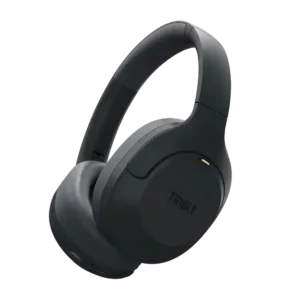
Best for exceptional battery life, useful ANC, flexible EQ, and strong budget value. Skip it if refined, detailed sound or polished controls matter more than price.
Pros: Value for money, Sound quality
Cons: Button control usability, App