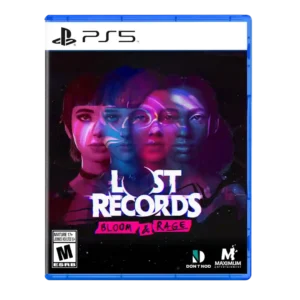
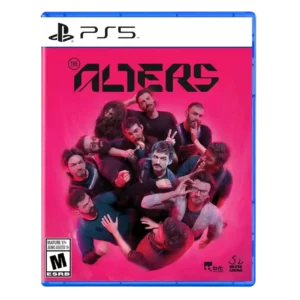
Lost Records: Bloom & Rage
Where It Has the Edge
- character roster is 4.7 vs 4.3. The character roster was praised for diversity, design, and romanceable central characters, with reviewers responding strongly to the...

Scorata scores summarize analyzed review evidence on a 1–5 scale; they are not laboratory measurements or a simple average of customer star ratings. Feature scores summarize the reviews covering that feature. The overall score averages feature scores within each review, then combines review averages. When both expert and customer evidence are available, those two groups receive equal weight. Products can have different review coverage, so small score gaps do not establish a winner.
Recommendations prioritize important features for the category, with a score of at least 3.5, a gap of at least 0.25 points and at least two supporting reviews per product. Features with widely varying scores or broad connectivity contexts are excluded from recommendations. These safeguards do not establish statistical significance.
Quick verdict
The review evidence points to a tradeoff: character roster versus core gameplay loop and sound design. Choose according to which strengths matter more to you; the overall score alone does not settle that choice.
Choose Lost Records: Bloom & Rage for character roster.
Choose The Alters for core gameplay loop and sound design.
Scores are out of 5. Missing scores mean missing review evidence, not a missing feature.
The core loop was criticized by the few reviewers who addressed it directly, with one saying it needed more as a game and another finding little gameplay at all.
The core loop was often described as compelling, addictive, or well-designed, with one dissenting review arguing the hybrid systems failed to cohere.
Crash stability had limited direct evidence, with one PS5 reviewer noting no crashes.
Crash stability was a major issue in one PC review, which reported frequent crashes around the Quantum Computer.
Originality had limited evidence, with one reviewer criticizing the story as trope-heavy.
Originality was strongly praised, with reviewers calling the concept unique, uncategorizable, ambitious, or unlike anything else.
Frame rate stability had mixed evidence, with one Steam Deck review saying it never chugged and another PS5 review reporting hefty drops.
Frame rate stability was generally strong, with reviewers citing consistent 60+ fps, 120 fps, or stable 60 fps with only occasional drops.
The relationship and choice systems were often praised for reactivity, especially in Tape 2, though at least one review felt dialogue choices lacked meaning.
Progression drew criticism from one reviewer who felt unlocks mostly reduced earlier friction rather than adding exciting new capabilities.
Handheld suitability was split, with one reviewer praising improved Steam Deck performance and another strongly discouraging Steam Deck play.
Handheld suitability had limited but positive evidence, with Steam Deck described as playable with decent image quality.
Movement feel received limited but positive evidence, with one reviewer saying roaming and camera use usually felt good despite the game’s simplicity.
Movement drew mixed-to-negative notes, with one reviewer calling traversal cumbersome and another saying Jan could feel awkward or get stuck.
Polish received limited direct evidence but was criticized through technical blemishes in one review.
Polish was mixed, with notes about lacking presentation and unskippable scenes despite otherwise strong execution.
Narrative quality was sharply mixed: reviewers praised the character drama and emotional payoffs but often criticized the supernatural mystery, structure, ending, or uneven payoff.
Narrative quality was one of the strongest areas, with many reviewers praising the story as compelling, thoughtful, philosophical, or emotionally resonant.
Facial animations were mixed: one review praised expressive faces, another criticized lip syncing, and another praised facial animation effects.
Facial animation evidence was positive, with one reviewer specifically praising how faces reflect current attitude.
Bug frequency was a common concern, with many reviews mentioning texture pop-in, progression issues, visual bugs, reloads, or a buggy launch.
Bug evidence was mixed: several reviewers saw minor bugs, glitches, or stuck characters, while one reported zero bugs and another saw more disruptive issues.
Immersion was mixed: one reviewer praised immediate immersion, while another said an editing-like issue broke immersion.
Immersion was strong but intense, with reviewers describing deep involvement and a claustrophobic, absorbing feel.
Reviewers split on the simple narrative-adventure mechanics: several liked the camcorder and environmental interaction, while others felt filming and light interactivity became filler.
Most reviewers praised the blended survival, management, and narrative mechanics as polished or inventive, though a few found the underlying gameplay basic.
Art direction was mostly praised for cinematography, lighting, production design, and visual identity, with one strongly negative dissent calling the aesthetic average.
Art direction received strong praise for the alien planet, visual design, and Jan/Alter presentation.
Dialogue quality leaned mixed to negative, with recurring criticism of clunky, awkward, or unnatural lines despite some qualified praise.
Dialogue quality was mixed: some praised meaningful character conversations, while others found the script or conversations flat and stilted.
Fun factor was polarized, with enthusiastic enjoyment from several reviewers and one reviewer saying they did not enjoy it.
Fun factor was positive, with reviewers describing the game as entertaining, a blast, hard to put down, or excellent from start to finish.
Emotional impact was a major strength for many reviewers, with praise for poignancy, tears, nostalgia, grief, and connection, despite a few negative reactions.
Emotional impact was consistently strong, with reviewers describing thought-provoking, personal, vulnerable, and resonant moments.
Side character depth was often strong, especially around Kat, though one review singled out Dylan’s unresolved arc as a weakness.
Side character depth was praised in the reviews that addressed it, with the Alters described as distinct and fully realized.
Exploration divided reviewers, with one calling object hunting wasteful while another enjoyed moving through the world at a personal pace.
Exploration divided reviewers: several found it atmospheric, tactile, or satisfying, while others found it basic, repetitive, or chore-like.
Pacing was the clearest repeated concern, with many reviews calling the game slow, glacial, rushed in Tape 2, or uneven despite some praise for deliberate buildup.
Pacing was mixed, with praise for quick days and well-timed beats offset by complaints about cyclical acts, clocks, and difficult bad-end pressure.
Atmosphere was a strong point, with praise for dreamlike, creepy, nostalgic, and emotionally charged mood.
Atmosphere was consistently praised as isolating, eerie, tense, symbolic, and thrilling.
The character roster was praised for diversity, design, and romanceable central characters, with reviewers responding strongly to the core group.
The Alter roster was mostly praised for distinct variants, though one reviewer felt not all Alters were equally useful or nuanced.
Writing quality ranged from graceful, hard-truth character writing to complaints about structural problems, contrivance, and uneven dialogue.
Writing was mostly praised as authentic, human, or excellent, though one negative review called it shallow and another noted occasional creaking.
Character development was one of the strongest areas, with broad praise for the four girls, their relationships, and the adult/teen contrasts, offset by a few dissenting views.
Character development was broadly praised for distinct, evolving Jans, though one reviewer felt the alters leaned into caricature.
Content variety had limited direct evidence, but one review positively highlighted the abundance of collectibles.
Reviewers generally praised the variety created by survival, puzzles, exploration, branching side quests, and genre mixing, with one caveat about restrictive base building.
Environmental detail was a clear strength, with reviewers highlighting era-specific props, lived-in rooms, and careful production details.
Environmental detail was praised for adorable base rooms, dinky detail, and visually distinct alien landscapes.
Graphics quality was broadly strong, with repeated praise for landscapes, character models, lighting, and overall visual presentation.
Graphics were praised repeatedly, with reviewers calling the game gorgeous, detailed, good-looking, or visually distinctive.
Animation quality was praised where discussed, especially expressive action and realistic imperfect body movement.
Animation quality was mostly praised for character design and subtle idle movement, though one reviewer found some animations rough.
Value for money was polarized: some called the $40 package a steal or worthwhile, while others were hesitant or said it was not worth buying.
Value for money was praised, especially around the $35 price and replayable mid-sized scope.
Replay value was generally tied to branching outcomes, relationship variation, and alternate endings, though one negative reviewer said they would never replay it.
Replay value was widely praised because alternate Alters, choices, endings, and remembered dialogue paths encourage repeat runs, though a few reviewers saw replay fatigue.
Sound design was mostly positive for soundscape and cinematic effect, though one review reported overlapping audio issues.
Sound design evidence was strongly positive, emphasizing exceptional audio, tension-building environmental sound, and fantastic sound design.
Puzzle design was mixed to negative: a few simple puzzles were praised for the right complexity, but multiple reviews wanted more depth or found specific puzzles clunky.
Puzzle evidence was mixed: environmental puzzles earned praise, but the probe-based resource puzzle was criticized as fiddly and low-value.
World-building was widely praised for its nostalgic 1990s setting, memory framing, and believable sense of place.
World-building was praised for its strange sci-fi setting, cultural detail, and labor/corporate themes.
Voice acting was mostly praised, especially the cast performances, though a few reviewers found Swann’s performance weaker or grating.
Voice acting was strongly praised across many reviews, especially Alex Jordan’s work differentiating the many Jans, with only one mild delivery caveat.
Swann’s protagonist appeal was mixed but mostly positive: several reviewers loved or related to her, while others found her bland or rarely compelling.
Jan’s appeal was mixed: some found him more complete, plausible, and sympathetic, while one reviewer found him unpleasant.
Performance optimization was inconsistent across platforms and patches, ranging from PS5 stability praise to texture loading and popping complaints.
Performance optimization was mostly praised on reviewed builds, though one PC review reported dreadful performance.
Soundtrack quality was usually praised, often as excellent, atmospheric, or emotionally effective, though one review found it disappointing.
Soundtrack quality was praised for its synth mood, Piotr Musial’s work, and enjoyable/chill music.
Accessibility evidence was limited and mixed, with reviewers noting useful settings but also describing the overall accessibility approach as limited.
Combat-like anomaly encounters were generally seen as simple or secondary; some found them fitting, while others called them weak or uneven.
The crafting and production automation earned positive evidence for reducing food and essential-goods micromanagement.
Difficulty balance was mixed: several reviewers valued the pressure, but others found the stress overwhelming or the economy hard for newcomers.
Resource balance was mostly praised for satisfying pressure and strong management hooks, though some reviewers found it irritating or overly punishing.
Enemy or hazard variety had limited but positive evidence, with anomaly variants helping keep exploration tense.
Grind level drew negative evidence, with reviewers criticizing repetitive busywork and mindless material loops.
Horror tension had limited evidence and mixed results, with one review praising suspense while another felt the mystery lacked momentum.
Innovation was praised through the game’s unusual genre blend and standout sci-fi structure.
Load-time evidence was mixed-to-negative because shader precompilation was called long or repeatedly required on launch.
Lore depth was a repeated weakness; reviewers often found the Abyss, supernatural elements, or broader mystery underexplained or unresolved.
Onboarding was praised for introducing many systems without overwhelming the player.
Stealth was mostly a weak point: one reviewer liked a short sequence as variety, but others called later stealth awkward, padding-like, or simply not good.
Visual effects evidence was mixed-to-negative in one review because close-up scenes sometimes became pixelated.
Age appropriateness evidence points to mature themes, with one reviewer warning about substance abuse, suicide, and self-harm.
One reviewer specifically praised the controls on both controller and mouse/keyboard, with no conflicting control-responsiveness evidence.
Menu usability was generally positive thanks to quality-of-life tools, though some reviewers found navigation old or menu-jumping cumbersome.
Level and map design were praised for dense, hand-crafted layouts and well-crafted act-specific maps.
Map and navigation design was praised for clever fast travel and tense maze-like routing that reduced backtracking.
Mission design received mixed evidence because one reviewer felt survival objectives and narrative goals could work against each other.
UI design was mostly praised as clean, tactile, and not intrusive, with some interface quirks noted.
Save reliability was mixed: one reviewer lost progress due to daily saves and crashes, while another appreciated nightly/location auto-saves.

Best for fluid traversal, rewarding exploration, striking art, and forgiving quality-of-life features. Skip it if you want deep combat, radical genre innovation, or consistently demanding bosses.
Pros: difficulty balance, boss design
Cons: innovation, sandbox freedom

Good if you want fast, tactical roguelite combat with huge progression depth, striking art, and standout music. Skip it if repetition, resource micromanagement, or a less emotionally satisfying sequel story...
Pros: combat system, progression system
Cons: originality

Good if you want a beautiful, demanding survival sandbox built around exploration, building, progression, and memorable co-op. Skip it if long resource runs, harsh death recovery, and deliberate pacing sound...
Pros: town-building system, exploration quality
Cons: grind level, fast travel convenience

Best for joyful destruction, dense exploration, and a charming DK-Pauline adventure. Skip it if camera quirks, frame-rate dips, easy bosses, or premium Switch 2 pricing are dealbreakers.
Pros: fun factor, world interactivity
Cons: frame rate stability, boss design