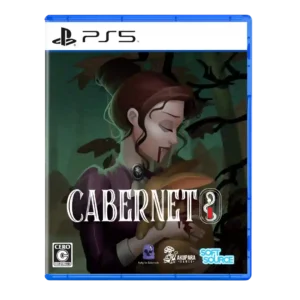
Cabernet
Where It Has the Edge
No clear scored advantage over the other product.

Scorata scores summarize analyzed review evidence on a 1–5 scale; they are not laboratory measurements or a simple average of customer star ratings. Feature scores summarize the reviews covering that feature. The overall score averages feature scores within each review, then combines review averages. When both expert and customer evidence are available, those two groups receive equal weight. Products can have different review coverage, so small score gaps do not establish a winner.
Recommendations prioritize important features for the category, with a score of at least 3.5, a gap of at least 0.25 points and at least two supporting reviews per product. Features with widely varying scores or broad connectivity contexts are excluded from recommendations. These safeguards do not establish statistical significance.
Quick verdict
The available evidence supports the recommendation below, but does not establish an overall winner. Check the remaining features against your priorities.
There is not enough comparable review evidence to recommend Cabernet over the other product.
Choose Europa Universalis V for sandbox freedom and content variety.
No clear scored advantage over the other product.
Scores are out of 5. Missing scores mean missing review evidence, not a missing feature.
Accessibility support was praised in one review because infinite blood mode lets players avoid feeding pressure and focus on the story.
Accessibility support is a weak spot. Colorblind support exists, but reviewers wanted stronger options such as high-contrast maps and font controls and did not consider the game broadly accessible.
Load times were a recurring platform concern, especially on Switch, though one review balanced the initial wait against smooth movement after loading.
On a high-end test system, loading times were specifically described as impressive.
The learning curve had limited positive support, with one reviewer saying the mechanics initially seem complex but are actually simple.
Complexity is the most consistent barrier. Veterans and newcomers alike describe a steep, sometimes overwhelming learning curve that can take dozens of hours before the game feels comfortable.
Difficulty balance had limited positive support, with one reviewer saying the dawn timer functioned more as a gentle nudge than a harsh death threat.
At least one reviewer found major-power campaigns too easy, especially with strong starting nations, suggesting challenge can vary sharply with the country selected.
Pacing was mixed, with praise for strong momentum and well-paced stretches balanced against story lulls, slow social play, and a central plot that could recede too much.
The slower simulation is a recurring tradeoff. Some appreciate quiet stretches and deliberate planning, but others report long waits, slow campaigns, and tempo that can actively drain the fun.
Endgame content was positively received in limited evidence, with reviewers praising the final chapters and an unexpected epilogue.
One reviewer found the later game less rewarding than the early and middle stages, where incremental growth and expansion feel more tangible.
Immersion was a standout for many reviewers, driven by role-playing, atmosphere, world-building, and emotional investment, though some audio and logic issues could disrupt it.
Historical immersion is strong when audiovisual detail and simulation align, but passive or implausible AI behavior can break that feeling.
Animation quality had limited but positive support, with one reviewer praising close-up cutscenes while another noted the aesthetic masks animation limitations.
Battle animations received direct praise for adding life to the large-scale map presentation.
Sandbox freedom was mixed: reviewers appreciated moral and dialogue freedom, but also noted invisible walls, predetermined quest paths, and an illusion of openness.
The game gives players broad freedom to pursue conquest, diplomacy, trade, internal development, or unusual nation-building goals. Reviewers repeatedly praised how many viable paths exist.
Progression was widely praised for tying stats, books, outfits, and dialogue checks into role-playing, with reviewers calling the RPG elements satisfying and intriguing.
The technology and advancement structure earns praise for depth and scale, but its sprawling presentation can be cumbersome and difficult to navigate.
HUD clarity had limited negative support, with one reviewer wanting NPC locations added to reduce unnecessary searching.
Notifications can overlap important information, with one reviewer reporting the right-side ticker obscuring a key national ledger.
Crash stability was mixed, with several reviews reporting crashes or freezes while one Switch review said it did not unexpectedly crash.
Crash reports are one of the largest technical concerns: some reviewers saw few or none, while others encountered repeated or even frequent crashes. Stability appears highly variable by build and hardware.
Tutorial quality was mixed-to-positive, with one preview praising seamless instruction while another full review felt the vampire reveal was partially spoiled by tutorial wording.
Tutorials are substantially better than older Paradox onboarding in several accounts, with missions, hints, and nested tooltips helping. They still cannot explain everything, and some reviewers call them too basic, rigid, or incomplete.
Content variety had mixed support: one review wanted more vampiric ability variety, while another noted more transformations unlocking as the game progressed.
The huge nation roster, cultural differences, dynamic events, resources, and playstyles create enormous variety. Even when regional depth varies, there is no shortage of different campaign setups.
The nightly action-point loop, coffin deadline, and relationship management were usually praised for creating meaningful prioritization, with one reviewer noting the slow social pace is not for everyone.
Nation management is consistently described as absorbing and hard to put down once the systems click. Even critical reviewers often stayed engaged for dozens or hundreds of hours.
Art direction was a major strength, with praise for detailed characters, striking storybook aesthetics, gothic setting, and strong visual identity.
Visual direction is mixed but generally positive: splash art and flat-map presentation earn strong praise, while some reviewers think the 3D aesthetic trails Paradox’s best-looking titles.
Bug frequency was the most repeated technical concern, with many reviews reporting glitches, soft-locks, quest-breaking issues, or visual jank; a few encountered only minor problems.
Bugs remain a recurring concern across release and later-patch commentary, ranging from UI quirks to systemic problems. Several sources expect patches to improve them, but they materially affect polish.
Onboarding was praised for teaching controls, lore, stats, and vampiric rules through the opening narrative rather than through intrusive instruction.
Automation, recommended nations, guided starts, hints, and tooltips make the game more approachable than its scale suggests. Results vary: some newcomers found the entry process excellent, while others still found it nearly impenetrable.
Originality was praised through the game’s unusual vampire-life premise, unique narrative RPG flavor, and distinctive approach to the visual novel genre.
One reviewer argues that the scale and depth set a new standard for what grand strategy can be, reflecting unusually ambitious genre design.
Environmental detail had limited positive support, with one review praising the environmental storytelling built into the settings.
Terrain and map detail are a standout, with one reviewer calling it among Paradox’s prettiest maps and valuing how geography supports both planning and atmosphere.
Reviewers generally found the RPG, morality, feeding, and vampire systems engaging and well matched to the narrative, though a few noted uneven execution or jank in ability use.
The simulation’s interconnected systems are the defining strength: population, politics, trade, control, logistics, and government choices feed into one another in ways reviewers repeatedly found deep and coherent.
Atmosphere was consistently praised as gothic, eerie, haunting, and immersive, with reviewers frequently tying it to art, music, and setting.
The game is praised for creating a distinctive historical mood, from quiet stretches of rule to music and visual details that make long campaigns feel grounded.
Exploration was strongest when tied to bat traversal, side quests, and optional world discovery, with reviewers generally finding it fun and effective despite a contained world.
Colonial exploration can be a calmer, satisfying way to play, with gradually lifting fog of war providing a rewarding sense of expansion even when competition for colonies intrudes.
Fun factor was strongly positive among reviewers who connected with the narrative RPG format, with several saying they had a genuinely good or best-time experience.
Despite complexity and technical flaws, most reviewers report strong enjoyment, often describing the game as engrossing, rewarding, or difficult to stop playing.
Polish was a common weakness, with reviewers saying glitches, rough edges, and quality-control issues held the game back from higher scores.
The core foundation is strong, but several reviewers describe the game as needing more tuning, balance work, and refinement. Later patches improve some areas while occasionally introducing new issues.
Narrative quality was the dominant strength, with broad praise for the vampire premise, branching story, character focus, and emotional storytelling despite some mixed views on main-plot lulls.
The strongest stories are emergent rather than scripted, growing from political crises, wars, dynasties, disasters, and player decisions. Several reviewers singled out this unscripted alternate-history storytelling as a major strength.
Frame rate stability had limited negative support, with a Switch review reporting drastic frame skipping in a specific area.
Stutter and uneven frame pacing are common complaints, especially during busy wars, month ticks, high simulation speeds, or late-game empires. Patches help, but smoothness is not consistently reliable.
Graphics were generally praised for attractive backgrounds, effective cel-shaded visuals, and storybook presentation, though one review found the visuals somewhat simplistic.
Maps, terrain, units, and city growth are widely praised as attractive and detailed. A few reviewers prefer other Paradox games aesthetically, but the overall presentation is considered strong.
Resource balance was mixed: time pressure created urgency, but another review felt blood management became too trivial by the end.
Trade, markets, production, population needs, and logistics form a deep economic simulation that many reviewers love. The same complexity can become opaque, frustrating, or unreliable when automation makes poor choices.
Mission structure received positive support from one review that highlighted varied tasks and fresh, engaging gameplay.
Guidance through missions is mixed: some reviewers liked clearer, more instructive objectives, while others found mission trees rigid, underbaked, or frustrating when progress could be lost.
Map and navigation design had limited negative support from a reviewer who noted the lack of a map and reliance on memory.
Map modes and presentation are frequently useful as well as attractive, with flat-map styling, culture views, and filters helping players read an exceptionally dense world.
Sound design was mixed: one reviewer found the audio immersion-breaking, while others praised fitting sound, emotional reinforcement, or noted only limited audio misfires.
Audio design is positive overall: one reviewer called it impressive, while another found it competent and enjoyable rather than especially memorable.
User interface design was mixed: one review found it organized and another effective, but several criticized parsing, hotspot cycling, and rough interface elements.
UI opinions are sharply split. Nested tooltips and organization can make huge amounts of data manageable, but dense screens, unclear actions, overlapping text, and readability problems remain common complaints.
World-building was consistently praised for its living town, memorable characters, political themes, folklore, and richly imagined Eastern European vampire society.
The game’s detailed historical simulation makes countries feel embedded in a living world of cultures, religions, populations, institutions, and crises. Reviewers repeatedly praised the scale and historical texture.
Save reliability was mixed, with one review emphasizing saving regularly and another reporting forgotten progress after a reload.
One reviewer found mid-game save loading unreliable, requiring a return to the main menu before the selected save would actually load.
Value was positive but platform-dependent: some reviewers recommended it or loved it, while others advised waiting for patches before buying.
Value opinions are mixed: one reviewer sees exceptional value in the sheer density of content, while another worries about further spending on future additions.
Replay value was one of the clearest strengths, with reviewers citing different choices, endings, relationships, achievements, and quest outcomes as reasons to replay.
Replayability is exceptional across the board, driven by hundreds of nations, alternate-history outcomes, varied strategies, and systems deep enough to sustain hundreds or even thousands of hours.
Menu usability was a recurring complaint on controller and Switch, with reviewers criticizing cursor-based menus, small text, and lack of button navigation; one PC-focused review found the menu effective.
Some newer UI tools make complex menus dramatically easier to use, even though the broader interface can still be dense.
The soundtrack was consistently praised as gothic, mournful, haunting, atmospheric, and memorable.
Music is one of the clearest strengths, repeatedly described as superb, spectacular, rich, varied, and well suited to campaigns that last for tens or hundreds of hours.
Performance optimization varied by platform; Switch and console reviews often criticized optimization, while one Switch-focused review said it ran really well.
Performance varies sharply by hardware, patch, and campaign stage. Some reviewers report impressive optimization, while others describe heavy CPU demands, late-game slowdowns, or a rougher launch experience.
The achievement list loses freshness by reusing a notable number of challenges from Europa Universalis IV.
AI is highly context-dependent: automation often handles delegated chores well and can teach newer players, while strategic opponents and some automated economic decisions are criticized as passive, erratic, or suboptimal.
Character development was generally strong, with reviewers praising memorable personalities, relationship consequences, and excellent development, though one found some characters less complex.
The character roster/cast was praised as plentiful, diverse, and well-written, with enough variety to support the relationship-driven structure.
Checkpointing had limited positive support because one reviewer noted autosaves before frustrating action segments.
Warfare gains weight from terrain, weather, logistics, supply, formations, and population losses, making victories feel earned. A few reviewers found battle rules or sieges opaque, but the overall system is widely praised.
The base game is vast, but completeness varies by region and source. Underdeveloped nations, repetitive generic events, and expectations of future DLC contrast with reviewers who still find the launch package substantial.
Dialogue was widely liked for richness, vibrancy, and delight, though one reviewer noted occasional out-of-order conversations that hurt immersion.
Emotional impact was high, with reviewers citing heartbreaking moments, difficult choices, sobbing reactions, and themes treated with gravity.
Longtime players overwhelmingly see it as a worthy or superior continuation, preserving Europa Universalis identity while reworking older abstractions and borrowing useful ideas from Paradox’s other series.
Fast travel convenience was praised when reviewers discussed bat form and dialogue skipping improving pace and movement around town.
Bat traversal was often enjoyable and convenient, but one review found landing and ability activation janky while another described the powers as conceptually fun but uneven.
Campaigns are enormous time commitments, often measured in dozens of hours and sometimes far more. For dedicated players that scale can be a strength, while others find it excessive.
Handheld suitability was split: one reviewer felt Switch was not the best platform, while another called it a great Switch port.
Horror tension had limited positive support from the preview’s praise for the dark, mysterious gothic setup.
Innovation had limited but strong support from a reviewer who said the RPG-infused visual novel felt unlike anything they had encountered in the genre.
Lore depth was a strong point, with reviewers praising the vampire mythology, folklore, glossary material, and social-commentary roots.
Mission variety was praised for the large variety of optional quests and the range of task types, from fetch quests to puzzles and dialogue.
One later commentary strongly criticizes the expectation that missing depth will be sold back piecemeal, framing the long-term content model as unfair.
Movement drew mixed-to-negative feedback: reviewers liked some traversal ideas but criticized slow walking, clunkiness, obstacle snagging, and awkward fast movement.
Side characters were repeatedly praised as well-written, complex, rounded, and enjoyable to interact with, though one reviewer found some contemporaries merely personable rather than deeply developed.
One reviewer praised invisibility as useful for sneaking and completing quests, giving stealth a positive but lightly supported score.
The upgrade system had one strong supporting review that described the RPG elements behind skill growth as simple but satisfying.
Visual effects quality had limited negative support from a review that disliked temporary visual echoing during character movement.
Reviewers praised the consequence-driven world, noting meaningful choices, character-altering outcomes, and impactful interactions with people and systems.
Writing quality was consistently praised as fantastic, sharp, thoughtful, and beautifully written, helping carry the dialogue-heavy structure.
Control and interaction precision were a recurring weak spot, with reviewers pointing to tricky icon selection, awkward action segments, and hard-to-trigger object interactions.
Liza’s protagonist appeal had strong but limited support, with one reviewer calling her exceptionally endearing.
Voice acting was strongly praised by most reviewers, especially for Liza and the broader cast, but some criticized inconsistent accents, uneven performances, or audio quality.
One reviewer worries that realizing the game’s full long-term potential could require years of expansions and substantial additional spending.
Platform-specific support was weak on Switch and consoles, with reviewers pointing to poor PC-to-Switch conversion and rough console experience.
Open-world design was only lightly supported; one reviewer felt the game gives the illusion of openness while still expecting specific sequences.
Side quests were a major strength across reviews, often called intriguing, imaginative, and high quality, though one reviewer found some boring, rushed, or uneven.

Best for fluid traversal, rewarding exploration, striking art, and forgiving quality-of-life features. Skip it if you want deep combat, radical genre innovation, or consistently demanding bosses.
Pros: difficulty balance, boss design
Cons: innovation, sandbox freedom

Good if you want fast, tactical roguelite combat with huge progression depth, striking art, and standout music. Skip it if repetition, resource micromanagement, or a less emotionally satisfying sequel story...
Pros: combat system, progression system
Cons: originality

Good if you want a beautiful, demanding survival sandbox built around exploration, building, progression, and memorable co-op. Skip it if long resource runs, harsh death recovery, and deliberate pacing sound...
Pros: town-building system, exploration quality
Cons: grind level, fast travel convenience

Best for joyful destruction, dense exploration, and a charming DK-Pauline adventure. Skip it if camera quirks, frame-rate dips, easy bosses, or premium Switch 2 pricing are dealbreakers.
Pros: fun factor, world interactivity
Cons: frame rate stability, boss design