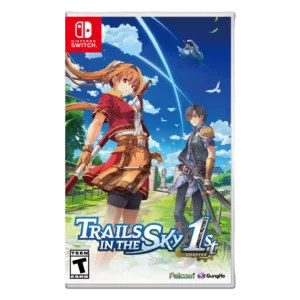
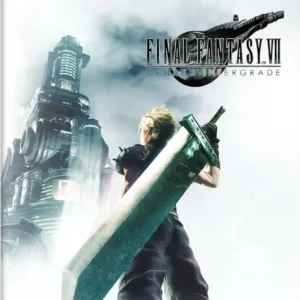
Trails in the Sky 1st Chapter
Where It Has the Edge
- performance optimization is 4.9 vs 4.6. Performance optimization was praised on PS5 Pro, PC, and PS5, with one reviewer reporting no performance issues or...

Scorata scores summarize analyzed review evidence on a 1–5 scale; they are not laboratory measurements or a simple average of customer star ratings. Feature scores summarize the reviews covering that feature. The overall score averages feature scores within each review, then combines review averages. When both expert and customer evidence are available, those two groups receive equal weight. Products can have different review coverage, so small score gaps do not establish a winner.
Recommendations prioritize important features for the category, with a score of at least 3.5, a gap of at least 0.25 points and at least two supporting reviews per product. Features with widely varying scores or broad connectivity contexts are excluded from recommendations. These safeguards do not establish statistical significance.
Quick verdict
The review evidence points to a tradeoff: performance optimization versus writing quality and polish. Choose according to which strengths matter more to you; the overall score alone does not settle that choice.
Choose Trails in the Sky 1st Chapter for performance optimization.
Choose Final Fantasy VII Remake Intergrade for writing quality and polish.
Scores are out of 5. Missing scores mean missing review evidence, not a missing feature.
Quest design was generally praised for attaching story, character moments, and worldbuilding to side activities instead of leaving them as empty errands.
Side quests add character and rewards, though many are viewed as basic fetch work or filler.
Level design received limited criticism, mainly that some repeated tower-style spaces could feel tedious.
Linear chapters and dungeons are often polished but can feel corridor-like, padded, or less interesting than the larger sequel.
World-building was one of the strongest attributes, with repeated praise for living NPCs, regional culture, and detailed continuity.
The expanded Midgar turns a few original hours into a dense, memorable city shaped by class, industry, and resistance.
Camera behavior drew a clear complaint in tight combat spaces.
The camera is usually serviceable but can become frustrating in crowded battles.
Exploration was praised for scale and connected spaces that made the remade Liberl feel more convincing.
The city rewards wandering and discovery, though its linear structure and limited interaction disappoint open-world-minded players.
Writing quality was mixed: many praised the worldbuilding and story, but several criticized localization, grammar, awkward phrasing, or lost personality.
Writing is praised for warmth, humor, and character depth, though some reviewers dislike its excesses and convoluted additions.
Pacing was the clearest tradeoff: many liked the slow-burn structure, while several warned about long dialogue or cutscene-heavy stretches.
Reviewers enjoy the major beats but repeatedly flag slow walks, padded chapters, and occasional pacing whiplash.
Bug frequency received one notable negative report of a fight lockup.
The port is generally stable, although one review reports no bugs while another source notes a clipping incident.
Environmental detail was praised for expanded roads, visible distant locations, and faithful recreation of remembered spaces.
Midgar’s slums, markets, reactors, and skyline are densely detailed, with occasional soft textures or pop-in.
Content variety was mixed, with praise for activities and environments but complaints that new remake content is minor or fluffy.
Story chapters, side quests, minigames, combat challenges, and Materia experimentation add variety, but some reviewers want more.
Difficulty balance was mostly praised as strategic and rewarding, with some warnings about spikes or more demanding modes.
Normal difficulty is usually fair and engaging, while Hard mode offers a sharper post-game challenge.
Polish was mostly positive, but some reviewers noted localization, publishing, or rough-edge concerns.
The Switch 2 release is widely characterized as polished, smooth, and unusually well finished.
Accessibility impressions were mixed: reviewers appreciated adjustability and difficulty options, but one specifically noted the lack of colorblind mode.
Optional progression boosts, Classic mode, and difficulty settings help players bypass grind, though some reviewers find the boosts overpowered.
Upgrade systems were viewed positively for making gear and Orbment improvements easier and more convenient.
Weapon upgrades and Materia builds encourage experimentation and weakness-based planning.
Frame rate stability received direct praise for smooth performance and short loads.
The locked 30fps is usually stable and responsive, with occasional cutscene dips; some reviewers still want 40 or 60fps.
The character roster was praised for its memorable supporting cast, though one review noted some arcs and backstories are not fully developed yet.
The playable cast feels distinct and memorable, while supporting characters gain welcome personality and screen time.
Load times received limited positive evidence around seamless battles and lack of loading transitions.
Switch 2 load times are repeatedly praised as fast or nearly absent.
Atmosphere was praised for its slow, cozy, easy-breezy sense of place.
Midgar feels oppressive, beautiful, and alive, with lighting and environmental detail reinforcing its mood.
Fun factor was very positive, with reviewers calling it a blast, a 10/10, and instantly lovable.
Reviewers repeatedly describe the game as fun, engrossing, and hard to put down, especially in combat and replay sessions.
Dialogue quality had limited but notable criticism around awkward sentence structures.
Dialogue and banter often land with humor and personality, though some lines are called cringe-worthy or overly cheesy.
Grind level was praised in one review for reducing grinding almost entirely.
Optional boosts reduce grinding, and several reviewers say the base game rarely demands it.
Narrative quality was heavily praised for its engaging mystery, character-driven structure, and satisfying setup despite being a first chapter.
The story is praised for emotional scale and character focus, though meta twists and the unresolved trilogy structure are divisive.
Character development was praised for Estelle and Joshua’s growth, their bond, and the way the remake carries emotional arcs.
Expanded scenes give Cloud, Aerith, Tifa, Barret, Jessie, Biggs, and Wedge more depth; one reviewer finds the main cast less likable.
Handheld play suitability was praised across Switch/TV, Steam Deck, and short-burst play impressions.
Portability is the defining strength: reviewers call handheld play viable, convenient, or the best portable way to play.
Graphics quality was widely praised, with a few caveats around stiffness or imperfect 3D presentation.
The Switch 2 version is widely praised for lighting, models, and cinematic presentation, with softer textures and hair artifacts as tradeoffs.
Combat drew the strongest agreement: reviewers liked the hybrid real-time and command-battle system, though a few found the action side simple.
The hybrid real-time and ATB system is a consensus strength: strategic, flashy, and rewarding, though aerial combat and some controls draw criticism.
Menu usability was mixed, with praise for tracking but complaints about Arts/menu friction and inaccurate or issue-prone menus.
Menus and command navigation are generally clear and quick, with combat options easy to reach once learned.
Voice acting was mostly praised for strong performances, though a few reviewers disliked specific English delivery or partial/awkward implementation.
The main cast is praised for expressive performances, though some reviewers note uneven delivery or cheesy NPC work.
When mentioned, controls were described as smooth, responsive, and easy to execute in both combat styles.
Controls are generally responsive and combat inputs feel clean, though Joy-Con layouts and crowded fights can take adjustment.
Performance optimization was praised on PS5 Pro, PC, and PS5, with one reviewer reporting no performance issues or bugs.
The port is treated as a technical showcase, preserving a large AAA experience with surprisingly few compromises.
Soundtrack quality was strongly praised, although a few reviewers wanted more variety or bolder new arrangements.
The reimagined score is a consistent strength, balancing orchestral emotion, industrial texture, and memorable battle themes.
Value for money was positive overall, with praise for $60 value and trying both versions, while one reviewer noted the original is cheaper.
At $40, reviewers call the package exceptional value for its length and included Intermission; storage and key-card costs temper that praise.
Barret’s ranged role is useful, but one reviewer finds his aiming feedback stilted.
Animation quality was praised for expressive character animation, cutscene choreography, and flashy combat animations.
Art direction was praised for vibrant, expressive presentation and faithful anime-style modernization.
The core loop was praised for blending action entry points, turn-based follow-through, and rewarding pacing that kept reviewers engaged.
Crash stability was flagged by one reviewer who had to Alt-F4 after a battle lockup.
Emotional impact was praised in standout scenes, though one reviewer felt a key late scene lost impact versus the original.
Facial animations and lip sync were more mixed, with explicit criticism of off lip syncing and awkward presentation.
Fast travel convenience was repeatedly praised for cutting down backtracking and making quest cleanup faster.
The expanded Midgar arc commonly takes about 30–40 hours, with side content and completionist runs stretching much longer.
Reviewers praised the gameplay changes as a broad improvement, especially how the remake’s enhancements improve overall flow.
One reviewer appreciates HD Rumble 2 for adding subtle feedback without distraction.
Immersion was praised for making the world feel more alive through visual and quality-of-life improvements.
Learning curve impressions varied: one reviewer called the systems approachable, while another found the combat complexity and tutorials potentially off-putting.
Lore depth was praised for its connected saga, worldbuilding, and long-term setup.
Mission variety received positive but limited evidence, mainly around enough quest and objective variety to avoid slogging.
Movement and combat flow feel precise and responsive in handheld play.
Reviewers consistently considered this remake an approachable starting point for newcomers to the Trails series.
The physical release is a Game Key Card requiring a large download, which collectors describe as disappointing.
The Orbment/progression systems were praised for flexible character building and rewarding experimentation.
Remake/remaster quality drew overwhelming praise for being faithful, modernized, and a strong entry point, though one reviewer cautioned it does not replace the original.
Side character depth was mostly positive, especially for party members, though some reviewers felt certain supporting arcs remained thin.
Tutorial quality drew a clear complaint around poorly explained cooking, and another reviewer warned that combat systems lack intuitive onboarding.
Visual effects were praised for making Arts, Crafts, and combat animation look spectacular.
Bosses are a recurring highlight, combining spectacle with demanding patterns and memorable multi-stage fights.
Map and navigation design was mostly praised for reducing friction, though one reviewer disliked markers spoiling riddle-style quests.
User interface design was praised for easy navigation and a modern UI, though evidence was limited.
The lack of cross-save is a small but real disappointment for players moving between platforms.
Intermission adds a worthwhile Yuffie campaign and extra perspective, but its story is often found shorter and less complete than the main game.
Platform-specific feature support received praise for the PC port’s Steam integration.
Replay options, Hard mode, fast-forwarding, and streamlined progression make revisiting attractive.
Protagonist appeal was very strong, with reviewers repeatedly praising Estelle and Joshua as charming, complementary, and easy to follow.

Best for fluid traversal, rewarding exploration, striking art, and forgiving quality-of-life features. Skip it if you want deep combat, radical genre innovation, or consistently demanding bosses.
Pros: difficulty balance, boss design
Cons: innovation, sandbox freedom

Good if you want fast, tactical roguelite combat with huge progression depth, striking art, and standout music. Skip it if repetition, resource micromanagement, or a less emotionally satisfying sequel story...
Pros: combat system, progression system
Cons: originality

Good if you want a beautiful, demanding survival sandbox built around exploration, building, progression, and memorable co-op. Skip it if long resource runs, harsh death recovery, and deliberate pacing sound...
Pros: town-building system, exploration quality
Cons: grind level, fast travel convenience

Best for joyful destruction, dense exploration, and a charming DK-Pauline adventure. Skip it if camera quirks, frame-rate dips, easy bosses, or premium Switch 2 pricing are dealbreakers.
Pros: fun factor, world interactivity
Cons: frame rate stability, boss design