Scorata scores summarize analyzed review evidence on a 1–5 scale; they are not laboratory measurements or a simple average of customer star ratings. Feature scores summarize the reviews covering that feature. The overall score averages feature scores within each review, then combines review averages. When both expert and customer evidence are available, those two groups receive equal weight. Products can have different review coverage, so small score gaps do not establish a winner.
Recommendations prioritize important features for the category, with a score of at least 3.5, a gap of at least 0.25 points and at least two supporting reviews per product. Features with widely varying scores or broad connectivity contexts are excluded from recommendations. These safeguards do not establish statistical significance.
Quick verdict
What each product is best for
The review evidence points to a tradeoff: Included accessories and Build quality versus False alert filter effectiveness and Field of view. Choose according to which strengths matter more to you; the overall score alone does not settle that choice.
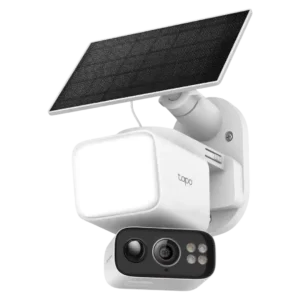
Choose Tapo C615F Kit for Included accessories and Build quality.
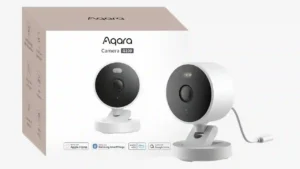
Choose Aqara G100 for False alert filter effectiveness and Field of view.
Why these recommendations?
Tapo C615F Kit
Where It Has the Edge
Included accessories is 4.1 vs 2.0. Included accessories were helpful overall, especially the guide, mount, solar setup, and clean-install hardware.
Build quality is 4.4 vs 3.7. Build quality comments were positive, focused on a sturdy mount and a well-made solar panel.
App controls and settings is 4.2 vs 3.7. The Tapo app offered many useful settings and controls, but setup menus and some bugs kept the app...
Aqara G100
Where It Has the Edge
False alert filter effectiveness is 4.8 vs 3.2. False alerts are generally well controlled, with testers reporting rare false positives and better behavior than some cheaper...
Field of view is 4.5 vs 2.9. The 140-degree view is consistently useful for covering rooms, driveways, and studio areas with few blind spots, though...
Smart-home integration (Alexa, Google, Siri, HomeKit, Matter, Thread) is 5.0 vs 4.2. Broad ecosystem compatibility is a major selling point, with repeated praise for support across Apple Home, Google, Alexa,...
Tapo C615F Kit4.3 overall score
Aqara G1004.6 overall score
Compare features
Scores are out of 5. Missing scores mean missing review evidence, not a missing feature.
Scored on both products
Battery and charging
Power options (battery)
Tapo C615F Kit
4.8
Aqara G100
2.0
Details and evidence for Power options (battery)
Tapo C615F Kit
Battery-powered operation was praised in PCWorld’s verdict as part of a low-cost floodlight camera that performs well.
Details and evidence for Continuous recording capability
Tapo C615F Kit
The 24/7 capture mode was divisive: some liked solar-compatible timelapse capture, while others felt the wording was misleading or missed true continuous recording.
The 140-degree view is consistently useful for covering rooms, driveways, and studio areas with few blind spots, though one reviewer calls it merely decent rather than class-leading.
Detection range was mixed: one tester saw useful range around 30 feet, while others found sensitivity weaker at distance or outside the PIR sensor’s view.
Mounting flexibility was mostly praised for separable solar-panel placement and versatile mounts, though one review disliked the lack of tabletop or inverted use.
Extra features such as anti-theft locking and voice changing feel thoughtful to some reviewers, though the voice-disguise option is less convincing for general indoor camera use.
Local storage is one of the G100’s most praised advantages, with microSD and NAS options repeatedly highlighted for flexibility and reduced dependence on cloud storage.
The camera is attractive for setups that want to avoid extra hardware, with reviewers praising no-hub operation and, in one review, local hub functionality for Aqara devices.
Night vision drew mostly positive comments, with reviewers praising both color and IR modes, while one noted IR and low-light motion still have limits.
Night vision is a clear strength: reviewers like both discreet IR and spotlight-assisted color modes, with good visibility and useful nighttime identification for the price.
The IP65 weather resistance is consistently viewed as strong enough for flexible indoor/outdoor use, with reviewers confident about rain, dust, and typical exposed placements.
Detection features were one of the clearest strengths, with frequent praise for free AI detection and tracking despite some range and false-alert caveats.
Detection is broadly well regarded, with person and motion alerts working reliably and advanced face, pet, vehicle, and package options adding flexibility when desired.
On-device person and motion processing is valued because common detection can work without relying on the cloud, and reviewers consider it sufficient for many everyday setups.
Details and evidence for Video resolution and detail
Tapo C615F Kit
Reviewers generally found the 2K footage sharp, clear, and detailed, though one reviewer noted artifacting and muted image quality in tougher motion scenes.
Reviewers generally find the G100’s video clear and useful for identification, especially in daylight, but several stop short of calling its 2K output premium and note the HomeKit resolution ceiling.
Details and evidence for False alert filter effectiveness
Tapo C615F Kit
False-alert filtering was mixed: subject-specific settings helped avoid unwanted triggers, but reviewers also reported hit-or-miss detection and PIR limits.
False alerts are generally well controlled, with testers reporting rare false positives and better behavior than some cheaper or floodlight-based alternatives.
Low-light performance earns strong praise in the review that evaluates it directly, with the dual night modes described as excellent in dim conditions.
Notification speed was acceptable rather than instant, with one tester seeing about 30 seconds and another wanting it a little quicker despite a 6-second result.
Broad ecosystem compatibility is a major selling point, with repeated praise for support across Apple Home, Google, Alexa, SmartThings, Home Assistant, and Aqara automations.
App reliability is mostly good once connected: one reviewer completed pairing in minutes, while another found the initial connecting phase noticeably slow.
The app offers plenty of controls, but opinions on polish are mixed: some find it easy to operate while others describe the menus as cluttered, buried, or less refined.
The G100 works especially well as part of a broader smart-home system, with exposed sensors, Aqara-device automations, and local accessory integration adding real utility.
Build quality is adequate to good for the price: the camera feels solid enough, but its plastic housing is less sturdy or rugged than premium alternatives.
Early outdoor durability impressions are positive, including successful short-term use and confidence in harsh-weather protection, though long-term winter testing is limited.
Installation is usually described as simple or straightforward, but the pairing code on the base can be inconvenient if the camera is mounted before the code is saved.
Value is one of the strongest areas of agreement, with multiple reviewers calling the G100 unusually affordable or an excellent bargain for its feature set.
The compact design is generally liked for being modern, discreet, and unobtrusive, though one reviewer finds the plastic finish more utilitarian than stylish.
Overall satisfaction is high: most reviewers see the G100 as a versatile, reliable, feature-rich budget camera, even if a few describe its core camera performance as merely solid rather than exceptional.
Details and evidence for Power options (solar panel)
Tapo C615F Kit
Solar power received broad praise for keeping the battery topped up, enabling remote installs, and reducing charging anxiety even in cloudy or snowy use.
Privacy is a recurring strength, thanks to no-login HomeKit mode, local storage choices, encrypted services, and anti-theft or privacy-focused controls.
Subscription pressure is relatively low because core use, local storage, and basic detection can work without a paid plan; the main tradeoff is that some advanced cloud AI remains paywalled.
Floodlight brightness was a major strength, repeatedly described as bright enough to illuminate yards despite being less powerful than some wired rivals.