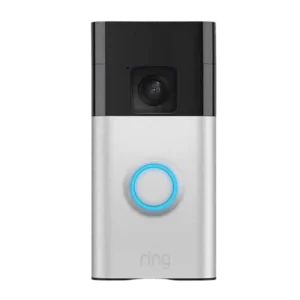
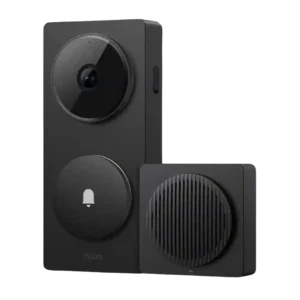
Ring Video Doorbell Battery
Where It Has the Edge
No clear scored advantage over the other product.

Scorata scores summarize analyzed review evidence on a 1–5 scale; they are not laboratory measurements or a simple average of customer star ratings. Feature scores summarize the reviews covering that feature. The overall score averages feature scores within each review, then combines review averages. When both expert and customer evidence are available, those two groups receive equal weight. Products can have different review coverage, so small score gaps do not establish a winner.
Recommendations prioritize important features for the category, with a score of at least 3.5, a gap of at least 0.25 points and at least two supporting reviews per product. Features with widely varying scores or broad connectivity contexts are excluded from recommendations. These safeguards do not establish statistical significance.
Quick verdict
The available evidence supports the recommendation below, but does not establish an overall winner. Check the remaining features against your priorities.
There is not enough comparable review evidence to recommend Ring Video Doorbell Battery over the other product.
Choose Aqara Smart Doorbell G410 for Storage and Personalization options.
No clear scored advantage over the other product.
Scores are out of 5. Missing scores mean missing review evidence, not a missing feature.
Storage was a major weakness because reviewers repeatedly noted cloud storage and recorded video access require payment.
Storage flexibility was repeatedly praised, especially microSD-in-chime storage, NAS, cloud, iCloud, and local options that reduce reliance on subscriptions.
Faceplate and accessory evidence was negative because reviewers noted older faceplates or covers were not interchangeable.
The included angled accessory was praised because it helps position the camera more accurately for the best view.
Color options were limited by the fixed cover/faceplate design, making color choice more consequential.
Color choice earned mild positive evidence because the available finishes were described as useful for matching home décor.
The included kit drew mixed evidence: basic tools and hardware were appreciated, but missing wedges, angle mounts, or extras frustrated some reviewers.
The box contents were praised as a complete ready-to-install kit for wired or battery setups.
Tamper security was criticized because the newer release mechanism seemed easier to unlock.
Tamper protection had limited but positive evidence, with the alarm and red flashing described as useful against theft attempts.
Subscription requirements were the most consistent negative theme, with reviewers objecting to paywalled recordings, smart alerts, and cloud history.
Subscription opinions were mixed: reviewers liked that subscriptions are not mandatory for core storage, but criticized reduced free cloud storage and paid premium AI/cloud features.
Zones and activity areas were praised for detailed adjustment, package zones, and flexible motion-zone setup.
Zones and activity areas had mixed evidence: range tuning helped reduce false detections, but one reviewer wanted finer adjustment by feet or height.
Package monitoring was useful where available, but reviewers also emphasized that package alerts are subscription-tied.
Package monitoring improved through the taller field of view, but reviewers still warned that the lack of a dedicated package camera can limit package visibility.
Weather tolerance evidence was mixed: one review praised reliability across weather, while another warned cold temperatures can significantly cut battery life.
Weather resistance was a repeated concern; reviewers frequently warned that IPX3 or limited water resistance makes covered installation important.
Security ecosystem integration was strongly praised when using other Ring products.
Security ecosystem integration worked well in Home Assistant for button events, video, and battery monitoring, though Matter exposure remained incomplete.
Quick Replies were tested positively by PCMag and worked as intended.
Pre-recorded or custom audio features were liked as useful and fun, especially for visitors, delivery scenarios, or voice-changing responses.
Recording drew mixed evidence: paywalls frustrated reviewers, but linked-device recording was useful within Ring's ecosystem.
Recording drew mixed reactions: continuous local recording is a major plus when hardwired, but short clips and slow recording start were common caveats.
Personalization was useful where reviewed, including motion sensitivity adjustments and mode-specific smart replies.
Personalization is a major strength, especially custom alerts, ringtones, privacy settings, sensitivity controls, and notification choices.
Privacy controls were reviewed positively through privacy zones and data-protection-oriented masking.
Privacy evidence was positive around indoor microSD storage, encrypted storage, and keeping recordings safer from outdoor tampering.
Video detail drew mixed evidence: several reviewers found the 1440p image solid or impressive, while TechGearLab reported unclear, pixelated footage.
Video detail was broadly praised as sharp, crisp, and improved over 1080p, but some reviewers noted HomeKit resolution limits, missing HDR, or merely okay contrast.
The wide head-to-toe field of view was usually praised for coverage, but some reviewers noted placement limits, distortion, or missed space near the door.
The wider/taller framing was one of the strongest upgrades, helping capture people and sometimes packages better than the earlier 16:9 design.
Chime support was useful but context-dependent: one reviewer disliked the extra cost, while others found Ring chime options helpful or working properly.
The included chime is usually a strength, with several reviewers calling it loud or pleasant, though one disliked that it could not match a traditional mechanical chime.
AI-related value was supported mainly through Ring's Smart Video Search, which the automation review called a great feature.
AI detection is useful but not uniformly top-tier: reviewers found it accurate in daylight and workable, while noting sophistication and night consistency limits.
Automation flexibility was a strength in the automation review, especially custom routines and linked-device behaviors.
Automation flexibility is a standout when used with Aqara, Matter, or face-recognition triggers, though one Apple Home-focused review found the presence sensor less useful inside Apple’s camera workflow.
Do-not-disturb/snooze controls were useful, with options extending up to 12 hours.
Quiet-time scheduling had narrow evidence, but Do Not Disturb was called handy in the Aqara app.
Recommendations were generally positive for new Ring/Alexa or budget buyers, but TechGearLab recommended other cameras for video quality.
Most reviewers recommended the G410 for HomeKit, Aqara, or smart-home users, while still noting it is not ideal for every installation or simplicity-first buyer.
Night vision was polarizing: some reviewers liked color night vision, while others found it washed out, weak in dark scenes, or an Achilles heel.
Night vision was serviceable but not universally impressive: reviewers liked the monochrome infrared detail in some cases, while others wanted color night vision or better low-light clarity.
System completeness was praised in T3's review as offering nearly everything expected from this type of doorbell.
System completeness was praised because the G410 covers doorbell basics, hub functions, storage choices, and smart-home features in one package.
Motion detection was generally effective, with instant alerts and useful smart filtering, though testing varied by environment.
Motion detection was one of the most consistent strengths, with mmWave presence detection repeatedly credited for cutting false alerts and improving reliability.
Base and alarm integration was praised in the automation review, especially Ring alarm mode behavior.
Reviewers consistently praised the chime/hub architecture, treating the G410 as more than a doorbell because it can serve as a Matter, Thread, Zigbee, or Aqara hub.
Power options were flexible, with battery, hardwire, and existing doorbell support, though trickle charging may not prevent drain in heavy use.
Power flexibility is a strength for buyers who need either battery or wired installation, though one reviewer reported hardwiring compatibility could be hit or miss.
Lag evidence was positive where reviewed, with PCMag reporting instant motion and doorbell notifications.
Latency and live-view speed were mostly positive, with instant or subsecond responses reported, though Wi-Fi strength still affected performance.
Sharing access appeared easy in the app because adding another user only required an email address.
Family sharing had limited evidence, but one reviewer said inviting family members through the app was very easy.
Person/object detection was useful when available and performed well in one test, but subscription gating reduced its value for non-subscribers.
Object and person detection had limited but mixed support: package/person detection was seen as useful, while fast passersby could still be hard to capture clearly.
Peace of mind was supported by one review that emphasized staying connected and secure at home or away.
One reviewer connected lingerer detection to real theft concerns and said it could help catch suspicious activity, supporting peace-of-mind value.
Ongoing cost was a repeated concern because useful recording and smart features depend on recurring Ring plan fees.
Ongoing ownership costs were viewed positively where local or HomeKit storage meant a subscription was not required for basic footage storage.
Upgrade value was weak from a Plus-owner perspective because the new model lost removable battery and faceplate flexibility.
The G410 is widely framed as a meaningful upgrade over the G4 thanks to better video, smarter sensors, and broader connectivity, though upgrades may be optional for current G4 owners.
General reliability was split between a highly positive T3 experience and TechGearLab's more restrained 'gets the job done' conclusion.
General reliability was mostly positive, with dependable connectivity and stable review-period performance, but one reviewer saw multi-view streaming strain.
Installation was usually a standout strength, described as quick, beginner-friendly, or app-guided, though replacing older mounts could add hassle.
Installation was usually described as easy, quick, or straightforward, but there were caveats around adhesive mounting, front-door setup issues, size, and occasional software pairing friction.
Price/value was often praised at the entry price, though that value is reduced for buyers who need paid Ring features.
Value was generally positive at the price because the G410 combines a doorbell, hub, storage flexibility, and smart-home features, though one review called the price high and another saw value as use-case dependent.
Phone-call style integration was useful, but one reviewer noted the feature sat behind a higher Ring plan tier.
Phone-call style integration was a weakness in the limited evidence, because the doorbell sends a notification rather than a direct call.
Smart-home integration is strongest with Alexa and Ring devices, but weaker overall because reviewers criticized missing Google Assistant and HomeKit support.
Smart-home integration was one of the G410’s strongest differentiators, with broad HomeKit, Alexa, Google, Matter, Thread, Zigbee, and Home Assistant support, despite some ecosystem limits.
Video feed stability was good in one review, while another warned Wi-Fi limitations and network congestion can create problems.
Connectivity improved through dual-band Wi-Fi and some reviewers praised fast or stable connections, though signal placement could still require care.
Notifications were one of the strongest areas, repeatedly described as instant, reliable, timely, or convenient, with one caveat about potential annoyance.
Notifications were widely praised for becoming more relevant, peaceful, or quick, especially when mmWave detection reduced unnecessary alerts.
The app and software were usually praised as clear, intuitive, and easy to navigate, though one Blink user disliked adding another app.
The software drew split reactions: several reviewers found setup, menus, live view, and customization easy, while others criticized the Aqara app as messy or not beginner-friendly.
Physical controls and indicators were praised for the button pressure and easier quick-release charging mechanism.
Controls and indicators were viewed positively because the illuminated button and status colors help visitors understand the doorbell is active.
The form factor was praised for being slimmer than higher-end removable-battery models.
Size/form factor was a recurring compromise; reviewers repeatedly noted the device is bulky or large, even when the design itself was acceptable.
Design aesthetics were praised for tidy looks, slimmer construction, and durable-feeling styling.
Design opinions were split: some reviewers liked the clean or sleek look, while others called it cheap, plasticky, chunky, or not especially sleek.
Battery and charging drew mixed reactions: reviewers liked USB-C, efficiency, and easy detachment, but disliked the non-removable battery and recharge interruptions.
Battery feedback was mixed: some reviewers saw strong early battery performance or liked battery-plus-wired backup, while others reported fast drain, inconsistent reporting, or a one-month real-world runtime.
Audio was positively reviewed in the available tests, with reviewers impressed by quality or able to understand visitors clearly.
Audio was generally rated positively, with clear two-way talk and strong recorded audio, though one reviewer only called the speaker and microphone reasonable.
Community features were divisive: one reviewer found them a nuisance, while another highlighted lost-pet usefulness.
One reviewer considered the 2K sensor more bandwidth-efficient than higher-resolution options while still useful for a doorbell.
Face recognition is a major attraction and often works well, especially for automation and named alerts, though setup and training can be harder than rival systems.
Lens distortion was a clear weakness in TechGearLab's testing, especially near image corners.
RTSP support was valued by advanced users and Home Assistant users, but it is limited when the doorbell runs only on battery power.
The tamper siren evidence was limited but suggests the alarm is loud and attention-getting.
Video sharing evidence was limited but positive because one reviewer said clips can be downloaded easily to a phone.
Lens maintenance evidence was positive in one review because the smaller exposed area was considered less scratch-prone.
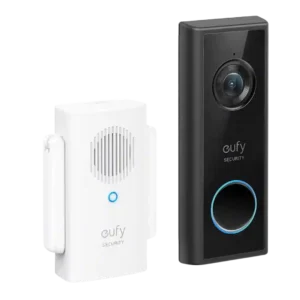
Choose the Eufy C210 if you want a no-fee, battery-friendly doorbell with local storage and good 1080p video. Skip it if you need hardwired charging, HomeKit, or consistently instant motion...
Pros: Installation and Mounting, Video resolution and detail
Cons: Power Options and Compatibility
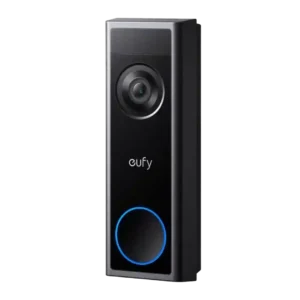
Good if you want an easy, no-fee doorbell with wired/battery power, local storage, and solid 2K coverage. Skip it if you need premium video bitrates, effortless chime coexistence, or built-in...
Pros: Installation and Mounting, App, software and firmware
Cons: Chime
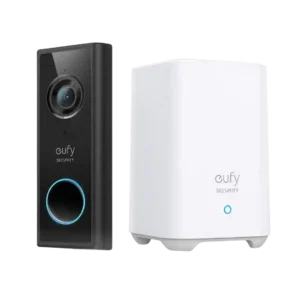
Good if you want sharp video, local storage and no required subscription. Skip it if you need 24/7 recording, flawless AI alerts, broad smart-home support or true six-month battery life.
Pros: Video resolution and detail, Recommendation for new buyers
Cons: Recording, Battery and Charging
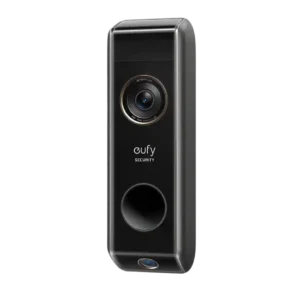
Choose the Eufy S330 if package monitoring, local storage, and no subscription matter most. Skip it if you need slim hardware, HomeKit, consistently fast live view, or stronger night vision.
Pros: Delivery package monitoring, Video resolution and detail
Cons: lag), Smart-home integration (Alexa, Google, Siri, HomeKit, Matter, Thread)