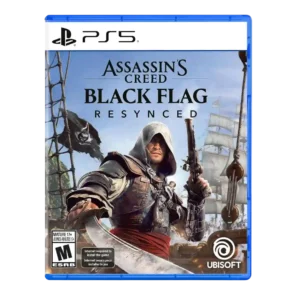

Assassin’s Creed Black Flag Resynced
Where It Has the Edge
- difficulty balance is 3.8 vs 2.4. Difficulty balance is mixed: stricter parry timing adds challenge, but slow-motion dodge and parry cues may make combat...

Scorata scores summarize analyzed review evidence on a 1–5 scale; they are not laboratory measurements or a simple average of customer star ratings. Feature scores summarize the reviews covering that feature. The overall score averages feature scores within each review, then combines review averages. When both expert and customer evidence are available, those two groups receive equal weight. Products can have different review coverage, so small score gaps do not establish a winner.
Recommendations prioritize important features for the category, with a score of at least 3.5, a gap of at least 0.25 points and at least two supporting reviews per product. Features with widely varying scores or broad connectivity contexts are excluded from recommendations. These safeguards do not establish statistical significance.
Quick verdict
The review evidence points to a tradeoff: difficulty balance versus writing quality and controls responsiveness. Choose according to which strengths matter more to you; the overall score alone does not settle that choice.
Choose Assassin’s Creed Black Flag Resynced for difficulty balance.
Choose Yakuza Kiwami 2 for writing quality and controls responsiveness.
Scores are out of 5. Missing scores mean missing review evidence, not a missing feature.
Monetization fairness is a concern where one reviewer interpreted perk-bearing deluxe content as potentially pay-to-win.
The in-game progression was praised for handing out its currencies at a fair rate and not pushing paid shortcuts. That keeps character growth tied to normal play.
Microtransaction impact is concerning where a reviewer disliked the sound of cosmetic pet skins and perk-linked bonuses.
One reviewer specifically praised the progression for avoiding microtransactions entirely. Growth comes from playing, exploring, eating, fighting, and completing stories instead.
Weapon balance looks improved through varied weapon perks and chain-kill limits that help avoid button-mashing.
Stored weapons add flexibility, but they can also make combat and bosses dramatically easier. For some players that reduces frustration; for others it undermines challenge.
Difficulty balance is mixed: stricter parry timing adds challenge, but slow-motion dodge and parry cues may make combat easier.
Difficulty is one of the less consistent areas: weapons can trivialize some bosses, while other fights, Clan Creator missions, or minigames can spike sharply. Several reviewers preferred the easier combat to earlier frustration, but balance is uneven.
The character roster expands positively through the addition of three officers, each framed as a meaningful new crew presence.
The returning and new cast is a major strength, with memorable allies, rivals, and eccentric side characters. The ensemble helps sustain both the crime drama and the lighter substories.
Polish is viewed positively overall, with several reviewers saying the remake looks refined, while still noting minor flaws and pre-release uncertainty.
The Dragon Engine creates a notably smooth, modern-feeling version of the game. Seamless transitions and refined presentation help the remake feel current even where older design choices remain visible.
Writing quality is praised for potential added depth and returning writer involvement, with a caveat about whether new additions integrate smoothly.
The script, localization, and side-story writing are widely praised for balancing crime-drama seriousness with bizarre comedy. A few reviewers note occasional older-story awkwardness, but the dialogue and character work remain strong.
Upgrade systems are praised for Jackdaw alternate-fire options, new ship upgrades, and more tactical flexibility.
Upgrades are straightforward and rewarding, letting players improve stats and unlock useful or spectacular combat abilities. The system supports steady growth without requiring a rigid unlock path.
Handheld play suitability has a positive early signal because dedicated handheld presets were described as good news.
Portability is a major selling point of the Switch 2 version. Reviewers liked having the full Yakuza experience on the go, even when they preferred other platforms for smoother performance.
Camera behavior drew a negative note around assassination camera cuts feeling too harsh.
The camera can become a real nuisance in fights, with reviewers citing close framing or trouble keeping up with fast action. These problems can make attacks and prompts harder to read.
Exploration is expected to feel richer through denser locations, more expansive underwater areas, and a more seamless Caribbean.
Compact city layouts reward wandering with side stories, arcades, restaurants, and other discoveries. Reviewers liked how much activity is packed into small spaces, even when the world is modest by modern open-world standards.
Narrative quality is promising because of Edward-focused additions and new story content, but the changed modern-day structure leaves some story questions.
The crime story is the product’s biggest consensus strength, with frequent praise for its tension, twists, characters, and emotional payoff. A minority found it messy, melodramatic, or less engaging than other Yakuza entries.
Character development is expected to improve because reviewers saw the remake fleshing out Edward’s story and personal relationships.
Major characters get meaningful arcs, especially the new faces tied to the central conflict. Reviewers praise how those developments deepen both the rivalry and the emotional stakes.
Faithfulness to franchise is a strength because reviewers felt the remake respects original Black Flag and longtime fans.
Kiwami 2 preserves the series’ defining contrast between serious crime drama and absurd side stories particularly well. That familiar tonal balance is a major part of its appeal.
Side character depth is strongly praised through new officers, personal questlines, expanded arcs, and more character connection.
Ryuji Goda, Kaoru Sayama, Majima, and the broader supporting cast receive substantial praise. Ryuji in particular is often described as a memorable foil, though some reviewers wanted more screen time for him or Majima.
World interactivity is viewed positively through breakable environments, more consequential ship damage, and dynamic environmental effects.
Fights make unusually playful use of the environment, from bicycles and signs to destructible interiors and NPC-assisted Heat Actions. That physical interaction helps street brawls feel chaotic and distinctive.
Atmosphere is highly praised, especially the Caribbean lighting, weather, sea feel, and more alive world presentation.
Kamurocho and Sotenbori are repeatedly praised for their neon-lit bustle, ambient sound, and lived-in personality. The cities make returning locations feel vivid rather than merely recycled.
Environmental detail is consistently praised through denser foliage, livelier towns, more NPCs, improved textures, and richer scenery.
The two city districts are dense with storefronts, lighting, reflections, interiors, crowds, and small visual touches. Reviewers repeatedly say the detail makes familiar streets feel alive.
Load-time impressions are very positive because several reviewers noted seamless docking or no loading screens entering cities.
Seamless movement into shops and fights is a major quality-of-life improvement, and newer storage cuts waits further. Reviewers repeatedly praised how little interruption there is between exploration and action.
Graphics quality has the strongest agreement: reviewers repeatedly praised the modernized visuals, lighting, water, faces, and environmental fidelity.
The Dragon Engine makeover earns near-universal praise for detailed character models, lighting, city streets, and cinematic presentation. Even reviewers with performance complaints generally consider the visual upgrade a major success.
Combat is one of the most consistently praised areas, with reviewers highlighting faster attacks, parries, chain takedowns, added depth, and a more modern feel.
Combat is widely enjoyed for brutal Heat Actions, environmental weapons, and seamless brawls, but the single fighting style divides opinion. Fans of the older multi-style system may find it shallower or more repetitive.
Pacing has a mild caveat because one reviewer thought the parkour footage looked slower than the original.
Most reviewers praise the main story’s forward momentum, but a smaller group found interruptions, fetch-like detours, or late-game sequencing disruptive. The tone also deliberately alternates between urgent drama and optional silliness.
Content variety is praised for new story hours, new crew content, revamped combat, and broader remake additions.
The game is packed with substories, arcade games, karaoke, cabaret management, Clan Creator, gambling, sports, and other distractions. Cabaret Club is a frequent favorite, while some individual modes land less consistently.
Visual effects are highly praised, especially lighting, ray-traced effects, refreshed underwater visuals, rain, wind, and water presentation.
Lighting, reflections, particles, and other Dragon Engine effects add polish to fights and city scenes. Reviewers especially notice how these touches strengthen the remake’s visual impact.
Emotional impact may improve because more expressive faces are expected to add emotion to story scenes.
The main story and character arcs land with surprising emotional weight for many reviewers. Majima’s material, Kiryu’s relationships, and the finale were singled out as genuinely affecting.
Movement and parkour drew broad praise for added flow and modern free-running, though some reviewers noticed slower pacing or momentum loss.
Traversal and fighting are generally more fluid under the Dragon Engine, though 30fps versions can feel less smooth. Several reviewers still preferred the tighter, snappier feel over Yakuza 6.
Reviewers strongly liked that the remake preserves a solo action-adventure identity rather than converting Black Flag into an RPG.
The blend of serious story chapters, street fights, exploration, and absurd side activities creates an effective rhythm. Reviewers liked being able to shift between intense drama and lighter distractions.
One reviewer saw the remake giving players more direct control during combat, especially through revised tool and weapon handling.
The mix of brawling, exploration, RPG-style growth, and side activities works together smoothly. Reviewers especially liked how quickly the game can shift between these systems.
Facial animations are broadly praised as much more detailed and expressive, though one hands-off preview still found them somewhat hit or miss.
Character expressions benefit from the Dragon Engine’s added detail and help the dramatic scenes look more modern. They contribute to the remake’s strong cinematic presentation.
Remake quality is broadly praised as ambitious, faithful, and more than a simple remaster, though integration questions remain before release.
The remake is widely viewed as an ambitious modernization with major visual, combat, and content upgrades. A minority of long-time fans prefer the original’s coherence or dislike removed and altered material.
Animation quality is positive for more dynamic cinematics, but one reviewer found some motion capture and facial animation uneven.
The Dragon Engine delivers fluid, expressive action and impressive character work, though ragdoll excess, older motion-capture data, and occasional stiff transitions can stand out.
Immersion impressions are positive where the remake is said to push dynamism, gameplay, and immersion further.
Rich city detail, seamless interiors, ambient noise, and constant street activity make the setting easy to sink into. Story-focus issues occasionally pulled individual reviewers out, but the world itself is strongly immersive.
Progression appears improved through weapon perks, trinket-style choices, and returning fleet management that adds light progression outside core missions.
Five experience categories feed stats, abilities, and Heat Actions, and many reviewers like how ordinary activities contribute to growth. A few find the menus or progression less exciting than earlier skill-tree approaches.
Fun factor is very high in the evidence, with reviewers describing excitement, purchase interest, and strong enthusiasm after previews.
Most reviewers found Kiwami 2 enormously entertaining, often because it can pivot from intense crime drama to ridiculous side activities without losing its identity. Even several critics still described the overall experience as fun.
Value for money is mixed: one reviewer liked the $60 price, while another advised waiting for reviews rather than pre-ordering.
Reviewers commonly see the package as strong value thanks to its long story and enormous side-content library, especially at discounted pricing. A few comparisons become less favorable when competing Yakuza releases are similarly priced.
DLC value is a recurring concern because Freedom Cry and other DLC are missing, though some reviewers accepted the narrower focus.
The included or bonus content can add useful extras, but some reviewers found powerful Clan Creator items distort the mode’s balance. Its value depends on whether convenience matters more than preserving challenge.
Replay value looks strong for players who enjoy roaming the Caribbean and engaging with the sailing fantasy beyond missions.
The abundance of optional activities gives players reasons to keep exploring after the main story. The core narrative is linear, but unfinished substories and minigames make returning easy.
User interface design has a mixed note because one reviewer found the on-screen combat UI somewhat messy despite being understandable.
The Switch 2 interface can look noticeably blurry on 1440p or 4K displays because some 2D assets are not rendered at native resolution. It is a visual blemish rather than a fundamental usability failure.
The open world is praised for preserving the Caribbean map while making it more seamless and easier to move through.
Kamurocho and Sotenbori are small compared with sprawling open worlds, yet they are dense and purposeful. Some reviewers found that compactness claustrophobic; others preferred the concentration of activities and detail.
Quest design impressions are positive, centered on new officer quests and added side content that reviewers found exciting.
Substories are a major attraction, mixing absurd comedy, character moments, useful rewards, and occasional combat benefits. Most are warmly received, though some reviewers found a portion forgettable or filler-like.
Controls were described as tighter and mostly faithful, with positive notes around ship controls and improved movement control.
When the Dragon Engine clicks, Kiryu feels quick, smooth, and responsive to control. Reviewers especially liked the faster recovery and more fluid combat feel compared with earlier iterations.
Voice acting impressions are positive where the original cast and new recorded lines are described as fitting the remake well.
The Japanese performances are a standout, giving major confrontations and dramatic scenes convincing weight. Reviewers repeatedly praise the cast even while noting the absence of an English dub in some versions.
Performance optimization looks promising because reviewers noted a benchmark tool and PC requirements that may compare favorably to Shadows, but no launch benchmarks exist yet.
Technical results vary sharply by platform. PC and some console coverage is very positive, while Switch 2 reviewers frequently flag a 30fps target, frame pacing, or busy-area dips despite otherwise impressive portability.
Soundtrack quality is praised because classic sea shanties return alongside new shanties and new music.
The music is usually praised for energetic battle tracks and strong atmosphere, though reactions are not unanimous. Some reviewers found it less memorable or disliked specific replacement music compared with the original.
The settings offer useful subtitle, camera, difficulty, blood-level, and tip controls, but the lack of colorblind modes is a notable omission.
AI behavior is mixed-positive: reviewers liked more realistic reactions and aggressive enemy behavior, but one still noticed enemies waiting their turn.
Art direction is mostly positive for retaining the original style, but one reviewer worried the new presentation could lose some of Black Flag’s soul.
One Switch 2 reviewer reported a clean playthrough with no bugs. That experience paired smooth moment-to-moment play with minimal loading.
The checkpoint system appears much improved because detection in tailing missions no longer forces instant desynchronization.
Naval handling earned strong praise, especially where storms, waves, and refined ship combat appear to affect how the Jackdaw feels at sea.
Experience and other currencies arrive at a pace one reviewer considered fair, allowing steady upgrades without turning progression into a chore.
Distinct enemy types and mechanics help fights evolve as the story escalates. The variety is not enormous, but tougher groups introduce useful changes to the basic brawling rhythm.
The game’s adult humor, red-light-district setting, sexualized side material, and violent comedy make it a poor fit for families seeking broadly kid-friendly content.
Cab travel keeps cross-city movement quick, helping players move between story beats and side activities without much friction.
Performance depends heavily on platform. Older console and Switch 2 coverage often cites a 30fps target and occasional drops, while some reviewers reported stable or smoother experiences on other hardware.
The main story generally provides a substantial campaign, while optional activities can multiply the playtime dramatically. Completion-minded players can spend dozens of additional hours in side stories and minigames.
Most progression feels generous, but a few side systems can become grindy. Clan Creator and other optional activities are the main places where repetition can wear thin.
Kiwami 2 refines familiar Yakuza systems more than it reinvents them. One reviewer felt it did little mechanically special beyond combining Yakuza 6 technology with Yakuza 2’s story.
The basic combat controls are easy to grasp, while timing blocks, dodges, weapons, and Heat Actions leave room to improve. That makes the action approachable without being completely one-note.
The story draws heavily on prior Yakuza history and clan relationships, rewarding players who know the earlier games. A recap helps, but the continuity carries more weight with that background.
Majima’s bonus campaign is the clearest point of disagreement. Its character moments can be emotional and entertaining, but several reviewers call the playable portion brief, stripped-down, or underwhelming.
A recap helps newcomers follow the immediate plot, but many reviewers strongly recommend playing Yakuza 0 and Yakuza Kiwami first. Prior context adds weight to relationships and returning characters.
The remake preserves the familiar Yakuza formula rather than reinventing it. That consistency is comfortable for fans, but a few reviewers felt Kiwami 2 borrows heavily from Yakuza 6 without establishing enough of its own mechanical identity.
Platforming precision is promising because of freer movement, but one reviewer flagged beam-to-beam delay and sluggishness as a concern.
Kiryu and Kaoru Sayama’s developing relationship won over reviewers who were initially skeptical. Their chemistry and mutual respect add warmth and vulnerability to the crime drama.
Sandbox freedom benefits from stealth and tool changes that let players approach encounters with more creativity.
The streamlined ability menu is functional but less exciting than the more visual skill-tree systems in some earlier games. One reviewer found leveling notably workmanlike and unexciting.
Stealth is widely viewed as improved thanks to free crouching, better detection behavior, and less punishing tailing, though social-stealth and penalty changes remain debated.
Some reviewers were comfortable with the series’ outrageous adult humor, while others objected to sexualized or sleazy side content. Shoppers sensitive to that material should expect a deliberately mature tone.
Some Switch 2 menu assets look soft or blurry on higher-resolution displays. The functional design remains usable, but presentation quality does not always match the 3D game.
Kiryu remains a major reason the game works, combining intimidating combat ability with empathy and an earnest desire to help people. Reviewers repeatedly respond to that contrast.
Major showdowns are often praised as spectacular and satisfying, especially Ryuji Goda encounters. A few reviewers found difficulty or balance uneven, but the set-piece presentation is a recurring strength.
Map and navigation design is mixed because replacing the minimap with a compass was framed as a personal-preference change.
Mission design is mostly praised because tailing and eavesdropping no longer hard-fail instantly, though one reviewer worried the new approach weakens stealth tension.
Multiplayer design is a weak point because the mode is absent; reviewers ranged from disappointed to not considering it a major loss.
Heat-action prompts can be frustratingly brief or unreliable. Reviewers who struggled with them felt the timing got in the way of otherwise flashy combat.
Ambient city noise and combat audio help sell both quiet street scenes and sudden brawls. One reviewer specifically found the overall sound design improved, with only a few elements standing out awkwardly.
The compact districts gain personality through dense detail, recurring locations, side stories, and long-running character relationships. Reviewers describe them as places that feel increasingly familiar and real.
Platform-specific feature support is viewed positively on PC because the preview highlighted modern upscalers and broad technical support.
Saving itself is dependable, but one reviewer disliked the roughly thirteen manual slots and wanted enough room to preserve more chapter-by-chapter saves.

Best for fluid traversal, rewarding exploration, striking art, and forgiving quality-of-life features. Skip it if you want deep combat, radical genre innovation, or consistently demanding bosses.
Pros: difficulty balance, boss design
Cons: innovation, sandbox freedom

Good if you want fast, tactical roguelite combat with huge progression depth, striking art, and standout music. Skip it if repetition, resource micromanagement, or a less emotionally satisfying sequel story...
Pros: combat system, progression system
Cons: originality

Good if you want a beautiful, demanding survival sandbox built around exploration, building, progression, and memorable co-op. Skip it if long resource runs, harsh death recovery, and deliberate pacing sound...
Pros: town-building system, exploration quality
Cons: grind level, fast travel convenience

Best for joyful destruction, dense exploration, and a charming DK-Pauline adventure. Skip it if camera quirks, frame-rate dips, easy bosses, or premium Switch 2 pricing are dealbreakers.
Pros: fun factor, world interactivity
Cons: frame rate stability, boss design