Scorata scores summarize analyzed review evidence on a 1–5 scale; they are not laboratory measurements or a simple average of customer star ratings. Feature scores summarize the reviews covering that feature. The overall score averages feature scores within each review, then combines review averages. When both expert and customer evidence are available, those two groups receive equal weight. Products can have different review coverage, so small score gaps do not establish a winner.
Recommendations prioritize important features for the category, with a score of at least 3.5, a gap of at least 0.25 points and at least two supporting reviews per product. Features with widely varying scores or broad connectivity contexts are excluded from recommendations. These safeguards do not establish statistical significance.
Quick verdict
What each product is best for
The review evidence points to a tradeoff: platform-specific feature support and environmental detail versus emotional impact and character roster. Choose according to which strengths matter more to you; the overall score alone does not settle that choice.
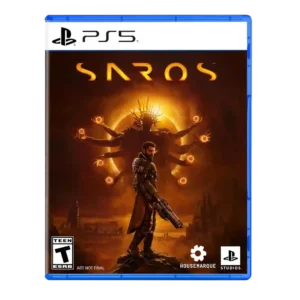
Choose Saros for platform-specific feature support and environmental detail.
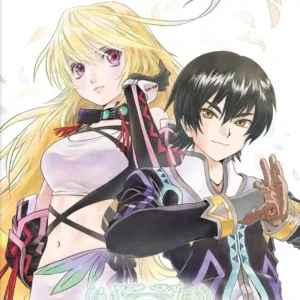
Choose Tales of Xillia Remastered for emotional impact and character roster.
Why these recommendations?
Saros
Where It Has the Edge
platform-specific feature support is 4.7 vs 1.9. Platform-specific support was praised through PS5 showcase features, Pro upscaling, DualSense use, and 3D audio.
environmental detail is 4.7 vs 2.1. Environmental detail was a frequent highlight, with reviewers praising Carcosa’s biomes, architecture, and alien spaces.
difficulty balance is 4.1 vs 2.3. Difficulty balance split reviewers: many called it tough but fair and customizable, while some felt ganks, repetition, or...
Tales of Xillia Remastered
Where It Has the Edge
emotional impact is 4.6 vs 3.0. The cast and story land emotionally for many reviewers, with heartfelt character moments, sacrifice, and relationship arcs giving...
character roster is 4.7 vs 3.6. The party is one of the most consistently praised parts of the game. Reviewers love the colorful personalities,...
writing quality is 4.5 vs 3.7. Character-focused writing is a major strength, with reviewers praising expressive interactions, themes, and emotional arcs. Even more critical...
Saros4.3 overall score
Tales of Xillia Remastered3.9 overall score
Compare features
Scores are out of 5. Missing scores mean missing review evidence, not a missing feature.
Scored on both products
Ownership and support
Platform-specific feature support
Saros
4.7
Tales of Xillia Remastered
1.9
Details and evidence for platform-specific feature support
Saros
Platform-specific support was praised through PS5 showcase features, Pro upscaling, DualSense use, and 3D audio.
Platform parity is a weak point. Switch and Switch 2 users do not receive the same frame-rate and visual experience available on PS5 and PC, and reviewers wanted a more capable native Switch 2 version.
Value is positive for many reviewers who see a strong JRPG and useful upgrades at a mid-range price. Others think the package asks too much for such a conservative remaster, and premium-edition value draws additional criticism.
Two protagonists, New Game+, and Grade Shop modifiers give the game real replay potential. The tradeoff is that several reviewers feel Jude and Milla's routes overlap too heavily to justify another full-length run.
Autosave is one of the most consistently appreciated additions, reducing the risk of lost progress and making long stretches between manual saves far less stressful.
Environmental detail is a recurring weakness: fields, caves, ports, and connecting areas are often described as bare, repetitive, or low-detail. Strong color and occasional attractive locations soften the criticism but do not erase it.
Several reviews found the game rich in sections, weapons, collectibles, and sights, though the content variety was usually discussed through exploration and spectacle.
The remaster loses some original crossover or licensed content, which contributes to the feeling that the package is less complete than it could have been.
Portable play is possible, but one detailed comparison recommends Steam Deck or ROG Ally over the Switch versions because of image quality and performance compromises.
Difficulty balance split reviewers: many called it tough but fair and customizable, while some felt ganks, repetition, or modifiers could undermine balance.
Several reviewers call out difficulty spikes around the middle of the game. The challenge can be managed, but the curve is not always as smooth as the otherwise approachable systems suggest.
The cast and story land emotionally for many reviewers, with heartfelt character moments, sacrifice, and relationship arcs giving the adventure lasting warmth despite structural weaknesses.
Upgrade systems are mixed: character and replay modifiers can be useful and flexible, but immediate Grade Shop access can undermine the intended progression and sense of earning upgrades.
The world's mood is split between cozy, colorful charm and criticism that repetitive spaces fail to captivate. Atmosphere depends heavily on how much the art style and cast carry the environment for the player.
Skits and party banter are repeatedly praised for humor, chemistry, and characterization. Repeated lines and occasional slow or awkward exchanges are the main drawbacks.
The remaster adds welcome polish and refinement, but reviewers still see visible PS3-era rough edges. The overall presentation is cleaner without feeling rebuilt from the ground up.
Enemy variety receives mixed feedback: some reviewers enjoy the range of encounters and memorable foes, while others feel the regular enemy pool becomes repetitive.
Pacing is a recurring concern, especially through the middle of the game where cutscenes, formulaic progression, or repeated structure can slow momentum. A few reviewers still find the overall story flow strong.
The party is one of the most consistently praised parts of the game. Reviewers love the colorful personalities, chemistry, distinct combat roles, and character arcs, with very few complaints about the core cast.
Exploration benefits from faster movement, marked objectives, treasure indicators, and optional detours, but repetitive fields and backtracking keep it from being a universal strength.
Loading is dramatically improved on faster platforms and often described as nearly instant. The base Switch version is the main outlier, where longer loads contribute to a slower overall feel.
Sharper resolution, stronger color, and cleaner presentation make the remaster look noticeably better, especially on PS5 and PC. Reviewers still see dated models, sparse assets, and notably softer image quality on Switch.
Character-focused writing is a major strength, with reviewers praising expressive interactions, themes, and emotional arcs. Even more critical takes usually reserve their complaints for familiar tropes or underdeveloped larger ideas rather than the cast writing.
Gameplay mechanics, especially the shield, parry, eclipse, and modifier systems, were praised, though one review felt the systems could overprotect players.
Newcomers generally get a friendly entry point through clearer systems and quality-of-life changes, though the Grade Shop appearing immediately can be confusing or overly front-loaded.
PS5 and PC are repeatedly praised for smooth, stable frame rates, often at 60 FPS or better. Switch impressions are substantially weaker, with a 30 FPS cap and dips in busier areas.
The game is widely described as enjoyable, charming, and easy to keep playing, with combat and party chemistry doing most of the work. Even more critical reviews usually still regard the core game as fun.
Animation quality is mixed. Combat can look fluid and energetic, but stiff cutscenes, older facial movement, and dated character animation repeatedly reveal the game's age.
The dual-protagonist structure and combat ideas are credited as meaningful innovations for the series, even though later reviewers debate how fully those ideas were realized.
Tutorial quality had limited but positive evidence, with reviewers noting trial-and-error teaching and encounter design that prepares players for bosses.
Combat is the clearest strength across the reviews. Linked Artes, character swapping, fast real-time attacks, and build experimentation are repeatedly described as fluid, deep, and fun, though a few reviewers find regular encounters repetitive or simpler than other Tales entries.
Grinding is highly context-dependent. Grade Shop modifiers can dramatically reduce repetitive leveling, while achievements, trophies, shop leveling, and some midgame progression can still demand busywork.
The colorful anime-inspired art direction has aged well and helps the game retain charm even when individual models, textures, and environments reveal their PS3 origins.
The shop-leveling economy is distinctive and can make gathering materials feel purposeful, but some reviewers think universal shop inventories and donation requirements overstreamline shopping or encourage unnecessary grind.
The story is generally liked for its emotional themes, political conflict, and character focus, but opinion is not unanimous. Some reviewers find it layered and gripping, while others call parts predictable, underdeveloped, or weaker than the cast.
The Lilium Orb progression system is widely praised for being flexible, rewarding, and constantly engaging. Reviewers like choosing stat, skill, and Arte growth instead of following a rigid path.
The skill-tree-style Lilium Orb offers meaningful build freedom and depth for most reviewers, although one critique finds parts of the progression less satisfying than they first appear.
Character growth is one of the strongest narrative qualities. Reviewers repeatedly praise the way Jude, Milla, Alvin, and the wider party evolve through personal struggles and relationships.
Reviewers praised Saros for broad accessibility and difficulty-tuning options, including modifiers, visual recoloring, remapping, and ways to soften or intensify challenge.
Modern convenience and accessibility additions are broadly praised, including difficulty settings, remapping, encounter toggles, subtitles, autosave, and clearer navigation. The suite is helpful rather than exhaustive, with at least one reviewer wishing for options such as colorblind modes.
Level design is one of the most consistent weak points. Reviewers repeatedly call dungeons and field areas linear, samey, or visually repetitive, even when individual locations or gimmicks work well.
Sound design is uneven. Effects and music can be crisp and immersive, but English voice compression, muffled clips, and occasional mixing problems are repeated complaints.
New objective, event, and treasure markers are broadly useful, but the map itself can become confusing in multi-level areas where icons overlap or elevation is awkward to read.
Bosses are often a combat highlight and can be memorable, but their quality is uneven; some rely on inflated health, stun-heavy behavior, or disruptive armor mechanics.
The interface is cleaner and more usable for some reviewers, while others still find portions dated or awkward, particularly settings buried too deeply in menus.
Voice performances are mostly well received, especially the ensemble cast, but audio quality creates a persistent caveat. Milla's English delivery and compressed or muffled voice recordings are singled out more than once.
Controls are generally responsive and flexible once learned, especially in combat, but a few reviewers still find the older control and camera conventions clunky.
Jude and Milla are both regarded as compelling leads, with reviewers especially responding to Milla's unusual perspective and the contrast between the two protagonists.
Performance is strong on PS5 and PC in most reviews, with smooth play and responsive combat. Switch is the clear exception, where lower image quality, frame-rate limits, and sluggishness receive criticism.
The soundtrack is one of the most dependable audiovisual strengths, with energetic battle themes, melodic town music, and orchestral pieces repeatedly singled out for praise.
Technical issues vary by platform and reviewer. Most are minor or non-game-breaking, but reported problems include subtitle behavior, audio drops, visual glitches, high-frame-rate bugs, and severe pop-in in older-source impressions.
The dual-protagonist choice sounds more consequential than it often feels. Some reviewers enjoy the different viewpoints and replay motivation, but many say Jude and Milla share too much of the same story for the choice to transform the campaign.
Linked companions are usually helpful and automate partner abilities smoothly, but one reviewer reports allies wasting resources or positioning poorly against tougher enemies.
A first run generally lands around the mid-30-hour range, which some find comfortable and others find daunting when considering a second protagonist playthrough.
Most reviewers consider this the definitive or easiest modern way to play Xillia thanks to autosave, markers, faster movement, smoother performance, and bundled extras. The central criticism is ambition: several call it barebones, conservative, or essentially an upscaled port, and the absence of Xillia 2 is repeatedly lamented.
Build customization is a standout strength. The Lilium Orb, Artes, skills, equipment, and party-link choices let players shape characters into distinct roles without making the system inaccessible.
Bundled costumes and legacy DLC are viewed as a welcome bonus, especially when included without extra cost, although some licensed items could not return.
Puzzle and dungeon interactions draw mixed reactions: some reviewers appreciate the occasional environmental tasks, while others criticize the game for lacking substantial traditional puzzles.
Side quests are commonly described as basic, repetitive, or fetch-heavy. A few have worthwhile narrative context, but their structure rarely matches the quality of the main cast and combat.