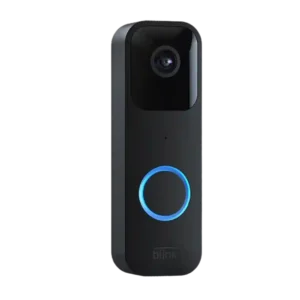
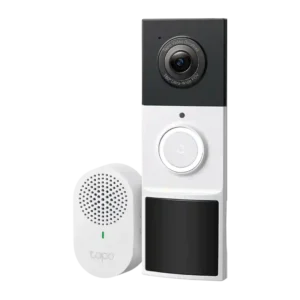
Blink Black Doorbell
Where It Has the Edge
No clear scored advantage over the other product.

Scorata scores summarize analyzed review evidence on a 1–5 scale; they are not laboratory measurements or a simple average of customer star ratings. Feature scores summarize the reviews covering that feature. The overall score averages feature scores within each review, then combines review averages. When both expert and customer evidence are available, those two groups receive equal weight. Products can have different review coverage, so small score gaps do not establish a winner.
Recommendations prioritize important features for the category, with a score of at least 3.5, a gap of at least 0.25 points and at least two supporting reviews per product. Features with widely varying scores or broad connectivity contexts are excluded from recommendations. These safeguards do not establish statistical significance.
Quick verdict
The available evidence supports the recommendation below, but does not establish an overall winner. Check the remaining features against your priorities.
There is not enough comparable review evidence to recommend Blink Black Doorbell over the other product.
Choose Tapo D210 Doorbell for lag) and Chime.
No clear scored advantage over the other product.
Scores are out of 5. Missing scores mean missing review evidence, not a missing feature.
AI features were a clear weakness because reviewers noted the absence of AI, person, human, or object classification.
AI features were rated highly where reviewers said the system worked well or stayed fully functional without a subscription.
Power flexibility was praised by a reviewer who preferred battery operation for homes without wired doorbells.
Power options were a weakness because reviewers repeatedly highlighted the D210’s battery-only design and inability to hardwire.
Object, person, and face handling was a weak point because reviewers emphasized the lack of AI distinction and inconsistent face identification.
Object and person detection received a positive score where the reviewer said the AI motion system worked well and distinguished people, animals, and vehicles.
Lag was a common limitation: reviewers found live view loading, voice delay, or intervention speed slower than ideal, even if sometimes tolerable.
Responsiveness and lag were praised, with reviewers describing quick live-view loading, fast reactions, and responsive behavior.
Chime feedback was mixed: some liked the loud built-in or phone/Echo options, while others criticized missing indoor hardware or imperfect wired chime behavior.
The bundled chime was praised as loud and valuable, adding to the package rather than feeling like a throwaway accessory.
One reviewer noted a visible fisheye effect from the wide-angle lens, making distortion a mild drawback.
Lens handling was viewed positively overall because the D210 avoids the stronger fisheye look, though one reviewer still noted edge softness on wide lenses.
Field of view drew mixed reactions because it covers people well enough but can miss packages or low doorstep areas due to limited vertical framing.
Most reviewers found the 160-degree view wide enough for porches and visitors, though one review treated it as a compromise versus broader-view models.
Recommendation sentiment was split: some reviewers highly recommended it for Blink/Alexa or budget users, while others preferred competitors.
Recommendation evidence was consistently positive, especially for buyers wanting a cheap battery doorbell without paying for unused wired features.
Theft/tamper opinions were mixed, with one review calling removal easy and another saying the mount requires the release tool.
Theft and tamper protection was viewed positively, with reviewers praising the anti-theft alarm, secure mounting, and harder-to-steal feel.
Night vision was viewed as workable, though reviewers described tradeoffs with IR intensity, washout, and close-up visibility.
Low-light performance drew strong praise across color and infrared modes, with repeated comments that night footage looked good or better than expected.
Reviewers generally found the 1080p image usable or clear for basic door monitoring, but some noted compression, shadowed faces, or only adequate detail.
Reviewers consistently praised the D210’s 2K footage as clear or impressive, with comparisons noting it stays close to higher-end Tapo models despite lower specs.
Recording was adequate but not flawless, with one reviewer noting a saved clip that cut off too early during package-theft testing.
Recording scored low where the D210 was contrasted with wired models because it lacks 24/7 recording.
Zones were seen as useful for reducing false alarms and narrowing motion areas.
Zones and activity areas were praised for narrowing notifications and reducing unwanted recording areas.
Subscription handling was a strength when paired with Sync Module/local storage because reviewers liked avoiding required ongoing fees.
Reviewers strongly agreed that the D210’s no-required-subscription model is a major advantage, with cloud storage remaining optional.
Motion detection was usually praised as responsive and reliable, with several reviewers saying it captured visitors or matched Ring's detection in their use.
Motion detection was described as impressive, useful, and reliable in practice, including one long-term user saying it captured what they needed.
Storage was praised when using Blink's local Sync Module option or existing free Blink storage.
Storage was a clear strength thanks to local microSD support, optional cloud storage, and reviewers preferring SD recording over fee-based-only systems.
Package monitoring was a weakness where discussed because reviewers noted no package detection or limited ability to see packages below the camera.
Delivery package monitoring was mixed-to-negative because the D210 can help show packages in view but lacks package detection and doorstep coverage in some setups.
Privacy zones were praised for blocking sensitive areas from both motion detection and recordings.
Privacy evidence was limited but positive where a reviewer liked the ability to automate privacy mode after arriving home.
Ownership costs were criticized by one reviewer because subscription or Sync Module/local storage additions raise the real cost for new buyers.
Ownership costs were viewed favorably because local microSD storage can reduce reliance on monthly fees.
General reliability was positive where mentioned, especially for basic budget performance and ongoing Blink-family use.
Reliability evidence was positive in testing and longer-term use, including reports of no problems after months outside.
Price and value were a major strength, with reviewers repeatedly calling it affordable, competitive, or strong for budget buyers.
Price and value were the strongest area of agreement, with reviewers repeatedly calling the D210 inexpensive, high value, or a top budget pick.
Installation was a consistent strength, described as quick, simple, easy, or a breeze.
Installation and mounting were broadly praised as easy, simple, quick, and supported by included hardware and app walkthroughs.
Wireless range received a concern from one reviewer who found Sync Module range not great in larger homes.
Wi-Fi stability evidence was limited to one long-term user, who reported the doorbell stayed connected.
The app and software were mostly seen as simple and user-friendly, but reviewers also noted bugs and limited battery status details.
The Tapo app and software were praised for fast loading, easy event review, and a strong camera-management interface.
Alexa integration was a strength, but reviewers criticized missing Google Home/HomeKit support and weaker Echo Show behavior than Ring.
Smart-home integration was viewed as useful with Amazon and Google, but the score is moderated by the lack of HomeKit, Matter, and IFTTT support.
Notification speed was praised as quick, especially for motion events, though broader response speed was still limited elsewhere.
Notifications were considered manageable when configured properly, especially because detection filtering and zones helped reduce unwanted alerts.
The physical button received positive feedback for responsiveness and clear click feedback.
Controls and indicators were viewed positively, including app-free chime controls and configurable LED color behavior.
Size and form factor were praised as compact or appropriately sized for a doorway.
Size and form factor were a weakness, with reviewers describing the D210 as big or bulky.
Design was generally liked, especially its sleek look and acceptable size, though one reviewer found materials less premium than photos suggested.
Design opinions were mixed: one user found it smart and premium, while a written review criticized the blocky, bulky look.
Audio was generally considered clear enough for two-way conversations, with one reviewer calling the speaker loud and clear.
Audio evidence was limited but positive, with one reviewer finding voice communication crisp and clear.
Battery life was described favorably in lower-traffic contexts, though reviewers repeatedly tied performance to activity and settings.
Battery life was widely treated as a strength for a battery-only doorbell, though real-world charging intervals vary by use and settings.
Automation flexibility was praised most strongly around Amazon and Tapo scenarios where video feeds and lighting automations worked well.
Sync Module integration adds useful live view and storage flexibility, but one reviewer said needing it can undermine the cheap appeal.
The kit was treated as complete and helpful because it includes the chime, mounting hardware, adhesive, and bracket options needed for installation.
Light adjustability received positive evidence because changing the LED color and spotlight brightness noticeably changes the doorbell’s appearance.
Peace-of-mind evidence was positive, with reviewers connecting the D210 to package monitoring and home awareness while away.
Personalization evidence was limited but positive, focused on the customizable chime settings.
The security ecosystem was viewed positively because reviewers described Tapo’s broader camera and doorbell ecosystem as useful and well built.
Snapshot capture was criticized as an imperfect substitute for true on-demand live view.
System completeness was praised in one review that said the D210 keeps all the essentials for effective home security.
Weather tolerance was supported by long-term use through snow and rain without reported problems.
Maintenance was lightly positive, with one reviewer saying occasional wiping was enough.
The built-in light can help color night vision, but reviewers noted tradeoffs: one found it too bright, and another said color mode increases battery drain.
Phone call integration was repeatedly praised as faster, easier, and more convenient than opening a notification and then launching an app.
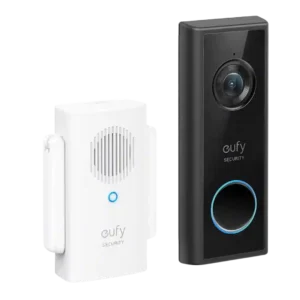
Choose the Eufy C210 if you want a no-fee, battery-friendly doorbell with local storage and good 1080p video. Skip it if you need hardwired charging, HomeKit, or consistently instant motion...
Pros: Installation and Mounting, Video resolution and detail
Cons: Power Options and Compatibility
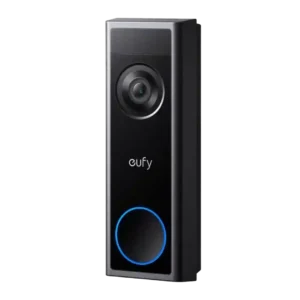
Good if you want an easy, no-fee doorbell with wired/battery power, local storage, and solid 2K coverage. Skip it if you need premium video bitrates, effortless chime coexistence, or built-in...
Pros: Installation and Mounting, App, software and firmware
Cons: Chime
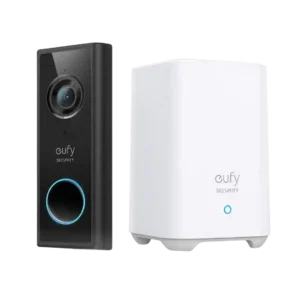
Good if you want sharp video, local storage and no required subscription. Skip it if you need 24/7 recording, flawless AI alerts, broad smart-home support or true six-month battery life.
Pros: Video resolution and detail, Recommendation for new buyers
Cons: Recording, Battery and Charging
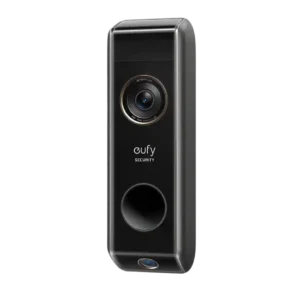
Choose the Eufy S330 if package monitoring, local storage, and no subscription matter most. Skip it if you need slim hardware, HomeKit, consistently fast live view, or stronger night vision.
Pros: Delivery package monitoring, Video resolution and detail
Cons: lag), Smart-home integration (Alexa, Google, Siri, HomeKit, Matter, Thread)