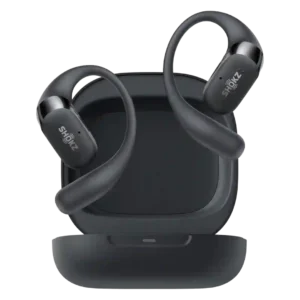
Shokz OpenFit 2
Where It Has the Edge
- Software/setup simplicity is 5.0 vs 4.6. Setup and software simplicity are praised through quick pairing, easy firmware updates, and clear app navigation.

Scorata scores summarize analyzed review evidence on a 1–5 scale; they are not laboratory measurements or a simple average of customer star ratings. Feature scores summarize the reviews covering that feature. The overall score averages feature scores within each review, then combines review averages. When both expert and customer evidence are available, those two groups receive equal weight. Products can have different review coverage, so small score gaps do not establish a winner.
Recommendations prioritize important features for the category, with a score of at least 3.5, a gap of at least 0.25 points and at least two supporting reviews per product. Features with widely varying scores or broad connectivity contexts are excluded from recommendations. These safeguards do not establish statistical significance.
Quick verdict
The review evidence points to a tradeoff: Software/setup simplicity versus Sound quality and Sensors. Choose according to which strengths matter more to you; the overall score alone does not settle that choice.
Choose Shokz OpenFit 2 for Software/setup simplicity.
Choose SoundPEATS UU2 for Sound quality and Sensors.
Scores are out of 5. Missing scores mean missing review evidence, not a missing feature.
Reviewers broadly praise the OpenFit 2 sound as much improved and strong for open-ear earbuds, though still not equivalent to sealed in-ear models.
Sound quality earns unusually strong praise for an inexpensive open-ear model, with clear mids, controlled treble and much fuller bass than reviewers expected. It still cannot match the isolation, sub-bass pressure or ultimate fidelity of a good sealed in-ear design.
Microphone noise reduction receives strong praise for cutting background noise, including wind, noisy surroundings, and loud music nearby.
Noise reduction can keep speech intelligible and suppress steady background noise well, but performance is inconsistent in wind. Some reviewers found outdoor filtering impressive, while others reported wind overwhelming the processing.
Spatial audio is a limitation for the standard OpenFit 2, with one reviewer specifically noting the absence of 3D or spatial audio.
Spatial Audio is one of the most divisive features. Movie mode can add useful width, but several reviewers preferred it off for music because it thinned the mids, reduced bass or added an artificial effect.
Bass is repeatedly described as better, richer, or surprisingly strong for open-ear earbuds, but several reviewers still note limited punch versus in-ear buds.
Bass is one of the UU2’s standout strengths, with reviewers repeatedly praising its punch and weight for an open-ear design. Deep sub-bass still trails sealed earbuds, and positioning or aggressive DynamicEQ can make the low end less consistent.
One reviewer reports no visible lip-sync delay, making video watching feel accurate.
Video and gaming latency was generally low, especially with Game Mode enabled; several reviewers found synchronization effectively unnoticeable for everyday viewing.
One technical review finds the tuning tracks closely through the midrange while keeping treble restrained, suggesting fair but limited response accuracy.
One detailed listening test found the default balance fairly flat across bass, mids and highs, with a natural overall timbre rather than exaggerated coloration.
Two reviewers note a wider or more expansive open soundstage, which fits the open-ear design’s spacious presentation.
The open fit produces a broad, airy stage with respectable separation and spatial cues. Imaging is adequate to strong, though not as precise or three-dimensional as better sealed alternatives.
Passive isolation is weak by design, and reviewers warn that noisy environments can drown out podcasts or make the buds poor for focused blocking.
Passive isolation is weak by design: outside noise remains audible and loud environments can overwhelm the music. That limitation is the flip side of the strong situational awareness many reviewers wanted from an open-ear product.
Sound leakage is improved and often limited at normal volumes, but several reviewers still warn it can be audible nearby at higher volume.
Some leakage is unavoidable at higher volume in quiet spaces, but Privacy Mode noticeably reduces what nearby people can hear. It helps rather than creating complete privacy, and it changes the tonal balance while active.
Codec support is a weak point in the evidence, with one reviewer criticizing the limitation to SBC and AAC.
SBC and AAC provide broad compatibility, while LDAC gives compatible Android devices a higher-bitrate option that reviewers considered unusually generous at this price.
Value is split: many recommend the OpenFit 2 for active users, while others call the price high or suggest waiting for a sale.
Value is close to unanimous praise: reviewers repeatedly said the UU2 competes with substantially more expensive open-ear models while delivering strong sound, comfort, battery life and features at around the $50 level.
Multipoint is consistently praised for seamless, reliable switching between devices, especially phones, laptops, watches, and work setups.
Multipoint switching between two devices was consistently described as useful and generally seamless. The main tradeoff is that LDAC must be disabled while multipoint is active.
Voice assistant integration is limited because one reviewer says Siri requires a button press rather than hands-free voice activation.
One reviewer praised being able to communicate with Siri on the fly, making voice-assistant access a useful hands-free convenience.
Call quality is consistently praised, with reviewers reporting clear voices, solid calls, and strong outdoor call usability.
Call quality is mixed rather than a core strength. Several reviewers had clear, natural indoor calls, but others reported reduced clarity, tinny tone or weak performance in noisy and windy conditions.
Bluetooth performance is viewed positively, with reviewers reporting stable connections, stronger performance in busy areas, and quick reconnection.
Most reviewers found Bluetooth 6.0 pairing, range and reconnection stable, but one test unit suffered frequent connection failures and dropouts even at very short range. Reliability therefore appears strong in most tests but not universal.
Setup and software simplicity are praised through quick pairing, easy firmware updates, and clear app navigation.
Pairing and basic setup are generally quick and uneventful, with firmware updates easy for most users. Minor friction included one app-language glitch and a few interface complaints.
Equalizer customization is a plus for reviewers who want to fine-tune sound, with praise for custom EQ options and sound/control tuning.
EQ flexibility is extensive, with custom, adaptive and DynamicEQ options giving plenty of control over the tuning. DynamicEQ often improves bass, though some listeners found it too heavy and one review disliked account-gating for certain EQ tools.
Physical button controls are one of the clearest upgrades, widely praised as easier, more precise, and better for workouts than touch-only controls.
Physical buttons are overwhelmingly preferred to touch controls because they give clear tactile feedback and avoid accidental commands while adjusting the fit. Minor complaints include small, flush buttons and one test unit with a noticeable response delay.
The app is mostly praised as helpful, clean, and customizable, though one reviewer notes it is not the most extensive.
The companion app is unusually feature-rich for the price, with EQ, button remapping, Privacy Mode, Find My and other tools. Most found it useful, though a few called setup clunky or noted minor software quirks.
Sensors are a weakness because reviewers repeatedly mention missing wear detection.
Wear detection and other smart sensors are absent, but most reviewers treated that omission as minor at this price. A few still noted automatic pause as a convenience they would have liked.
Preset EQ quality is mixed: Standard and Default work well for some, but one reviewer says other modes can distort at lower volumes.
One reviewer called the app’s large selection of EQ presets better than average, giving useful ready-made tuning choices.
Maximum-volume clarity is mixed: some reviewers praise consistent sound at high volumes, while others report distortion or muddiness when pushed.
The UU2 can play unusually loud for clip-on earbuds while remaining mostly clean and controlled. A few tests noted slight harshness, tonal change or bass distortion only near the highest levels.
Find My evidence is mixed: reviewers like earbud finding, but some criticize the inability to locate the case.
The Find My tools are useful for locating misplaced earbuds, though one reviewer found the audible locating function less helpful than expected.
Carry case impressions are mixed: some call it compact, flat, impressive, or secure, while others criticize size or lack of water resistance.
Most reviewers liked the compact, matte case, its magnets and premium-feeling finish. One reviewer encountered sticking charging pins that could leave a bud uncharged, making case reliability the main exception.
Smudge resistance is mixed: one case color got dirty quickly, while another reviewer praised the matte, fingerprint-resistant finish.
The matte, oil-resistant case finish was repeatedly praised for resisting fingerprints and staying cleaner than glossy budget cases.
One reviewer praises the case as compact enough for pockets or running pouches, supporting portability.
The compact charging case slips easily into a pocket and reviewers repeatedly found the overall package easy to carry.
Treble is mostly praised as clearer and crisper, though one lab-style review describes it as somewhat restrained rather than highly extended.
Treble is generally clear, crisp and controlled without the harsh glare common to cheap earbuds. Some reviewers found it slightly bright or short of premium-level air, with occasional harshness only at very high volume.
Midrange clarity is generally positive, with reviewers calling mids clearer, crisper, or natural, aside from occasional vocal muddiness at high volume.
The midrange is a major strength, with clear, natural vocals and good instrument texture that stays present even when the bass is energetic. Only critical listening exposed a modest loss of fine detail versus pricier in-ear models.
Water and sweat resistance are generally considered good for workouts, rain, sweat, and cleaning, though case water resistance remains a caveat elsewhere.
The IPX5 protection was consistently viewed as suitable for sweat, workouts and light rain. Reviewers still cautioned that the UU2 is not intended for swimming or full water immersion.
Stability is a major strength for most reviewers, with repeated praise for secure fit during running, workouts, and movement, despite one wobbly-ear caveat.
Most reviewers found the clip secure for walking, running and workouts, often reporting no shifting at all. One test noted slight movement during high-intensity exercise, so security can still depend on ear shape and activity.
Volume output is a major improvement: reviewers repeatedly say the buds get loud enough for outdoor use and often need less volume than before.
Output is unusually strong for an open-ear design, with most reviewers finding moderate settings already plenty loud. The extra headroom also helps outdoors where ambient noise competes with the music.
One reviewer specifically praises improved definition in guitars and acoustics, supporting stronger instrument separation.
Separation is repeatedly praised, with layered vocals, guitars and busy arrangements staying distinct instead of smearing together. A few reviewers stopped short of calling it analytical-grade imaging.
One reviewer reports no issues using the earbuds with a Google Pixel, supporting Android compatibility in practice.
Android users get the fuller feature set, including LDAC support, and reviewers reported straightforward operation on Android phones.
One reviewer successfully used the earbuds across phone, smartwatch, and sports-watch devices, supporting broad platform compatibility.
Reviewers connected the UU2 successfully across phones and computers, making it a practical cross-platform option for mixed-device use.
Weight comfort is positive; reviewers describe the buds as lightweight or well-distributed despite being heavier than tiny in-ear earbuds.
At roughly 5g per side, the earbuds are repeatedly described as barely noticeable, with several reviewers forgetting they were wearing them.
Design and aesthetics are positive overall, with praise for premium finish, stylish refinement, and glasses-friendly changes.
The design is generally viewed as clean, understated and more premium-looking than the price suggests, although one reviewer considered the basic clip form fairly generic.
Build quality is praised through premium finish and sturdy hooks, supporting a strong physical-quality impression.
The earbuds generally feel better built than their budget price suggests, with several reviewers describing them as premium or sturdy. A few noted that parts of the housing still feel plasticky.
Comfort is one of the strongest consensus areas, with many reviewers saying the buds work for long runs, workouts, glasses, and all-day wear.
Long-term comfort is the most consistent strength in the coverage. Reviewers repeatedly wore the UU2 for hours or a full workday without canal pressure, soreness or meaningful fatigue.
Charging is mostly positive because of quick-charge performance and improved case contacts, but lack of wireless charging hurts some impressions.
Quick charging is a useful strength and the case recharges over USB-C, with several reviewers praising short top-ups for emergency use. Full charging can take a while, and one test unit had unreliable case-pin contact.
Battery life is a major strength, with reviewers repeatedly calling it excellent, far improved, and sufficient for long workouts or all-day use.
Battery life is consistently praised, with real-world tests commonly landing around a full workday per charge and the case extending use substantially. LDAC and louder playback reduce runtime, but endurance remains a major strength.
ANC is absent or not competitive, and reviewers frame that as a limitation for commuting, isolation, and all-scenario use.
Firmware updating is generally straightforward, but software did not solve the persistent connection problems on one test unit. Another reviewer also encountered a minor app-language/update hiccup.
The included charging cable works, but one reviewer called the USB-A-to-USB-C choice dated for 2026.
Fit is usually secure, but sound is sensitive to placement and individual ear shape. A few millimetres of movement can change bass and volume, so some users may need a short adjustment period to find the best position.
Glasses compatibility is excellent: the slim clip sits around the outer ear instead of competing for space behind it. Reviewers also reported no meaningful interference with hats.
The package includes the basic essentials without clutter, and one reviewer particularly liked the clear, useful printed manual.
Integrated microphone impressions are positive overall, with one reviewer calling the microphone a surprise and another rating raw recordings as only standard.
LDAC is a notable value feature and several reviewers heard worthwhile gains in clarity or detail on compatible Android devices. It cannot be used at the same time as multipoint, so users must choose between fidelity and convenience.
Overall sentiment is strongly positive, driven by sound, comfort, features and price. The clearest exception is one reviewer whose persistent Bluetooth and charging-case problems prevented an unqualified recommendation.
Packaging was described as tidy and well protected, with the earbuds and essentials presented appropriately for the price.
Situational awareness is universally praised: the open design keeps traffic, conversations, doorbells and other surroundings audible while music continues. This is a central reason reviewers favored the UU2 for walking, cycling, work and exercise.
Touch controls are mixed: one reviewer found them finicky, another wanted more customization, and another reported they worked perfectly.
USB-C is a small convenience win because it avoids a proprietary cable.
The flexible clip applies little pressure and repeatedly avoided pinching or soreness, even during long sessions and with glasses.
One reviewer specifically described the charging-case hinge as solid.
Automatic left/right assignment is a small but widely praised convenience, letting either earbud go in either ear or charging slot without checking markings.
One reviewer specifically described SoundPEATS customer support and online service as very good.
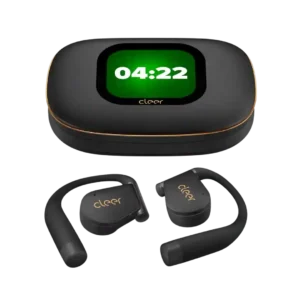
Best for all-day comfort, secure open-ear awareness, long battery life, and a genuinely useful touchscreen case. Skip it if deep bass, strong isolation, compact size, or consistently premium music quality...
Pros: Overall satisfaction, Carry case quality
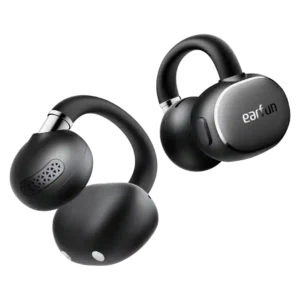
Best for lightweight all-day comfort, outstanding battery life, dependable physical controls, and premium features at a budget price. Skip it if you need deep bass, noise isolation, flawless high-volume sound,...
Pros: Overall satisfaction, Sound quality
Cons: Maximum volume clarity, Noise isolation (passive)
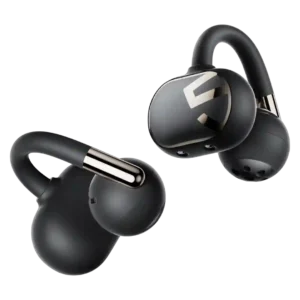
Best for featherlight all-day comfort, secure workout fit, strong open-ear sound, and unusually rich features for the price. Skip it if you need ANC, deep sub-bass, high volume in noisy...
Pros: Comfort during long use, Sound quality
Cons: Carry case quality, Touch control responsiveness
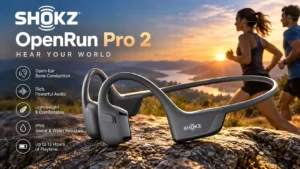
Choose these for secure, comfortable running with excellent outdoor awareness and improved bass. Skip them for noise isolation, swimming, or immersive music at a lower price.
Pros: Sound quality, Overall satisfaction
Cons: Volume output, Sound leakage