Scorata scores summarize analyzed review evidence on a 1–5 scale; they are not laboratory measurements or a simple average of customer star ratings. Feature scores summarize the reviews covering that feature. The overall score averages feature scores within each review, then combines review averages. When both expert and customer evidence are available, those two groups receive equal weight. Products can have different review coverage, so small score gaps do not establish a winner.
Recommendations prioritize important features for the category, with a score of at least 3.5, a gap of at least 0.25 points and at least two supporting reviews per product. Features with widely varying scores or broad connectivity contexts are excluded from recommendations. These safeguards do not establish statistical significance.
Quick verdict
What each product is best for
The review evidence points to a tradeoff: Battery and Multipoint connectivity reliability versus Sound quality and Sensors. Choose according to which strengths matter more to you; the overall score alone does not settle that choice.
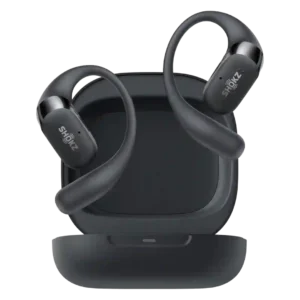
Choose Shokz OpenFit 2 for Battery and Multipoint connectivity reliability.
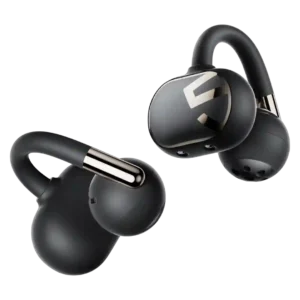
Choose SoundPEATS Clip1 for Sound quality and Sensors.
Why these recommendations?
Shokz OpenFit 2
Where It Has the Edge
Battery is 4.9 vs 4.4. Battery life is a major strength, with reviewers repeatedly calling it excellent, far improved, and sufficient for long...
Multipoint connectivity reliability is 4.9 vs 4.4. Multipoint is consistently praised for seamless, reliable switching between devices, especially phones, laptops, watches, and work setups.
Microphone quality for calls is 4.7 vs 4.2. Call quality is consistently praised, with reviewers reporting clear voices, solid calls, and strong outdoor call usability.
SoundPEATS Clip1
Where It Has the Edge
Sound quality is 4.8 vs 4.5. Reviewers overwhelmingly say the Clip1 sounds unusually good for an open-ear clip-on, with clear, lively tuning and detail...
Sensors is 4.6 vs 2.0. Wear detection and related sensors are usually reliable and convenient, automatically pausing and resuming playback. A few reviewers...
Value for money is 4.8 vs 3.8. Value is one of the strongest points of agreement. Reviewers repeatedly say the Clip1 competes with much more...
Shokz OpenFit 24.4 overall score
SoundPEATS Clip14.4 overall score
Compare features
Scores are out of 5. Missing scores mean missing review evidence, not a missing feature.
Scored on both products
Performance
Sound quality
Shokz OpenFit 2
4.5
SoundPEATS Clip1
4.8
Details and evidence for Sound quality
Shokz OpenFit 2
Reviewers broadly praise the OpenFit 2 sound as much improved and strong for open-ear earbuds, though still not equivalent to sealed in-ear models.
Reviewers overwhelmingly say the Clip1 sounds unusually good for an open-ear clip-on, with clear, lively tuning and detail that often rivals pricier models. The open design still imposes limits in noisy places and at the deepest bass frequencies.
Dolby Audio can add width, depth, and immersion, especially for movies and games. Music results are more subjective, with some reviewers loving the added space and others hearing little benefit or preferring it off.
Details and evidence for Frequency response accuracy
Shokz OpenFit 2
One technical review finds the tuning tracks closely through the midrange while keeping treble restrained, suggesting fair but limited response accuracy.
Most reviewers found video and gaming sync good, especially with Game Mode, but Android video playback was problematic in one review and another still detected residual gaming lag.
Leakage depends heavily on volume. One reviewer found colleagues could not hear a podcast at about 75%, while others heard noticeable leakage and said maximum volume was audible to people nearby.
AeroVoice and environmental noise reduction usually keep speech intelligible around traffic, wind, and steady background noise. Strong wind is the main exception reported by some reviewers.
There is no listening ANC, and reviewers who need isolation consider that a meaningful limitation. The Clip1 is better suited to situations where hearing the environment is desirable.
Passive isolation is intentionally weak because nothing seals the ear canal. That is excellent for awareness, but external noise readily competes with music in loud environments.
The Clip1 usually sounds open and spacious, with Dolby Audio adding extra width for movies and games. Some reviewers found the stage more tall than wide or relatively two-dimensional compared with pricier open-ear models.
Bass is repeatedly described as better, richer, or surprisingly strong for open-ear earbuds, but several reviewers still note limited punch versus in-ear buds.
Bass is better than many reviewers expected from an open-ear design, especially with Dynamic EQ, with punchy mid-bass and useful warmth. Deep sub-bass remains the main limitation, and several reviewers say sealed earbuds still hit much harder.
Value is one of the strongest points of agreement. Reviewers repeatedly say the Clip1 competes with much more expensive open-ear earbuds while delivering premium features around the $50-$70 range.
Multipoint usually switches smoothly between two devices and is useful for phone-and-computer workflows. A small number of reviewers saw awkward source switching, and LDAC cannot be used at the same time.
Wear detection and related sensors are usually reliable and convenient, automatically pausing and resuming playback. A few reviewers found detection hit-or-miss or encountered accidental behavior.
The earbuds themselves are tiny, but the charging case is a recurring portability complaint. Several reviewers call it bulky, chunky, or larger than rival earbud cases.
Volume is one of the more divided areas: some reviewers found it plenty loud, while others said it cannot overcome traffic or crowded environments. Buyers who listen loudly outdoors are the most likely to be dissatisfied.
Integrated microphone impressions are positive overall, with one reviewer calling the microphone a surprise and another rating raw recordings as only standard.
The case draws some of the most consistent criticism: several reviewers call it cheap, plasticky, slippery, flimsy, or awkward to open. Others like its finish, charging behavior, and easy bud placement, so opinions are mixed.
One reviewer tried scratching the glossy case with a fingernail and found it stayed shiny without visible marks, suggesting a surprisingly resilient finish.
Separation is consistently excellent for the form factor, with reviewers easily following guitars, vocals, and individual instruments. LDAC often improves the sense of space and separation further.
Touch controls are mixed. Some reviewers found them fast and reliable, while others reported oversensitivity, slow or ambiguous taps, accidental commands, or difficulty with triple-tap timing.
Treble is generally crisp, airy, and detailed without becoming harsh or fatiguing. A few reviewers found the top end slightly restrained or bright at higher volumes, but the consensus is favorable.
Details and evidence for Water/sweat resistance rating
Shokz OpenFit 2
Water and sweat resistance are generally considered good for workouts, rain, sweat, and cleaning, though case water resistance remains a caveat elsewhere.
IPX5 protection is considered well suited to workouts, sweat, light rain, and outdoor use. Reviewers consistently treat it as practical protection, while noting the earbuds should not be submerged.
Midrange clarity is generally positive, with reviewers calling mids clearer, crisper, or natural, aside from occasional vocal muddiness at high volume.
Vocals and mids are a major strength, repeatedly described as clear, natural, forward, and well defined. A few reviews note slight recession or occasional muffling when positioning is off.
The in-app find function is useful when it works as expected, but reviewers disagree on its execution. One wanted the feature entirely, while others praised sound or map-based locating and one found the stop behavior awkward.
One reviewer reported stable, consistent operation for Apple users while other reviews used Android, laptops, and tablets successfully, supporting broad everyday compatibility.
Stability is a major strength for most reviewers, with repeated praise for secure fit during running, workouts, and movement, despite one wobbly-ear caveat.
The secure fit is another major strength: reviewers ran, jumped, exercised, and shook their heads without the buds falling off. Positioning can be fussier for some ear shapes, but once set they usually stay put.
The tap-based control scheme works for basic playback, but volume adjustment is a recurring usability complaint. Reviewers often wanted simpler volume gestures or the tactile certainty of physical buttons.
The PeatsAudio app is powerful but inconsistent across reviewers. Some praise its clean layout and reliable customization, while others call it basic, unpolished, registration-heavy, or buggy.
Siri support is a notable omission for Apple users who rely on hands-free message reading or voice commands. Reviewers otherwise viewed the limitation as understandable at the price.
Call quality is generally above average for an open-ear design, with many reviewers reporting clear voices indoors and usable outdoor calls. Performance can dip in strong wind or noisy situations, and one reviewer found the mic weak.
Pairing is typically fast and stable, with good everyday range and quick reconnection. A few stutters appear in congested wireless areas or through floors and body obstruction.
EQ flexibility is a major strength, with presets, manual multi-band adjustment, Adaptive EQ, and Dynamic EQ giving users meaningful control. Dynamic EQ in particular often improves bass and overall balance.
Fast charging is universally well received: about ten minutes in the case yields roughly two hours of playback. Full charging times are also considered reasonable.
Battery life is broadly strong, usually around eight hours on standard codecs with roughly 40 hours including the case. LDAC can cut single-charge endurance sharply, and a few reviewers measured closer to five or six hours in mixed use.
At about 5g per bud, the Clip1 feels exceptionally light. Reviewers frequently describe it as barely noticeable or effectively disappearing during long use.
The earbuds are widely praised as refined, modern, low-profile, and more jewelry-like than many budget clip-ons. The case styling is less universally admired.
Comfort is the Clip1's clearest strength: reviewers repeatedly forgot they were wearing the 5g clips and used them for hours without ear-canal pressure. A minority with smaller ears or tighter fit experienced fatigue after longer sessions.
The earbuds generally feel sturdy and durable despite their low weight, with the flexible N-Flex arch inspiring confidence. The charging case often feels less premium than the buds themselves.
Fit is excellent for many ears, but a few reviewers found positioning sensitive or the loop a little large for smaller ears. Getting the speaker angle right can materially affect bass and clarity.
The clip design works especially well with glasses, masks, helmets, and even hearing aids in the reported use cases. Reviewers consistently found it avoids the pressure conflicts common with over-ear hooks.
The package is basic and typical for clip-ons, with little beyond the case, cable, documentation, and occasional stickers. One reviewer judged the contents about average rather than generous.
LDAC is widely praised for adding detail, clarity, and separation at an unusually low price. Its tradeoffs are substantial: shorter battery life and incompatibility with features such as multipoint or Dynamic EQ on some settings.
Overall sentiment is exceptionally positive, with many reviewers adopting the Clip1 for daily use or calling it one of the best open-ear values they have tried. Complaints center on the case, controls, isolation, and fit quirks rather than the core experience.
Situational awareness is a defining success: reviewers can hear traffic, coworkers, family, and outdoor surroundings while listening. That makes the Clip1 excellent for running and office use, but less suitable when isolation is the goal.
The open-ear fit acts like a natural transparency mode, letting outside sound through without electronic processing. Reviewers who prioritize awareness strongly value this behavior.
The clip is generally gentle and secure without painful pinching. A few reviewers noticed tighter pressure than on softer competitors, so ear shape can affect long-session comfort.
AutoSense is a standout convenience feature: either bud can go in either ear and the channels usually correct themselves automatically. Most reviewers love the friction it removes, though one review found occasional channel/control mix-ups.
Software stability is the weakest technical area in a handful of reviews, with wireless hiccups, an early mono/channel issue, Dolby crashes, and occasional dropouts. Other reviewers had stable connections, suggesting firmware version and environment matter.