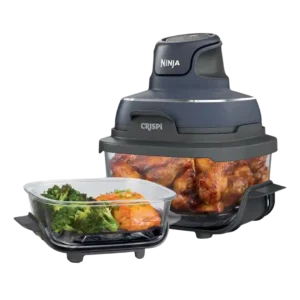
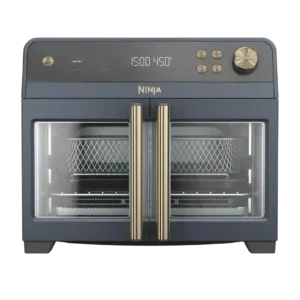
Ninja Crispi Air Fryer
Where It Has the Edge
- materials quality is 5.0 vs 4.7. Materials quality was praised for glass containers, sturdy construction, and reduced concern about plastic or coatings touching food.

Scorata scores summarize analyzed review evidence on a 1–5 scale; they are not laboratory measurements or a simple average of customer star ratings. Feature scores summarize the reviews covering that feature. The overall score averages feature scores within each review, then combines review averages. When both expert and customer evidence are available, those two groups receive equal weight. Products can have different review coverage, so small score gaps do not establish a winner.
Recommendations prioritize important features for the category, with a score of at least 3.5, a gap of at least 0.25 points and at least two supporting reviews per product. Features with widely varying scores or broad connectivity contexts are excluded from recommendations. These safeguards do not establish statistical significance.
Quick verdict
The review evidence points to a tradeoff: materials quality versus customization options and timer function. Choose according to which strengths matter more to you; the overall score alone does not settle that choice.
Choose Ninja Crispi Air Fryer for materials quality.
Choose Ninja French Door FO101 for customization options and timer function.
Scores are out of 5. Missing scores mean missing review evidence, not a missing feature.
Reliability evidence was dominated by one serious negative review where the unit errored and replacement parts again deteriorated from heat.
Most owners report dependable daily operation across air frying, baking, reheating, and toasting. Many reviews are still based on short ownership periods, so long-term reliability remains less certain.
Value depends on use case: reviewers found it worthwhile for compact meal prep and frequent air frying, but pricey versus larger or cheaper air fryers.
Most owners consider it worth the price because it replaces several appliances and gets used frequently. Reviewers who focus on upfront cost note that separate toaster ovens and air fryers can be cheaper.
Ease of use is strong for simple cooking and beginners, although users coming from drawer-style models often found it more hands-on.
The appliance is generally straightforward, with linked doors and intuitive controls that family members quickly learn. Rack placement, accessory stacking, and unfamiliar toast settings create a modest learning curve.
Dishwasher-safe bowls, crisper plates, lids, and adapters were widely praised and generally cleaned well, though the PowerPod itself remains hand-wipe only.
Dishwasher guidance is a recurring frustration: the owner’s guide says several accessories require hand washing even when listings imply otherwise. Some owners still use a dishwasher successfully, but the official restrictions reduce convenience.
Preset variety is limited to a small set of modes; this simplicity helps some users but frustrates those wanting more control.
The ten-mode selection is a clear advantage for users replacing an air fryer, toaster, and small oven. The breadth of settings supports both everyday reheating and more specialized tasks such as dehydrating.
Included accessories such as lids, crisper plates, adapter, guide, and containers were seen as useful, especially for storage and meal prep.
The racks, basket, and pans are usually described as sturdy and useful. Shoppers who bake often may need third-party pans, and several reviewers wanted better first-party accessories or a more useful recipe book.
Timer and timing evidence was mixed, with useful minute controls but complaints about confusing display behavior and unreliable recipe-book timings.
The timer is easy to set and pauses automatically when the doors open, which helps preserve cook timing. Some users still wanted better item-specific timing guidance.
Temperature range drew criticism because reviewers wanted lower or manually adjustable temperatures even though the high-heat modes crisp well.
One owner reported that higher settings were practically unusable because food burned above roughly 310–320°F. That experience conflicts sharply with the advertised high-temperature capability.
Grease and liquid collection is manageable in the glass bowl, but reviewers noted grease around the pod and water pooling near the back.
The sheet pan and crumb tray can catch drips effectively, but the shallow pan may fill with liquid. Grease can also reach hot elements, creating smoke and a difficult cleanup.
Capacity works best for one or two people and some small family components, but several reviewers found it too limited for full family meals or larger baking batches.
The deep basket handles family-sized fries, complete meals for two, and reasonably large proteins. It is generous for a countertop oven, though it cannot match a full-size oven for oversized meals.
Safety features are a tradeoff: auto-pause, feet, and reduced burn risk help, but exposed hot parts and melted components created real concerns.
Automatic pausing when the doors open and cool handles are useful safeguards. Hot exterior zones and powerful airflow around loose parchment or foil still require close attention.
Even cooking was strong in some tests but inconsistent in others, especially when food needed shaking, flipping, or better circulation.
Cyclonic airflow usually cooks toast, chicken, fries, and pizza evenly with little rotating. A few owners found the rear hotter or needed to shake piled food and separate mixed ingredients.
Browning can be excellent on fries, vegetables, toasties, and chicken, but some tests showed pale results, over-browning, or burning when heat was hard to manage.
Toast, pizza, and baked foods usually brown evenly, including across multiple slices. Some tests found darker edges, a hotter rear area, or pale and blackened spots in the same batch.
The Crispi often cooked faster than ovens and produced quick meals, though some foods took longer than expected or needed time adjustments.
The rapid preheat and compact cavity make meals noticeably faster than a full-size oven. That speed can be unforgiving, so packaged directions and familiar recipes often need shorter times or lower heat.
Preset usefulness was mixed: Recrisp and Max Crisp often impressed, but preset heat sometimes caused uneven results or required close monitoring.
Pizza, reheat, air roast, bake, and toast modes can produce excellent results. Toast settings often need to be lowered, and a minority found the non-air-fry functions less dependable.
Crisping ability drew strong praise for fries, wings, pizza, leftovers, and vegetables, with caveats around top-down heat and occasional unevenness.
Fries, wings, tofu, toast, and potatoes often develop excellent crispness with little intervention. Vegetables and low-oil foods can be softer than expected, but crisping is strong overall.
Exterior heat management is mixed: feet and handles help, but reviewers repeatedly warned that the pod, adapter, vents, glass, or nearby counter areas can get very hot.
The top and handles often stay comfortably cool, but the sides, front metal, glass, and rear exhaust can become hot. It needs clearance and careful placement despite generally good insulation.
Nonstick-coating evidence was cautionary: the glass bowls reduce coating concerns, but the crisper plates still raised buyer-beware concerns for some reviewers.
Opinions are cautious: one owner planned to replace the included nonstick sheet with stainless steel, while another reported rapid scratching and coating loss. Coating durability is not a clear strength.
Food texture was one of the strongest areas, with juicy chicken, crisp exteriors, tender interiors, and good reheated leftovers, though some foods dried out or overcooked.
Reviewers frequently achieved crisp exteriors with juicy, tender, fluffy, or flaky centers. Overdone toast and dried vegetables show that timing and food type still matter.
Versatility is a major strength: reviewers used it for air frying, recrisping leftovers, baking-style tasks, meal prep, storage, serving, and multi-component small meals.
Ten modes let it air fry, roast, bake, toast, reheat, broil, dehydrate, and cook pizza, replacing several countertop appliances. Its single-rack layout is less suitable for elaborate or simultaneous multi-dish meals.
Customization is one of the weaker areas because reviewers repeatedly noted limited control and no manual temperature selection.
Time, temperature, toast shade, and slice count are easy to adjust, including during cooking. Reviewers appreciated being able to personalize settings without navigating complex menus.
Controls are simple and intuitive for basic use, but several reviewers disliked how limited they feel without direct temperature control.
The button-and-dial interface is generally simple, uncluttered, and intuitive after a brief adjustment. A few users struggled with shutting it off or disliked the cheap feel of the plastic controls.
Durability evidence was limited but important: one reviewer had silicone bumpers and adapter material fail from heat, while others found parts survived dishwashing.
Early ownership is mostly positive, including one report of six complaint-free months. Door alignment, coating wear, and broader longevity concerns keep confidence from being uniformly strong.
Reviewers liked the modular glass-bowl concept, lids, and container switching, but some complained about uneven crisper plates, fixed bases, and crevices that complicate cleaning.
The basket itself is roomy, but the support system is awkward because most accessories must stack on the single sliding rack. This limits true two-level cooking and can make hot trays harder to remove.
Build impressions were mostly strong, with reviewers describing the unit as solid and high quality, while durability concerns came from separate reports of component failures.
Most owners describe sturdy metal construction, substantial racks, and a well-made cabinet. Complaints focus on flimsy or misaligned doors, cheap-feeling controls, and an easily damaged sheet-pan coating.
Handles and the pod shape were generally considered helpful for lifting and transport, though users still warned that hot parts require caution.
The synchronized French doors are widely praised because either handle opens both doors with one hand. Handles generally remain cool, making loading and checking food more comfortable.
Reviewers consistently liked the compact, stackable storage footprint, while portability was tempered by the heavy PowerPod.
It offers substantial capacity in a footprint many users can keep under cabinets or on a small counter. Others found it bulky, and the outward-swinging doors require extra clear space on both sides.
Materials quality was praised for glass containers, sturdy construction, and reduced concern about plastic or coatings touching food.
PFAS-free cooking surfaces, stainless-steel styling, and mostly metal construction appeal to shoppers avoiding plastic-heavy appliances. The material claims are positive overall, though some are manufacturer-provided rather than independently verified.
Visibility through the glass was consistently praised as a useful way to monitor doneness without opening the unit.
The glass French doors and interior light make progress easy to monitor without opening the oven. Automatic or button-activated lighting near the end of a cycle is especially useful.
Noise was usually viewed positively, with many reviewers calling it quiet or reasonable, though one noted the small unit was still slightly loud.
Most reviewers found the fan quiet to moderate, often comparable to a standard basket air fryer. A few units were called loud, including one comparison to a small jet plane.
Cleaning is easier than many air fryers thanks to glass and dishwasher-safe parts, but fixed handles, gaps, and the greasy PowerPod grate created recurring caveats.
Most users find the crumb tray, wipeable interior, and removable parts easy to maintain. Greasy foods, the wire basket, exposed heating areas, and hand-wash requirements can make cleanup much messier.
Reviewers generally found the Crispi effective as an air fryer, with strong results on wings, salmon, fries, and frozen foods, though one reliability-focused review was more guarded after defects.
Air frying is a major strength, producing crisp fries, wings, tofu, and reheated foods with little oil. A small minority reported overly aggressive heat or poor results in specific high-temperature uses.
The illuminated display and high-contrast text are easy to read for most users. One owner found several button labels too faint and added larger labels for easier viewing.
Temperature behavior is mixed: some owners call the heat spot-on, while others routinely lower recipe settings or measured overshoot. One severe complaint described burning above moderate temperatures in air-fry mode.
Most broad impressions are highly enthusiastic, with frequent daily use and strong recommendations. One comparison-focused owner still preferred a competing French-door model despite acknowledging this oven’s power and versatility.
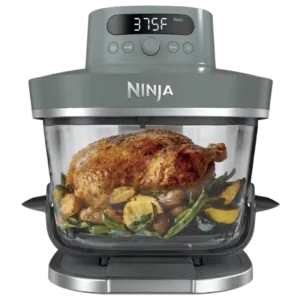
Choose it if you want fast, crisp results, glass cooking vessels, strong visibility, and easy cleanup. Skip it if price, usable surface area, bowl-loading fuss, or reported sensor/reliability failures outweigh...
Pros: overall satisfaction, ease of cleaning
Cons: included accessories, reliability