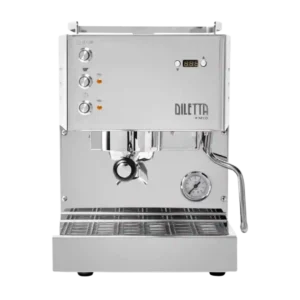
Diletta Mio Espresso Machine
Where It Has the Edge
No clear scored advantage over the other product.

Scorata scores summarize analyzed review evidence on a 1–5 scale; they are not laboratory measurements or a simple average of customer star ratings. Feature scores summarize the reviews covering that feature. The overall score averages feature scores within each review, then combines review averages. When both expert and customer evidence are available, those two groups receive equal weight. Products can have different review coverage, so small score gaps do not establish a winner.
Recommendations prioritize important features for the category, with a score of at least 3.5, a gap of at least 0.25 points and at least two supporting reviews per product. Features with widely varying scores or broad connectivity contexts are excluded from recommendations. These safeguards do not establish statistical significance.
Quick verdict
The available evidence supports the recommendation below, but does not establish an overall winner. Check the remaining features against your priorities.
There is not enough comparable review evidence to recommend Diletta Mio Espresso Machine over the other product.
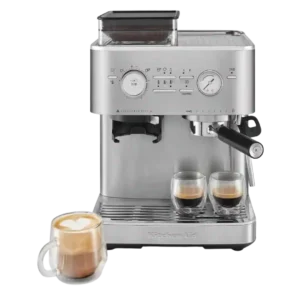
Choose KitchenAid Semi-Automatic Espresso Machine, KES6551 for Capacity and Milk, steam and frothing.
No clear scored advantage over the other product.
Scores are out of 5. Missing scores mean missing review evidence, not a missing feature.
Recognition was negative in one review because the reviewer referenced online reports of machines arriving damaged or not working.
QuietMark certification is backed up by notably restrained real-world grinder noise. The machine performs like a genuinely quiet certified appliance rather than relying on the badge alone.
Portability and travel-friendliness scored poorly because one reviewer outside the U.S. found the required transformer setup painful and impractical.
Rear wheels and a relatively narrow body make the machine easier to pull forward for filling or cleaning. Its substantial weight still limits true portability and can make repositioning cumbersome.
Pressure control was praised through the forgiving pressure behavior, accessible OPV, and useful gauge feedback.
Working units reach the ideal pressure zone and can maintain strong extraction. Other tests found vague regulation, inconsistent consecutive performance, defective gauges, or pumps that weakened after only a few weeks.
Energy-saving controls were received positively, with reviewers liking the separate steam-circuit switch and eco-mode behavior.
Timed dosing, pressure guidance, cleaning alerts, and status lights provide useful assistance without removing the hands-on work. Some testers found the automation basic, while a few owners experienced stuck purge or descaling behavior.
Capacity drew mixed reactions: one reviewer found the 2-liter tank small for back-to-back drinks, while another considered it large for the machine’s size.
The roughly 2.5-liter water tank is a standout convenience and supports frequent drinks without constant refilling. The removable hopper also makes it easier to switch beans, though rear tank access can be awkward under low cabinets.
The boiler-plus-thermoblock approach was a major strength because it reduced switching delays and enabled brew-and-steam convenience.
The single-boiler design requires espresso to finish before steaming begins. The transition only takes a short reheating pause, but it cannot brew and steam simultaneously.
Cup and tray handling was one of the most mixed areas, with praise for easy tray removal but repeated complaints about poor cup clearance and fiddly tray fit.
Removable components make filling and washing straightforward, and the top tray genuinely warms cups. The small drip tray on one test unit needed frequent emptying.
The hot-water dispenser score is based on one reviewer explicitly pointing out that the machine does not dispense hot water.
The dedicated spout is convenient for Americanos and occasional tea. Some machines delivered water that cooled too quickly or stopped at a small volume, making it unsuitable for properly hot black tea.
The water and maintenance story is mixed: side access and cleaning simplicity were praised, while the smaller tank created refill hassle for multiple drinks.
The removable hopper, accessible burrs, cleaning alerts, and mostly automatic descaling make routine care manageable. Persistent water leaks, overflowing drip trays, and messy grinding can turn maintenance into a daily burden.
Overall user experience was positive, with reviewers calling the machine enjoyable, balanced, and great despite recurring ergonomic caveats.
Satisfied owners describe an attractive, enjoyable machine that becomes easy to use after a short learning period. Dissatisfied buyers faced confusing setup, erratic controls, leaks, jams, or repeated replacements, creating a sharply divided ownership picture.
Reviewers split on accessories: the included wooden-handled tamp drew praise, but one review warned that buyers may still need a precise scale, grinder, and other tools.
The box is unusually complete, with a substantial tamper, multiple baskets, pitcher, filter, and cleaning tools. A few buyers found the pitcher undersized or cheap-feeling, and some wished a dosing funnel were included.
The grinder system is a drawback for convenience-focused buyers because one reviewer noted the appeal of a built-in grinder is missing.
The grinder is remarkably quiet, its removable hopper is convenient, and many units dispense fluffy grounds with little static. The biggest weakness is inconsistent calibration and timed dosing, with reports of overfilling, coarse limits, jamming, and severe mess.
Heating and steam power were adequate but not exceptional, with reviewers describing steaming as suitable but not especially powerful.
The thermocoil or thermoblock normally heats quickly and switches modes responsively. A small number of owners reported overheating during grinding or heat that became too weak to brew properly.
Milk steaming can produce good texture and works well for many drinks, but reviewers repeatedly noted slower or lower-pressure steam than stronger boiler-fed systems.
Milk performance is a major strength, with several testers producing velvety microfoam, latte art, and good results with dairy or oat milk. Wand placement, limited mobility, or modest power can require practice.
Used-puck disposal was a weakness in one review because puck knockouts came out wetter than expected.
Spent pucks are often dry, but they can cling stubbornly to the basket. Some users needed a spoon or knife, and one tester worried the loosely retained basket would fall into the trash.
Speed was a strength across reviews, with fast heat-up, quick recovery, back-to-back drinks, and minimal waiting repeatedly praised.
Cold-start readiness is typically around 20 to 50 seconds, and several testers made back-to-back drinks with minimal waiting. Milk steaming can take longer on the single-heater system, but mode changes are generally quick.
Espresso quality was consistently praised, with reviewers describing rich, flavorful, delicious, and consistent results.
At its best, the machine produces rich, full-bodied espresso with thick crema and balanced flavor. Poorly calibrated or failing units can instead deliver weak, cool shots or prove impossible to dial in.
The 58mm portafilter setup was praised because it matches a commercial standard and makes accessories easier to source.
Single- and double-wall baskets support both forgiving beginner preparation and more advanced extraction. Basket identification, water-filter assembly, missing or damaged parts, and limited grinder fineness caused frustration for some users.
Most reviewers found brewing stable, forgiving, and consistent, especially with PID control, though one reviewer noted needing more adjustment than on higher-end machines.
Once properly dialed in, the machine can repeat strong extractions and handle consecutive drinks with little waiting. Results are less dependable when grinder calibration, pressure, heat, or bean changes interfere.
The only opinionated marketing-claim issue was cup clearance, where one reviewer said the listed three inches was closer to two and three quarters.
The “smart dosing” label drew repeated skepticism because output often needed manual correction and sometimes varied unpredictably. Anti-static claims were convincing on working units, but a few owners reported the system failing and spraying grounds.
Build quality was generally praised for metal construction and durability, with only smaller concerns such as wobbling controls or rougher lower-touch parts.
The heavy metal body and substantial hardware feel built for long service, and one heavily used machine was still performing well after about eighteen months. That confidence is undercut by recurring reports of leaks, failed buttons, weak pumps, and grinder breakdowns.
Reviewers liked the looks and, in one case, the compact footprint, but other evidence criticized the machine as not compact enough or limited by cup clearance.
The color choices, premium finishes, and streamlined profile earn widespread praise, with several owners fitting it under low cabinets or on crowded counters. Its heavy build and rear tank can still make placement and movement awkward.
Design flaws centered on the missing pre-infusion, rough drip-tray execution, and tray pieces that did not seat as cleanly as expected.
Small design irritations include plastic portafilter spouts, a grinder dial that must sit exactly on a dot, awkward wand placement, no built-in shot timer, and mess without an added dosing funnel.
Value was generally positive: reviewers called it fairly priced or a strong bang-for-buck option, while still acknowledging its premium cost.
The integrated grinder, strong espresso, capable wand, and premium hardware can justify the price, especially when discounted. Value falls sharply for buyers who encounter leaks, calibration problems, or early component failures, and several rivals offer more guidance or control.
Warranty and support evidence was limited but positive, based on Seattle Coffee Gear’s two-year warranty being described as good.
Two- or three-year warranty coverage and a ten-year repair or parts promise provide meaningful reassurance in some regions. Actual support experiences were uneven, with multiple customers reporting representatives who lacked product knowledge or repeated ineffective troubleshooting.
Setup appears manageable, but one reviewer still recommended reading the user guide before starting.
Setup ranges from quick and intuitive to needlessly confusing. Priming instructions, basket identification, and grind-and-dose calibration are the main hurdles, and several users needed multiple attempts before producing a satisfying shot.
Packaging was secure and thoughtfully protected in positive unboxings. Other buyers received a missing water filter, a broken basket, or a machine with an inoperable pressure gauge.
The flat-bottomed 58mm portafilter is one of the most consistently praised features. It rests securely on a counter or scale, making firm, even tamping far easier than with rounded or protruding-spout designs.
A silicone wand handle and immediate steam shutoff make hot parts easier to manage. Temperature settings can feel broad or too hot, and one thermal-camera test found a hot spot near the bean hopper.
A hidden tray behind the drip tray provides a tidy home for extra baskets and small tools. It is a thoughtful way to reduce countertop clutter.
Users can tune grind, dose, shot volume, temperature, and milk texture while making espresso, Americanos, lattes, and cappuccinos. Controls are flexible but lack saved profiles and offer only three temperature levels.
Exceptionally quiet grinding is the clearest point of agreement. Multiple testers called it the quietest integrated or semi-automatic grinder they had used, making it especially suitable for early mornings and shared homes.
The metal exterior and heavyweight hardware support a premium impression. Plastic nozzles and internal portafilter pieces are a recurring disappointment, especially at this price.
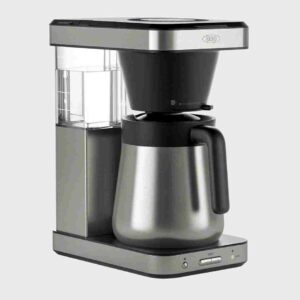
Choose the OXO Brew 8-Cup if you want fast, consistent drip coffee in small or full batches. Skip it if you need programming, app controls, a larger pot, or the...
Pros: Brewing performance and consistency, Overall user experience
Cons: Design flaws
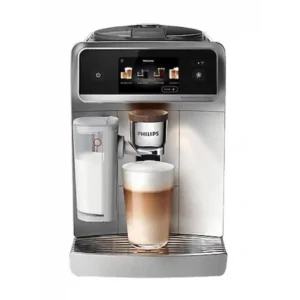
Best for effortless, highly personalized hot and cold coffee in a busy multi-drinker home. Skip it if counter space is tight, you demand silky adjustable microfoam, or the premium price...
Pros: Automation and sensors, Overall user experience
Cons: Design flaws, Mess-free used-puck disposal
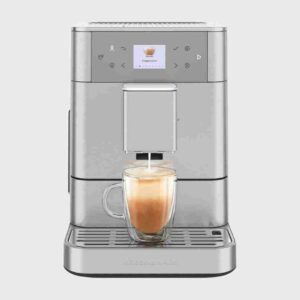
Choose the KitchenAid KF6 for rich espresso, quiet operation, easy cleaning, and strong value in a super-automatic. Skip it if dense cappuccino foam, plant-milk presets, touchscreen controls, or an included...
Pros: Water system, maintenance and descaling, Overall user experience
Cons: Accessories, Design flaws
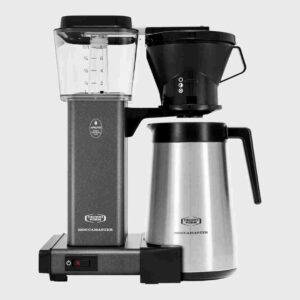
Choose the Moccamaster KBT for fast, excellent drip coffee, durable build, and a thermal carafe that keeps coffee hot. Skip it if you need programmability, a compact footprint, or a...
Pros: Brewing performance and consistency, Espresso and beverage quality
Cons: Automation and sensors, Design flaws