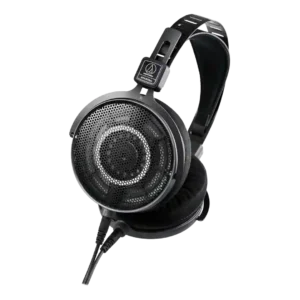
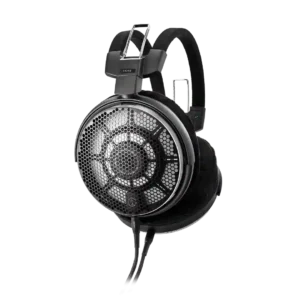
Audio-Technica ATH-R70XA Headphones
Where It Has the Edge
No clear scored advantage over the other product.

Scorata scores summarize analyzed review evidence on a 1–5 scale; they are not laboratory measurements or a simple average of customer star ratings. Feature scores summarize the reviews covering that feature. The overall score averages feature scores within each review, then combines review averages. When both expert and customer evidence are available, those two groups receive equal weight. Products can have different review coverage, so small score gaps do not establish a winner.
Recommendations prioritize important features for the category, with a score of at least 3.5, a gap of at least 0.25 points and at least two supporting reviews per product. Features with widely varying scores or broad connectivity contexts are excluded from recommendations. These safeguards do not establish statistical significance.
Quick verdict
The available evidence supports the recommendation below, but does not establish an overall winner. Check the remaining features against your priorities.
There is not enough comparable review evidence to recommend Audio-Technica ATH-R70XA Headphones over the other product.
Choose Audio-Technica ATH-ADX7000 for Volume output and Build quality.
No clear scored advantage over the other product.
Scores are out of 5. Missing scores mean missing review evidence, not a missing feature.
Reviewers broadly praise the ATH-R70xa for natural, detailed, clean open-back sound, with only one dissenting review calling it merely fine and not personally compelling.
Most reviewers find the overall sound engaging, natural, and technically accomplished, especially for bass-heavy music and immersive listening. A smaller group considers it colored, congested, or insufficiently refined against cheaper competitors.
Sound leakage is a consistent downside because the open-back design lets others hear the music.
As expected from a fully open-back design, sound leaks into the surrounding room.
Bass is the most divided sound attribute: some reviewers hear tight, extended, accurate lows, while others want more punch, richness, or sub-bass headroom.
Bass is the headline strength: unusually weighty, punchy, textured, and controlled for an open-back design. Sub-bass extension and pad behavior vary, and one critical review found the Alcantara bass loose and woolly.
Immersive audio impressions are positive, with reviewers describing an entrancing and surrounding presentation.
With the right music and amplifier, the presentation can feel enveloping, holographic, and emotionally absorbing. This immersive quality is closely tied to the headphone’s openness and bass weight.
Passive isolation is limited by the open-back design, making the headphones unsuitable for recording or noisy environments despite one reviewer finding outside sounds not too distracting.
The fully open design offers little isolation and works best in a quiet room.
Frequency response is mostly praised as neutral, flat, even, and suitable for critical listening, though one reviewer heard a warm-but-lean tonal balance.
The dominant impression is a balanced, natural, warm-neutral tuning that avoids the older Audio-Technica harshness. Pad choice, anatomy, and amplifier pairing can still shift the balance considerably.
Soundstage width is a consistent highlight, with reviewers describing the presentation as wide, spacious, airy, large, and open.
The stage is consistently described as open, spacious, and often holographic, with strong depth and lateral definition. Some listeners find it more intimate than expansive or slightly behind the very widest competitors.
Headband adjustability is inconsistent, with serious complaints about fit and the strap design alongside one reviewer who found adjustment easy.
The bendable, notched headband offers unusually direct control over fit and clamp. Reviewers note that these adjustments can also change the tonal balance.
Stability depends on fit: one reviewer with a smaller head had slippage, while another found the light clamp still secure.
The lightweight frame can remain secure even during exaggerated head movement, according to the one review that directly tested stability.
Volume output is a practical weakness because several reviewers note the 470-ohm load needs a capable amplifier and can be too quiet from weaker sources.
Volume can be adequate from modest dongles and low-power DAC/amps, though reaching volume is not the same as getting the fullest tonal and dynamic performance.
Carry case feedback is mixed: one reviewer liked the soft carry case, while another wanted a harder protective case.
The rigid metal or hard-shell case is repeatedly praised as protective, purposeful, and worthy of a flagship unboxing.
The detachable cable system is convenient for some because it locks, removes, and routes either way, but others dislike the proprietary or over-complicated design.
The detachable A2DC connection is secure and easy to use for some, but proprietary compatibility limits affordable replacement and cable-rolling choices.
One reviewer found resolution and clarity weaker at low levels, saying the headphone opens up more when played louder.
At extremely high test levels, one reviewer measured and heard more harmonic distortion than desired.
Headband padding feedback is split between one complaint that the pad collapses into the metal and one praise for comfort.
Headband comfort is the most divisive physical issue. Some find the thin dual-rod structure surprisingly comfortable, while others report fast hotspots and insufficient padding.
Cable quality is mixed: reviewers like the useful length and dual cable in some contexts, but others criticize the split design, length, memory, and ergonomics.
Cable feedback is sharply mixed. Several reviewers call the stock leads stiff, unwieldy, or highly microphonic, while one praises their quality and others mainly value the included balanced and single-ended options.
Connectivity is limited to wired use; one review frames that as a drawback versus wireless options, while another appreciates having no wireless complexity.
Desktop connectivity is well covered by 6.3mm and balanced XLR cables, but the proprietary cup connector narrows aftermarket choices. The headphone is built around wired hi-fi systems rather than broad device compatibility.
Travel friendliness is poor because reviewers repeatedly say the open-back design is bad for commuting, public listening, and shared spaces.
This is a desk-bound open-back headphone that expects a serious amplifier and leaks sound, making it a poor travel companion despite the protective case.
Instrument separation and imaging are repeatedly praised, especially for stereo placement, mix decisions, and hearing individual elements clearly.
Complex arrangements are usually easy to follow, with instruments staying distinct and layered across the stereo field. This separation remains strong even when the bass is elevated.
One review positively notes the included long lead as a useful standard accessory.
The hard case, two cables, two pad sets, and cable pouch create a generous flagship package. Cable quality is the main element that keeps the bundle from feeling universally luxurious.
Premium feel is mixed: some reviewers praise the finish and feel, while another says the simple build lacks premium materials.
The case and presentation often feel flagship-grade, but the headphone itself does not always communicate luxury through heft or ornamentation. This understated approach appeals to function-first listeners and disappoints those expecting visual drama.
The ear pads are generally described as soft, comfortable, breathable, and well padded, with one caveat that they can feel slightly shallow.
Both velvet and Alcantara pads are soft and useful, with meaningful changes to bass, treble, openness, and intimacy. Circular openings and shallow depth can cause ear contact for some listeners.
Midrange clarity is usually a strength, with vocals and mids described as clear, present, and revealing, though one reviewer found the mids shouty and honky.
Midrange is usually clear, natural, and musically engaging, with vocals often well placed and tangible. A few reviewers hear recession, bloom, or less realistic tone than the strongest competitors.
Overall recommendations are mostly positive for critical listening, mixing, and mastering, but fit, bass needs, build expectations, and use case shape the verdict.
Recommendations are strong for listeners seeking warm-neutral open-back sound, exceptional bass, and a spacious presentation. More critical reviewers advise auditioning first because comfort, treble, and value are unusually personal.
Aesthetics are generally praised as stylish, sleek, discreet, professional, or modern.
Its slim matte-black profile is unusually discreet for a flagship. The design favors quiet precision over decorative luxury.
Treble is generally praised as clear, smooth, detailed, and not harsh, with caveats about slight restraint or peakiness in a few reviews.
Treble opinions range from exceptionally clean, smooth, and non-fatiguing to peaky, sibilant, or incomplete around specific bands. Velvet is usually safer, while Alcantara often adds more energy and articulation.
Value is generally positive for sound quality and flagship-level pricing, though reviewers still note that the headphones are not cheap.
The $3,499 price is the clearest barrier, and several reviewers question whether the physical luxury or technical gains justify it. Supporters argue the rare bass-plus-space combination makes sense for committed flagship buyers.
Clamping force is praised as light and low-pressure, including for eyeglass users, while still staying usable on at least one reviewer’s head.
Clamp is usually secure and adjustable, with several reviewers finding it well judged. Large- and small-head experiences differ, and clamp changes can affect both comfort and treble balance.
Build quality is sharply split, ranging from flimsy, rattly, and delicate to solid, sturdy, excellent, and well constructed.
Reviewers generally praise the rigid magnesium construction and precise mechanical execution, especially given the unusually low weight. A few feel the plastic joints and shared chassis language do not look expensive enough for a flagship.
One reviewer praises the overall design as professional-looking and good-feeling.
The restrained industrial look is widely appreciated for function and precision rather than flash. Some buyers may find it too ordinary or too similar to less expensive Audio-Technica models.
Long-session comfort is a major strength thanks to the light build and soft contact points, though fit can be poor for smaller heads.
Low mass and roomy pads make long sessions easy for many listeners, including glasses wearers. Comfort is not universal because the dual-rod headband can create hotspots and circular pads may touch the ears.
Weight comfort is the strongest point of agreement: reviewers repeatedly describe the headphones as extremely light and easy to forget during wear.
At roughly 270–275 grams, the headphone is exceptionally light for the flagship class and often seems to disappear on the head. This is one of the most consistently praised aspects of the design.
The 490-ohm design rewards capable amplification, often gaining fullness, dynamics, bass texture, and spatial depth from stronger desktop or OTL chains. It can reach volume from modest sources, but several reviewers say underpowered gear sounds flat or thin.
One reviewer explicitly praises the driver matching alongside the overall frequency response.
Most listeners hear abundant detail and clean nuance without the usual sharp, analytical fatigue. A minority finds the presentation veiled or less resolving than similarly priced alternatives.
One review criticizes the ear cup swivel for not rotating enough to help the fit and seal.
Feature depth is limited, with one review calling the features sparse despite a few useful extras.
One reviewer wearing glasses found the fit comfortable and fatigue-free for hours, unlike earlier ADX models.
Images are usually well defined laterally and through depth, with strong layering and three-dimensional placement. A few listeners find localization slightly floaty or less precise than top competitors.
Enthusiasm is high across most sources, with many reviewers describing long, absorbed, emotionally engaging sessions. The few dissenting voices still acknowledge interesting qualities but do not feel the complete experience lands.
The included velvet and Alcantara pads function as meaningful tuning tools rather than simple replacements. Preferences differ widely, but the flexibility is considered valuable.
One reviewer raises a clear durability concern, saying the light construction did not inspire confidence for longevity.
One review criticizes the hinge/swivel area as weak and a source of rattles.
The left/right-independent cable routing is repeatedly treated as useful, clever, or cool.
Punch, transient speed, attack, and decay are widely praised, giving drums and bass unusually physical impact for an open-back dynamic headphone. Even positive reviewers note that it is not the absolute slam champion in every comparison.
Spatial performance is praised for impressive imaging and positional cues, including mixing placement and gaming directionality.
Setup simplicity is praised because the wired, app-free design is plug-and-play.
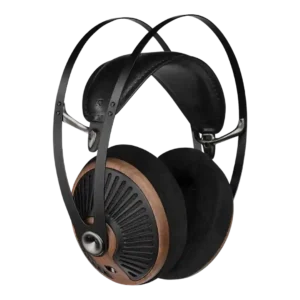
Choose the 105 Silva for beautiful, repairable construction, superb comfort, easy driveability, and an engaging spacious sound. Skip it if you need isolation, balanced connectivity, heavy sub-bass, or consistently smooth...
Pros: Design and Aesthetics, Overall recommendation
Cons: Noise isolation (passive), Connectivity options

Choose it if your workday revolves around calls and you want exceptional mic isolation, huge battery life, all-day comfort, and a slim travel-friendly design. Skip it if music fidelity, class-leading...
Pros: Battery, Charging
Cons: Value for money, Codec support

Choose the Aventho 100 for standout battery life, portable retro styling, strong ANC, and flexible wired/wireless use. Skip it if you dislike on-ear pressure or want a wide, consistently neutral...
Pros: Battery, Design and Aesthetics
Cons: Clamping force comfort, Soundstage width

Best for exceptional battery life, useful ANC, flexible EQ, and strong budget value. Skip it if refined, detailed sound or polished controls matter more than price.
Pros: Value for money, Sound quality
Cons: Button control usability, App