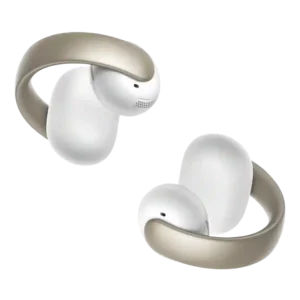
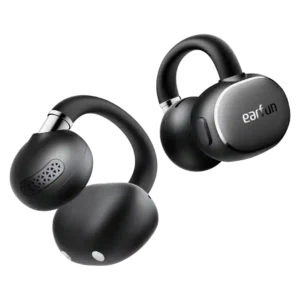
Soundcore AeroClip Earbuds
Where It Has the Edge
No clear scored advantage over the other product.

Scorata scores summarize analyzed review evidence on a 1–5 scale; they are not laboratory measurements or a simple average of customer star ratings. Feature scores summarize the reviews covering that feature. The overall score averages feature scores within each review, then combines review averages. When both expert and customer evidence are available, those two groups receive equal weight. Products can have different review coverage, so small score gaps do not establish a winner.
Recommendations prioritize important features for the category, with a score of at least 3.5, a gap of at least 0.25 points and at least two supporting reviews per product. Features with widely varying scores or broad connectivity contexts are excluded from recommendations. These safeguards do not establish statistical significance.
Quick verdict
The available evidence supports the recommendation below, but does not establish an overall winner. Check the remaining features against your priorities.
There is not enough comparable review evidence to recommend Soundcore AeroClip Earbuds over the other product.
Choose EarFun Clip 2 for Water/sweat resistance rating and Battery.
No clear scored advantage over the other product.
Scores are out of 5. Missing scores mean missing review evidence, not a missing feature.
Reviewers strongly liked the AeroClip's open-ear sound, repeatedly calling it clear, full, balanced, or surprisingly good for the category, with only isolated reservations about loud or complex tracks.
Sound is widely considered excellent for an affordable open-ear clip, with clear vocals and lively presentation. It is not uniformly refined, especially on dense music or at high volume.
Passive isolation is inherently weak because the open design lets outside noise through, which several reviewers framed as a core limitation in loud places.
Very little outside sound is blocked, which helps awareness but makes noisy trains, streets, and gyms difficult. Buyers seeking a sealed listening experience will find the isolation inadequate.
Bass was better than reviewers expected from open-ear earbuds, often described as punchy or strong, though a few noted limited depth, bass loss, or strain at higher volumes.
Mid-bass has more punch than many open-ear rivals and can improve further with EQ. Deep sub-bass remains limited, and a few listeners find the stock bass weak or distorted.
Several reviewers found the AeroClip spacious for open earbuds, describing a wide or unusually open soundstage with good stereo presentation.
The open design creates a spacious, airy presentation, and Theater Mode can widen it further. Depth and precision vary, with a few listeners finding complex tracks narrow or less immersive.
Reviewers consistently noted the lack of ANC as a limitation for users who want noise cancellation or a shut-out-the-world earbud.
There is no active noise cancellation, and one buyer found surrounding noise made music much less enjoyable in a loud workplace.
Frequency balance was mostly positive, with reviewers highlighting well-rounded or balanced tuning, though one detected subtle distortion on demanding electronic music.
Several listeners describe the tuning as balanced and natural, especially through the mids. Driver position and ear shape can shift the treble substantially, so individual EQ may be necessary.
Microphone noise reduction was usually strong against traffic, wind, and household noise, but a few reviewers found wind or busy restaurants could still overwhelm calls.
Background-noise rejection is often impressive, especially for steady office or street noise. Aggressive processing can occasionally muffle the speaker or create artifacts in wind.
Latency was generally acceptable for video and everyday use, but gaming performance was described as unsuitable for faster action games.
Game Mode generally keeps videos and casual games well synchronized. Some users must enable it after every connection, and a few still noticed lag or occasional desync.
Sound leakage was mixed: some reviewers found leakage lower than open-ear rivals, while others still warned that nearby people may hear them at higher volume.
Leakage is usually modest at moderate volume and in everyday environments. It becomes audible to nearby people at high volume or in very quiet offices and libraries.
Spatial audio had limited evidence, but one reviewer said Android spatial audio produced a more spacious sound.
Theater Mode can create a wider, more immersive presentation for movies and games. For music, it often changes tonality, adds reverb, or sounds unnatural.
Included accessories had limited positive evidence, mainly around the useful added grip attachments.
The box contains only the basic cable, case, and paperwork, leaving the accessory package noticeably sparse.
IPX4 resistance was acceptable for sweat, splashes, and light rain, but many reviewers wished for better dust and water protection.
IP55 protection handles sweat, light rain, dust, and workout use with confidence. It is not intended for swimming or submersion.
LDAC evidence was split by platform and review, with Android-focused reviewers praising it while others noted LDAC was absent or unavailable on Apple devices.
LDAC is a rare premium feature at this price and can add detail on compatible Android devices. It disables multipoint and cuts battery life sharply, leading some reviewers to prefer the standard connection.
High-volume clarity was mixed, with some praise for maintaining vocals and tuning but repeated caveats about tinny sound, bass loss, treble brightness, or distortion near higher levels.
The Clip 2 sounds best below its upper volume range. Loud playback can become thin, shouty, distorted, or treble-heavy.
Sensors were a weakness because several reviewers criticized missing wear detection, auto-pause, or smart sensor features.
The lack of wear detection is a notable omission: music keeps playing when the earbuds are removed.
Fit stability was exceptionally strong, with reviewers repeatedly saying the buds did not move, fall off, or need repositioning during runs, gym use, or daily wear.
Most users report a secure clip that stays put through running, workouts, head movement, and long wear. Fit is highly ear-dependent, with a minority experiencing slippage, poor driver alignment, or complete incompatibility.
Volume output was mixed: some reviewers found the AeroClip very loud or improved, while others said noisy streets, trains, or open-ear use forced higher volume.
Output is generally loud for open earbuds and noticeably stronger than the original Clip. A few buyers still found it inadequate against wind or loud workplace noise.
Midrange and vocal clarity were usually praised, especially for voices, podcasts, and pop/R&B, with one review noting mids could sit quieter under the bass-heavy profile.
Vocals, podcasts, guitars, and other midrange content come through clearly and naturally. This is one of the most consistently praised parts of the tuning.
Treble was generally clear and enjoyable, but reviewers were split between crisp highs and comments about understated, grainy, muddy, bright, or peaky treble.
Highs are usually crisp, airy, and detailed at moderate volume. Some tests found the treble sharp, dominant, or distorted when the earbuds are pushed louder.
The compact case and lightweight form made the AeroClip easy to carry in pockets, hydration vests, or daily use; foldability itself was not relevant.
The earbuds and compact case are easy to slip into a pocket or bag, even though some testers found the case slightly larger than the first generation.
Case feedback was positive for compactness and durability in several reviews, but one reviewer criticized the loose shake-test retention.
The case is compact and generally functional, with a solid lid on some units. Its plain plastic, slippery surface, cheap appearance, and lack of a battery percentage display drew repeated criticism.
Preset EQ profiles were well received overall, especially Podcast, Classical, Volume Booster, and Soundcore Signature, though preferences varied by listener.
Bass Boost and treble-reduction presets can make the stock tuning warmer and smoother. Theater Mode is more divisive and is generally better for video than music.
Multi-platform compatibility was strong across reviews that tested phones, laptops, iOS, Android, MacBook, and other playback devices.
The earbuds work well across iPhone, Mac, Android, and computers, with smooth playback and calls on multiple platforms.
Instrument separation received limited but positive support, with reviewers noting nicely placed instruments and clear differences between parts of the mix.
Most detailed tests found good spacing between instruments for an open clip. Dense arrangements can compress or lose individual layers at higher volume.
Android compatibility had limited but strong support, including near-instant Google Fast Pair and Android-specific hi-res support.
Google Fast Pair and LDAC make Android setup and daily use especially strong across Samsung, Pixel, Motorola, and other compatible phones.
Find My / Find Device was a useful app feature when evaluated, with reviewers noting loud beeps that help locate misplaced buds nearby.
The audible earbud locator usually works reliably and is useful for misplaced buds. It cannot locate the case, and a low current volume can make the alert harder to hear.
Integrated microphones were strongly praised in the review that evaluated them as a major conversation strength.
The built-in multi-microphone system delivers impressive everyday call quality for an affordable open-ear design.
Codec support was mixed: some reviewers criticized the lack of higher-end codecs, while others praised LDAC support where available.
SBC, AAC, and LDAC provide unusually broad codec coverage for the price. One test did not identify AAC support, so iPhone codec behavior was not described consistently.
Value was widely positive because reviewers saw strong comfort, calls, fit, and sound for the price, though one reviewer questioned the upgrade value.
Value is exceptional, combining comfort, long battery life, wireless charging, LDAC, translation, and a strong app far below premium clip-on pricing.
Multipoint was a frequent strength, with reviewers appreciating smooth device switching for work calls, phones, laptops, and daily device changes.
Switching between a phone and computer is usually fast and reliable, and the app’s device list helps. Multipoint cannot operate with LDAC, and a few users experienced inconsistent routing or disconnects.
Setup was praised as simple and quick in the few reviews that evaluated it directly.
Pairing is usually quick and straightforward, and reconnection is commonly automatic. A few users found first-time pairing confusing, disliked re-enabling Game Mode, or struggled with subtle left/right markings.
The Soundcore app was generally praised as slick, useful, simple, or intuitive, especially for EQ, controls, battery views, multipoint, and device finding.
The EarFun Audio app is usually described as clean, intuitive, and unusually feature-rich for a budget product. One reviewer found it basic and clunky, but that view was an outlier.
Bluetooth performance was generally reliable, with reviewers reporting easy pairing, no dropouts, and good enough range, aside from one merely acceptable range result.
Pairing and daily connections are usually quick and stable, particularly on Android. A smaller group encountered brief city dropouts, random disconnects, or repeated manual reconnection.
Equalizer customization was a major advantage, with reviewers frequently using custom EQ or the app's 8-band controls to improve sound.
The 10-band EQ gives meaningful control and often fixes weak bass or sharp treble. A few testers found the personalized sound process finicky or the EQ behavior imprecise.
Call microphone quality was widely praised as clear, crisp, or flawless, though a few reviewers found it darker or less effective in especially noisy environments.
Calls are usually clear and dependable in quiet or moderately noisy settings. Some voices sound distant or processed, and busy cafés or strong wind can reduce clarity.
Charging was helped by quick-charge support, but the lack of wireless charging or inductive charging held the score back in several reviews.
Wireless charging, USB-C, and useful quick charging make the Clip 2 unusually convenient for the price. One customer reported severe case overheating while charging.
Battery life was mostly seen as solid or good for daily use, but several reviewers noted it was not exceptional versus some open-ear competitors.
Battery life is outstanding for clip-on earbuds, commonly lasting close to a full workday and about 40 hours with the case. A few units fell short of claims or deteriorated early.
Clamp and pressure comfort depended on ear shape, with one reviewer finding pressure painful over time and another reporting no rubbing or discomfort.
The clip usually holds with gentle pressure and avoids the pinching of many rivals. Larger or differently shaped ears may feel noticeable pressure after several hours.
Build quality was generally solid, with praise for scratch resistance, tight construction, and the flexible memory wire's ability to spring back.
The earbuds generally feel durable and well assembled despite their lightweight plastic construction. The materials do not feel premium, and one unit arrived with a strong silicone odor.
Long-wear comfort was the product's strongest theme; most reviewers could wear them for hours or forget they were on, though a few experienced pinching or discomfort.
Comfort is the product’s clearest strength: many people forget the lightweight clips are on even after hours. Ear shape still matters, and tighter clamping can become painful for some larger ears.
Design drew mostly positive reactions for sleekness, jewelry-like styling, and cohesive materials, although a few reviewers called parts cheap-looking or polarizing.
The restrained black design looks sleek and understated to many users. Others think the plain plastic styling appears cheap beside more colorful or polished rivals.
Weight comfort was excellent, with reviewers repeatedly describing the earbuds as light, barely noticeable, or relieving neck and ear fatigue.
At roughly 5.5 grams per bud, the Clip 2 feels exceptionally light and nearly disappears during normal wear.
Translation works surprisingly well for travel and casual conversation, with broad language support and generally clear output. It requires internet and an account, has noticeable delay, and may not remain free.
The clip format usually works more comfortably with glasses, sunglasses, thick hair, and even over-ear hearing aids than hook-style earbuds. One customer could not achieve a usable fit with glasses.
The Clip 2 earns broad enthusiasm as a comfortable, feature-packed, affordable open-ear option. Returns and low scores mainly stem from ear-fit problems, connectivity faults, charging heat, or unmet translation expectations.
The open design makes conversations, traffic, family, and workplace sounds easy to hear without removing the earbuds. Awareness drops as volume rises, and loud surroundings can still overpower the audio.
The matte surfaces resist fingerprints, oil, and grime better than glossy cases and are easy to wipe clean.
Controls were divisive: some found the tap area responsive and easy, while many others complained about missed taps, limited gestures, or awkward use during runs.
Awareness of surroundings was one of the clearest strengths, with reviewers praising the natural, safe, open-ear experience for running, parenting, commuting, and everyday use.
The physical buttons are one of the most praised design choices, registering reliably with sweaty hands and avoiding accidental touch inputs. Actions are customizable in the app.
Voice assistant integration had limited evidence, with one review noting Siri commands can be assigned in the app.
EarFun’s support earns unusually warm praise for quick, practical responses and prompt resolution of order or case-related problems.
The included grip or sleeve options were usually seen as useful for improving fit and stability, though one reviewer found them too tight.
The charging case hinge feels solid and reassuring rather than loose or flimsy.
Firmware updates have improved consistency and added useful refinements. One customer still heard an occasional brief discordant sound, and another needed an update for reliable operation.
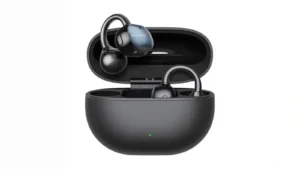
Choose the UU2 for unusually full open-ear sound, all-day comfort, strong battery life and excellent value. Skip it if you need sealed-bud isolation, consistently strong calls, or zero tolerance for...
Pros: Overall satisfaction, Sound quality
Cons: Spatial audio
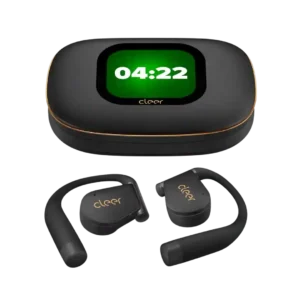
Best for all-day comfort, secure open-ear awareness, long battery life, and a genuinely useful touchscreen case. Skip it if deep bass, strong isolation, compact size, or consistently premium music quality...
Pros: Overall satisfaction, Carry case quality
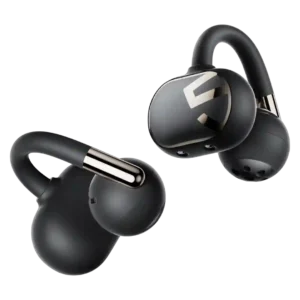
Best for featherlight all-day comfort, secure workout fit, strong open-ear sound, and unusually rich features for the price. Skip it if you need ANC, deep sub-bass, high volume in noisy...
Pros: Comfort during long use, Sound quality
Cons: Carry case quality, Touch control responsiveness

Choose these for secure, comfortable running with excellent outdoor awareness and improved bass. Skip them for noise isolation, swimming, or immersive music at a lower price.
Pros: Sound quality, Overall satisfaction
Cons: Volume output, Sound leakage