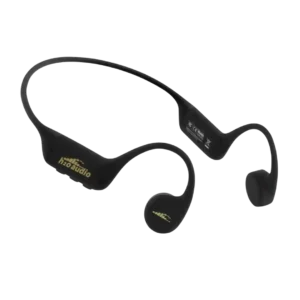
H2O Audio TRI 2 PRO Headphones
Where It Has the Edge
- Water/sweat resistance rating is 4.9 vs 4.3. Water readiness is the strongest consensus area, with reviewers repeatedly praising pool, underwater, and waterproof performance.

Scorata scores summarize analyzed review evidence on a 1–5 scale; they are not laboratory measurements or a simple average of customer star ratings. Feature scores summarize the reviews covering that feature. The overall score averages feature scores within each review, then combines review averages. When both expert and customer evidence are available, those two groups receive equal weight. Products can have different review coverage, so small score gaps do not establish a winner.
Recommendations prioritize important features for the category, with a score of at least 3.5, a gap of at least 0.25 points and at least two supporting reviews per product. Features with widely varying scores or broad connectivity contexts are excluded from recommendations. These safeguards do not establish statistical significance.
Quick verdict
The review evidence points to a tradeoff: Water/sweat resistance rating versus Equalizer customization and Instrument separation. Choose according to which strengths matter more to you; the overall score alone does not settle that choice.
Choose H2O Audio TRI 2 PRO Headphones for Water/sweat resistance rating.
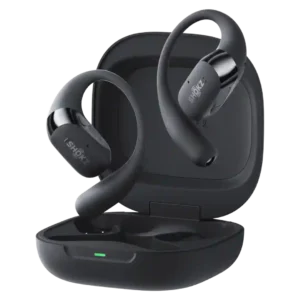
Choose Shokz OpenFit 2+ for Equalizer customization and Instrument separation.
Scores are out of 5. Missing scores mean missing review evidence, not a missing feature.
Reviewer opinion is split by use case: underwater and swim use often sounds good or even impressive, while several reviewers criticize above-water sound as tinny, muddy, or below regular earbuds.
Reviewers broadly praised the open-ear sound as unusually strong, clear, balanced, or top-tier for the category, though SoundGuys treated it as below critical-listening earbuds and one runner focused mainly on clear voice playback.
Passive isolation depends on the open-ear tradeoff: awareness is strong, but external noise can drown out playback unless earplugs are used.
Passive isolation is essentially not the point of the design; the cited reviewer emphasized that the earbuds do not isolate the listener from the world.
Bass is highly inconsistent: some reviews praise punch or improved bass in water, while others say land playback lacks low-end impact or becomes woolly and hollow.
Bass was often better than expected for open-ear earbuds, especially with EQ or Dolby, but several reviewers still noted limited punch and depth compared with sealed earbuds.
Sound leakage is mixed: pool use appears discreet, but above-water leakage can appear at higher volumes.
Sound leakage was generally better than expected for open-ear earbuds at reasonable volumes, but reviewers still warned that higher volumes can be heard nearby.
Frequency balance is not very accurate; reviewers describe the response as not crisp and noticeably unbalanced.
Only SoundGuys offered an opinionated frequency-response critique, finding upper mids and treble below its preferred target.
EQ customization is essentially absent, with reviewers explicitly noting no EQ or presets to tune the sound.
EQ customization was a clear strength: reviewers liked tweaking sound, custom EQ, and personal preference controls, though one app workflow was limited.
Call quality is a weak point overall; some calls are usable, but several reviewers report quiet, distant, or incomplete microphone pickup.
Call quality was mostly praised as clean, clear, or very good, with caveats around wind, crowded cafés, or heavy processing.
Controls are divisive: some reviewers found them reachable or simple, while many criticized stiff buttons, accidental presses, and unreliable secondary commands.
Physical buttons were widely praised as easier, more reliable, and more comfortable than touch-only controls, though one ultrarunner wanted an on/off button.
The app is adequate but limited; some found it easy to navigate, while others wanted clearer instructions, more customization, or smoother access to stored music.
The app was generally considered useful, simple, or feature-rich for EQ, firmware, controls, Dolby, and tracking, though a few reviews described it as minimal or not essential.
Setup is mixed: drag-and-drop loading can be easy, but Playlist+, app handling, and troubleshooting are often described as clumsy or time-consuming.
Setup simplicity was supported by the convenient pairing button and the fact that app use is not required for basic functions.
Bluetooth experiences vary sharply: pairing can be easy on phones and laptops, but underwater use, stutters, random disconnections, and clumsy setup hurt reliability.
Bluetooth behavior was mixed: reviewers liked seamless single-bud use, but others reported earbuds staying connected in the case or draining phone battery without an off switch.
Instrument separation is weak in critical listening, with strings, guitar, and bass parts getting lost or failing to cut through the mix.
Instrument separation was praised when reviewers heard clean, distinct instruments or stereo separation without muddying vocals and guitars.
Maximum-volume playback is a recurring weakness, with distortion, muddiness, overpowering tracks, or bone-conduction tickle appearing at louder levels.
Most reviewers who discussed high-volume behavior heard clean playback without distortion, though one warned that very high volume could sound cranky.
Portability is supported by a compact, gym-bag-friendly case in the review that discussed it.
Portability had one notable criticism from an ultrarunner who found carrying the case extra weight and space during long races.
Treble is serviceable but not consistently crisp; reviewers mention rolled-off, grainy, or missing high-end detail, with a few brighter elements coming through well.
Treble drew mostly positive comments for crispness, sparkle, and detail, while SoundGuys found the treble weak and less detailed in busy mixes.
Midrange and vocals range from clear and full in some testing to static, under-defined, or not very cutting in more critical reviews.
Midrange and vocals were generally described as clean, natural, energetic, or more forward, with the strongest praise coming from music-focused reviews.
Volume is adequate for some voices and workouts, but multiple reviewers had to raise it high, noticed vibration, or found volume changes distracting in water.
Volume was usually enough for music, calls, and outdoor use, but reviewers split on headroom in noisy places, with some wanting more output.
Case quality is mostly praised as nice, protective, or convenient, though one reviewer found the standard case bulky.
Case quality was mixed: reviewers liked the size/design and wireless charging, but cited a pinch hazard, poor low-battery signaling, and non-waterproof case limitations.
Water readiness is the strongest consensus area, with reviewers repeatedly praising pool, underwater, and waterproof performance.
Water and sweat resistance was generally reassuring for rain, sweat, and workouts, though reviewers warned against submersion and sweat-related charging care.
Android compatibility is supported by a reviewer pairing successfully with a Google Pixel phone.
Android compatibility received one direct positive test result alongside iOS compatibility.
Multi-platform compatibility is positive in the review that paired the headset with both a Google Pixel phone and a MacBook.
Multi-platform compatibility was positively supported by tested compatibility across Android and iOS.
Stability is a major strength in water and workouts, although one reviewer with fit issues felt less secure while running.
Stability was strong for running, workouts, and general movement, but reviewers found caveats with helmets, buffs, high-impact jumps, or losing an earbud when removing layers.
Battery life is mostly good for workouts and swims, though one review found real-world drain below the stated claim.
Battery life received strong agreement as excellent, long-lasting, or a non-issue for daily use, training, and long sessions.
Charging feedback is positive where reviewed, with magnetic connection clarity and roughly one-to-two-hour charging times.
Charging was praised for wireless convenience and quick top-ups, but one review reported case charging behavior that could leave earbuds undercharged.
Value depends heavily on the use case: swimmers often get enough benefit, while land users and audio-focused buyers face better-value alternatives.
Value was usually positive for first-time buyers because reviewers saw the $10-$20 Plus premium or category price as justified, though existing OpenFit 2 owners may not need to upgrade.
Design works well for aquatic use and looks clean to some reviewers, but fit gaps and sizing for smaller heads create caveats.
Design and aesthetics were praised as classy, understated, premium, sleek, and among the best-looking open-ear designs tested.
Comfort is generally strong thanks to low weight and soft contact, though a few reviewers report long-wear soreness or fit quirks.
Comfort was one of the strongest points across nearly every review, with repeated praise for long-wear softness, low fatigue, and all-day active use.
Build quality is a strength, with reviewers describing sturdy construction, flexible durability, and soft-touch or sleek materials.
Build quality was praised through flexible/durable ear hooks and robust-feeling materials.
Weight comfort is a clear strength; reviewers repeatedly call the headset lightweight enough for running, swimming, and extended workout use.
Weight comfort was consistently praised; reviewers repeatedly said the earbuds felt very light or nearly disappeared on-ear.
Reviewers consistently framed ANC as absent or unsuitable for noise-cancellation seekers, treating the product as intentionally awareness-first instead.
One reviewer found video latency minimal and acceptable for casual gaming, while noting no dedicated gaming mode elsewhere in the review.
Microphone noise reduction generally handled traffic, background noise, or indoor noise well, but wind remained the recurring weak scenario.
Dolby and the open presentation usually expanded the stage, but SoundGuys felt the spatial positioning was more artificial than genuinely dimensional.
Spatial/Dolby audio was usually praised for richer, wider, more immersive sound, but some reviewers preferred it for video or podcasts over music and one found it gimmicky.
Charging and transfer cable feedback is mixed, from necessary for waterproofing to inconvenient proprietary limitations and one failed USB loading experience.
Find My-style feedback was mixed: some reviewers liked ringing/tracking features, while others complained about missing true case Find My support or losing tracking when the battery died.
Adjustability is limited, with one reviewer wishing the band could be adjusted for a looser fit.
Included accessories are useful, especially earplugs, a protective case, and clear documentation that improve swim use and setup.
LDAC was specifically missed by one reviewer who expected it on a premium open-ear product.
Offline playback is the product's defining advantage for swimming, but Playlist+ recording and syncing can be cumbersome or unreliable.
Preset EQ opinions were mostly positive for Bass Boost, Treble Boost, and Vocal/voice modes, with one technical review saying presets help compensate for open-ear limitations.
Sensor feedback was mixed: one review praised wear detection, while another wished smart sensors were included.
Touch control usefulness was limited in the cited review because the touchpad was mainly restricted to voice assistant activation.
USB-C received one explicit positive mention for avoiding proprietary charging cables.
The one explicit clamping-force assessment was very positive because the reviewer felt no clamping pressure at all.
Codec support drew criticism from one reviewer because the earbuds lack high-end Bluetooth codecs.
Multipoint was repeatedly described as smooth, seamless, convenient, or reliable for switching between phones, laptops, watches, and other devices.
Voice assistant integration exists through limited touch or button customization, but reviewers treated it as secondary rather than a standout feature.
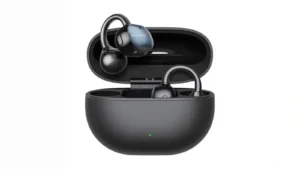
Choose the UU2 for unusually full open-ear sound, all-day comfort, strong battery life and excellent value. Skip it if you need sealed-bud isolation, consistently strong calls, or zero tolerance for...
Pros: Overall satisfaction, Sound quality
Cons: Spatial audio
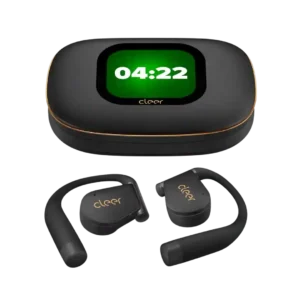
Best for all-day comfort, secure open-ear awareness, long battery life, and a genuinely useful touchscreen case. Skip it if deep bass, strong isolation, compact size, or consistently premium music quality...
Pros: Overall satisfaction, Carry case quality
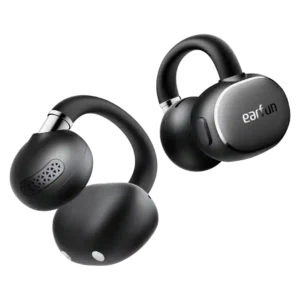
Best for lightweight all-day comfort, outstanding battery life, dependable physical controls, and premium features at a budget price. Skip it if you need deep bass, noise isolation, flawless high-volume sound,...
Pros: Overall satisfaction, Sound quality
Cons: Maximum volume clarity, Noise isolation (passive)
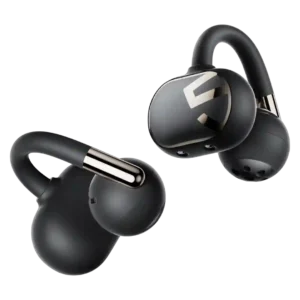
Best for featherlight all-day comfort, secure workout fit, strong open-ear sound, and unusually rich features for the price. Skip it if you need ANC, deep sub-bass, high volume in noisy...
Pros: Comfort during long use, Sound quality
Cons: Carry case quality, Touch control responsiveness