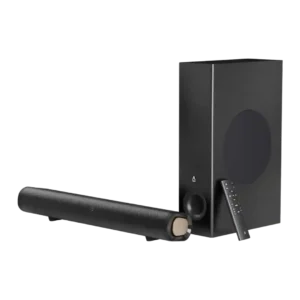

Creative Stage Pro Soundbar
Where It Has the Edge
- Subwoofer performance is 4.2 vs 3.0. The wired subwoofer is a major strength for the price, adding punch, warmth, and bass weight, though it...

Scorata scores summarize analyzed review evidence on a 1–5 scale; they are not laboratory measurements or a simple average of customer star ratings. Feature scores summarize the reviews covering that feature. The overall score averages feature scores within each review, then combines review averages. When both expert and customer evidence are available, those two groups receive equal weight. Products can have different review coverage, so small score gaps do not establish a winner.
Recommendations prioritize important features for the category, with a score of at least 3.5, a gap of at least 0.25 points and at least two supporting reviews per product. Features with widely varying scores or broad connectivity contexts are excluded from recommendations. These safeguards do not establish statistical significance.
Quick verdict
The review evidence points to a tradeoff: Subwoofer performance versus Stereo imaging accuracy and Tonal balance. Choose according to which strengths matter more to you; the overall score alone does not settle that choice.
Choose Creative Stage Pro Soundbar for Subwoofer performance.
Choose Creative Sound Blaster GS5 for Stereo imaging accuracy and Tonal balance.
Scores are out of 5. Missing scores mean missing review evidence, not a missing feature.
Home theater integration works best in small rooms, desktops, bedrooms, or dens; reviewers consistently warn it is not ideal for large rooms or big TVs.
Optical makes basic TV use practical, but the absence of HDMI keeps the GS5 from integrating as smoothly as a conventional home-theater soundbar.
Dynamic headroom is praised in limited evidence, with reviewers noting punchy dynamics and a cinematic feel rather than flat presentation.
At the top of its range, the GS5 does not scale every part of the mix evenly; bass and some musical elements begin to fall behind.
High-volume behavior is mixed: several reviewers heard little or no distortion, while others found the system strained, sharp, or less pleasant when pushed hard.
Sound is generally clean at normal levels, but several reviewers heard tinny clipping, buzzing, static, or weakened bass near maximum volume. Bass boosting can make the problem worse.
HDMI ARC support is convenient when it works, but reviewers reported ARC-only limitations, missing eARC, and one serious volume-step issue.
The lack of HDMI or ARC/eARC is a clear limitation for buyers who want seamless TV control and fuller home-theater integration.
Tonal balance earns praise for warmth, fullness, and clean treble in some reviews, but others note boosted mids/highs, muddiness, or tinniness depending on content.
Most reviewers found the mids clear, the highs crisp without much harshness, and the overall tuning balanced. Less enthusiastic listeners still heard some brashness or ordinary treble refinement.
The remote is generally useful and sometimes praised, but reviewers warned not to lose it and noted quirks such as limited onboard backup or awkward behavior.
The included remote is widely appreciated for volume, source, lighting, and sound-mode control from a desk or sofa. Some units respond slowly or require careful line-of-sight aiming.
Status indicators are useful but imperfect: reviewers appreciated clear source/input displays, while others found the standby or dark-room display too bright.
The bright center display is one of the most repeated complaints, especially in dark rooms. Later owners report that newer firmware and the app can disable or time out the display, so behavior may depend on software version.
The bar’s compact, lightweight body was praised as easy to handle and set up individually.
The bar feels solid but remains light enough to move between a desk and TV without much effort.
Detail retrieval is generally good for the price, especially dialogue, treble, games, and moderate volumes, though busy mixes and some effects lose clarity.
Game effects, instruments, and dialogue can sound distinct and easy to locate, especially with the right mode. Audiophile-level refinement and competitive-headset precision are still out of reach.
Overall presentation is consistently competent for the price, often described as cohesive, versatile, and all-around, though not premium or cinematic at scale.
Overall sound is lively, clear, and satisfying for everyday gaming, video, and casual music. Bass-light units, processing quirks, and failures account for the sharply negative outliers.
Reviewers generally found the compact bar louder than expected, with enough output for bedrooms, desks, and small living rooms, though room-filling scale is limited.
The GS5 gets surprisingly loud for its size and can fill a desktop or small room. A few reviewers still found its upper limit modest for buyers chasing very high output.
Voice clarity is split: several reviewers heard clear vocals, while one found vocals pushed back in music and dialogue-heavy scenes.
Speech and vocals are usually clear and forward, making the bar useful for YouTube, calls, and everyday media. Heavy bass settings can mask upper tones and reduce vocal definition.
Dialogue clarity is usually a standout, with many reviewers praising crisp, intelligible speech, though one review strongly criticized muffled dialogue in action-heavy content.
Dialog+ and some sound modes make speech easy to follow, but basic or movie modes can sound less intelligible in certain setups. Mode selection matters more than expected.
Smart features are limited, with reviewers pointing to absent Wi-Fi streaming, no richer feature set, and missing app EQ support.
Fast wake-from-sleep behavior makes the soundbar feel responsive during everyday PC use.
Bluetooth codec support is limited by the reported SBC codec, though the same reviewer still found the Bluetooth audio acceptable.
Bluetooth is limited to SBC, so wireless convenience comes without higher-quality codec options.
On-device controls are useful as backup basics, with reviewers appreciating physical buttons, though fuller control still depends on the remote.
The side volume knob and buttons are convenient, responsive, and cover the essentials. Their labels can be hard to see when the bar sits low beneath a screen.
Bluetooth stability is positive in the limited evidence, with quick pairing and clear, crisp playback reported.
Bluetooth pairing is consistently fast and stable, with reviewers reporting smooth switching and reliable range across normal rooms.
EQ customization is helpful for bass/treble adjustment, but reviewers criticized subtle presets and the lack of deeper app-based band control.
Windows users get extensive EQ, presets, Acoustic Engine controls, and game-specific profiles. Mobile and Mac users receive fewer options, and app-detection problems can block the feature entirely.
Stereo imaging is a weak point overall, with repeated comments about narrow, localized sound, limited separation, and stronger performance only near the sweet spot.
SuperWide gives the little bar a much broader image than its cabinet suggests, with clear separation and convincing positional spread. Results vary by content, and real stereo speakers remain more accurate.
Height and driver-aiming benefits depend heavily on placement; reviewers noted the angled drivers and fake-Atmos presentation but not true height immersion.
Near Field mode can make the presentation feel not only wider but taller, helping the compact bar sound more like separate speakers.
Latency evidence is mixed: one reviewer saw no Bluetooth delay with a projector, while another noticed brief audio skips during UHD Blu-ray playback.
Optical, USB-C, and AUX connections provide low-latency playback that suits gaming and TV use without obvious lip-sync concerns.
The wired subwoofer is a major strength for the price, adding punch, warmth, and bass weight, though it does not reach deep premium-subwoofer performance.
The built-in port gives the bar more weight than typical monitor speakers, but it cannot match a dedicated subwoofer for deep, room-shaking effects.
SuperWide and surround simulation are useful but imperfect; reviewers liked the wider, more immersive effect, while also noting lost definition, gimmickry, or fake-Atmos limits.
SuperWide is the product’s signature strength, creating a wider, more open presentation for games and movies. It cannot replace real surround speakers, and some music sounds better with it disabled.
Wired connectivity is consistently praised, especially HDMI ARC, optical, USB-C, and aux support, with USB-C helping the bar fit TV, console, and PC setups.
USB-C, optical, AUX, and the headphone jack give the GS5 unusually broad wired flexibility. Reviewers regularly used it across PCs, consoles, TVs, and laptops without reworking their setups.
Low-volume performance is mixed: low-level dynamics and late-night control are praised, but HDMI volume steps can be too coarse or loud.
The GS5 sounds clear and full at modest desktop levels, where many reviewers think it performs best. A whining power adapter can spoil quiet listening on defective units.
Optical input worked as a practical workaround for one reviewer after HDMI ARC volume control caused problems, but it also changed remote-control behavior.
Optical input is repeatedly praised because it makes TV and console use simple, low-latency, and more practical than Bluetooth alone.
Setup is one of the clearest strengths, with reviewers repeatedly describing it as simple, easy, and quick for TV, desktop, and general use.
Direct USB and Bluetooth setup can be quick, but drivers, firmware updates, hub conflicts, and Mac configuration create avoidable friction for some users.
Value is one of the strongest consensus points, with nearly every reviewer framing the Stage Pro as unusually capable for its low price.
Most reviewers see the GS5 as a strong sub-$100 upgrade with more features and connectivity than expected. Poor bass, display annoyance, or reliability failures make it a bad value for a minority.
Aesthetics are divisive: some reviewers liked the compact, elegant, premium-feeling look, while others disliked the gold accents or cheap-looking design.
Its black, minimalist styling blends easily with monitors and TVs, while the RGB adds optional personality. Some find the look plain, but few consider it gaudy.
Build quality is seen as solid for the price, with reviewers calling the bar well built and the soundbar/subwoofer set solidly constructed.
The GS5 usually feels sturdy, stable, and better made than its price suggests, even though the plastics are not premium.
A small but serious group reported audio dropouts, crackling, static, channel failure, or complete failure within weeks. These cases turned otherwise useful units into returns.
One buyer described a slow, inconvenient replacement process for a whining power adapter and said the experience ended their loyalty to Creative.
The side headphone jack struggled badly with demanding planar headphones, producing weak volume and poor sound.
The dedicated adapter helps the GS5 produce more output than USB-powered bars, but it adds cable clutter. Multiple buyers also reported short cords, coil whine, or early adapter failure.
Smart Volume was criticized for audible pumping and for failing to tame loud peaks effectively.
Height/Atmos-style performance is limited; reviewers treated SuperWide as a partial substitute, but it is not true Dolby Atmos and does not match Atmos effects.
Inter-speaker connectivity is simple but cable-heavy: reviewers noted the wired subwoofer and overall cable load as practical constraints.
The underglow RGB is customizable, subtle enough for many non-RGB fans, and easy to disable. Brightness opinions vary, with a few users finding it dim or unnecessary.
The side buttons generally work with a light press, though one reviewer found them slightly stiff.
Speaker/subwoofer cable placement is a recurring limitation, with the wired sub restricting where reviewers could place it in TV or couch setups.
The GS5 is widely considered a strong fit for desks, bedrooms, and small living rooms, with enough output to replace weak built-in speakers. Its depth and height can still crowd smaller desks.
The Creative software can be stable and useful on a properly connected Windows PC, yet detection failures, USB-only restrictions, and limited macOS support frustrate some owners.
Bluetooth connects quickly to phones, computers, and other devices, making the GS5 easy to share across a mixed setup.
Review contexts may differ, so use caution when interpreting the score gap.
Bluetooth range is a strength, with reviewers maintaining stable playback across typical rooms and even between floors.
Music is enjoyable and often surprisingly full for a gaming soundbar, particularly at moderate volume. SuperWide and limited refinement can make some tracks less accurate or more congested.
Audio format support is serviceable for the price, with Dolby Digital/Plus noted, but reviewers repeatedly call out missing Atmos and eARC-related limits.
Bass is the most divisive part of the GS5: many hear punchy, well-controlled weight without a subwoofer, while others report almost no low end or muddy boosted bass. Expectations and unit/setup differences appear significant.
Games sound punchy, spacious, and engaging, especially for casual play and racing titles. Competitive players may still prefer a headset for the most precise positional cues.
The fixed upward angle did not suit one desk, forcing the owner to tilt the bar toward ear level before it sounded right.

Choose it if you want unusually hi-fi music, deep standalone bass, clear dialogue, and convincing Atmos from one premium bar. Skip it if you need multiple HDMI inputs, a mature...
Pros: Overall product quality, Overall sound quality
Cons: Value for money, Video passthrough support
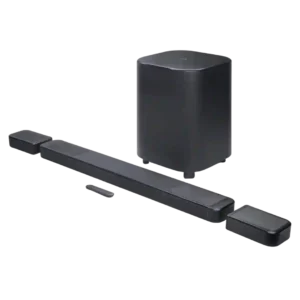
Best for room-filling Atmos, hard-hitting bass and genuinely useful detachable rears. Skip it if 4K/120 passthrough, a compact footprint or consistently polished app control matters more.
Pros: Rear speaker versatility, Overall product quality
Cons: Size and TV fit, Gaming HDMI passthrough
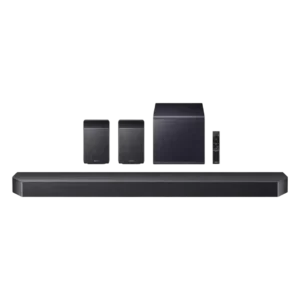
Choose the Samsung HW-Q990F if you want a premium, easy Atmos system with huge surround, strong bass, and Samsung TV perks. Skip it if price, a four-piece setup, music purity,...
Pros: Value for money, Surround sound simulation
Cons: Status indicators, Wi-Fi streaming reliability

Best for class-leading Atmos immersion, clear dialogue, compact but forceful bass, and a complete rear-speaker package. Skip it if you own the Q990F, need a compact one-bar setup, or cannot...
Pros: Home theater integration, Bass performance
Cons: Value for money, Design and aesthetics