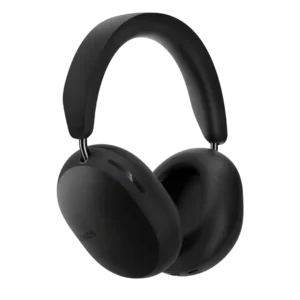
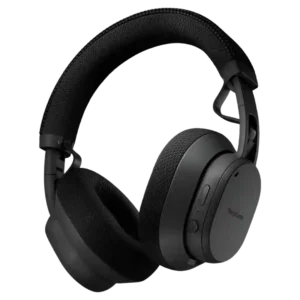
Sonos Ace Wireless Over-Ear Headphones
Where It Has the Edge
No clear scored advantage over the other product.

Scorata scores summarize analyzed review evidence on a 1–5 scale; they are not laboratory measurements or a simple average of customer star ratings. Feature scores summarize the reviews covering that feature. The overall score averages feature scores within each review, then combines review averages. When both expert and customer evidence are available, those two groups receive equal weight. Products can have different review coverage, so small score gaps do not establish a winner.
Recommendations prioritize important features for the category, with a score of at least 3.5, a gap of at least 0.25 points and at least two supporting reviews per product. Features with widely varying scores or broad connectivity contexts are excluded from recommendations. These safeguards do not establish statistical significance.
Quick verdict
The available evidence supports the recommendation below, but does not establish an overall winner. Check the remaining features against your priorities.
There is not enough comparable review evidence to recommend Sonos Ace Wireless Over-Ear Headphones over the other product.
Choose Fairphone Fairbuds XL for Multipoint connectivity reliability and Button control usability.
No clear scored advantage over the other product.
Scores are out of 5. Missing scores mean missing review evidence, not a missing feature.
Reviewers were split on sound quality: several praised clean, enjoyable, detailed sound, while others criticized clarity, dynamics, and tuning limits.
Sound opinions range from very good and fun to merely serviceable or disappointing for the price. The common pattern is energetic, consumer-friendly tuning rather than class-leading refinement.
Wind/leakage handling had limited mixed evidence: firmware compensation helped somewhat but was not viewed as groundbreaking.
Wind handling is a clear weakness in ANC/ambient and call use. Multiple reviewers describe wind noise as harsh, distracting, or overwhelming.
ANC background noise reduction was generally strong, especially for low frequencies, vehicles, and aircraft-like noise.
ANC can introduce a low level of white-noise hiss on some units, reducing the sense of silence when cancellation is active.
ANC was a major strength overall, with several reviewers praising strong cancellation, though some found it short of class-leading or leaky with high-pitched noise.
ANC is usually described as decent to good, but opinions vary sharply. It reduces commute and room noise effectively for many reviewers, while others find it far behind Sony/Bose or even problematic.
Bass drew mixed-to-positive comments, ranging from punchy and powerful praise to complaints about warmth, low-end emphasis, or lighter deep bass.
Bass is usually a strength: rounded, punchy, or robust without always becoming excessive. A few reviewers hear bloat or find the default low end too restrained depending on profile and generation.
Soundstage comments were split: CNET found it relatively wide, while What Hi-Fi described a lack of spaciousness.
Soundstage is generally adequate, with some reviewers hearing good width while others find it closed-in or less expansive than desired.
Ear cup swivel and fit adjustment were praised for helping the cups mold to the face and maintain a snug fit.
Limited ear-cup swivel can reduce fit flexibility. One reviewer directly links the lack of swiveling to poorer comfort.
3.5mm analog availability was praised as useful for wired listening and in-flight entertainment.
The lack of a dedicated 3.5mm jack frustrates some reviewers, even though USB-C audio and adapters provide wired alternatives.
Water/sweat resistance was a limitation because there is no IP rating, though light exercise use was described as acceptable by one reviewer.
The IP54 rating makes the headphones unusually suitable for light workouts, rain, and sweat compared with many over-ear rivals.
Treble was generally praised for sparkle or definition, though frequency-response comments also flagged treble emphasis as potentially fatiguing.
Treble quality varies by tuning and generation: some hear clear highs, while others find the top end brittle, erratic, rolled off, or not especially resolving.
Overall recommendations were mixed-positive: many reviewers liked the Ace, but some limited recommendations to Sonos users or criticized value/sound tradeoffs.
Recommendation depends heavily on priorities: repairability-focused reviewers can be enthusiastic, while a strongly negative owner says the quality issues and service problems make the product impossible to recommend.
Transparency/Aware mode was widely praised as natural and clear, with one dissenting user finding it less convenient for quick conversations.
Transparency/ambient mode is usable but inconsistent. Some reviewers praise its naturalness, while others hear hiss, muffling, weak pass-through, or below-class performance.
Midrange evidence was limited but mixed, with natural vocals and clear dialogue praised while one lab-style review criticized recessed mids.
Midrange performance is inconsistent. Some hear pleasant, rich mids, while others find vocals recessed, muddy, or less prominent than ideal.
Maximum-volume clarity was praised in PCMag's testing because bass stayed clean at top volumes.
At high volume, the low end can remain clean without obvious distortion, supporting solid maximum-volume clarity.
Instrument separation was often praised, but one critical review found the presentation blurry and confused.
Instrument separation ranges from good on many tracks to noticeably blurred in complex mixes. More critical reviewers hear less distinction between layered instruments than premium rivals provide.
Firmware roadmap/update evidence was mixed: meaningful updates improved features, but update handling was described as painful.
Long-term repairability depends on spare-parts support. Reviewers like the parts program but note uncertainty around how long every component will remain available.
Charging was praised for the quick-charge feature that adds hours of playback from a short charge.
Charging is not a standout strength. Several sources note the lack of fast charging or multi-hour full-charge times.
Battery life was consistently positive, with 30-plus-hour evidence and some reviewers reporting very strong endurance.
Battery life around the high-20-hour range is viewed as respectable but not class-leading. The replaceable battery substantially improves the long-term ownership story.
Advanced software features were viewed positively when considered as a bundle of multipoint, wear detection, spatial audio, and TV Audio Swap.
Smart and advanced features are relatively sparse for the price. Missing wear detection, richer app controls, and other premium conveniences repeatedly come up.
EQ customization was widely criticized as basic, usually limited to bass and treble rather than full-band control.
EQ controls are a recurring weakness. Reviewers frequently want more bands, more granularity, or true manual adjustment rather than a small set of presets.
Call microphone quality was mixed: some reviewers found calls clear, while others heard muffling or little firmware-update improvement.
Call quality varies considerably by environment and reviewer. Quiet-room speech can be clear, but noisy conditions often expose weak background-noise handling and low or muffled voice pickup.
The app experience was mixed: useful and sometimes excellent, but limited, buggy, or frustrating in several reviews.
The app is functional but basic. Firmware updates and EQ presets are useful, yet reviewers repeatedly criticize the limited depth and settings.
Voice assistant integration was criticized because there is no built-in assistant, only phone-assistant triggering.
Reviewers give this area a generally critical assessment, with experiences varying by use case and expectations.
Voice prompts and feedback were criticized for distracting control sounds or digital buzzing/clicking.
Voice confirmations can be useful, but reviewers note that some prompts are annoying and cannot be disabled.
Physical controls were a consistent highlight, with reviewers praising the Content Key, buttons, and tactile operation.
The joystick is one of the most consistently loved features. Reviewers find it tactile, simple, responsive, and easier than touch-heavy control schemes.
Build quality was strongly praised as premium, well-built, durable-feeling, and among the best in class.
Build impressions are mixed: some call the headphones solid or good quality, while others report rattles, gaps, or early assembly concerns tied to the modular construction.
Clamping force was mostly well judged, giving a secure fit without excessive pressure for most reviewers.
Clamping force is highly fit-dependent. Several reviewers call it secure and well judged, while others find it too firm, especially with glasses or during long sessions.
Comfort during long use was one of the strongest themes, repeatedly praised as light and easy to wear, with only some heat or ear-size caveats.
Comfort is mostly positive, especially on models with softer fabric, but fit varies. Some reviewers report firm cups, clamp pressure, heat, or discomfort after long sessions.
Design and aesthetics were strongly praised, with reviewers repeatedly calling the Ace stylish, premium, slim, and well executed.
The distinctive green/orange styling earns frequent praise for personality and freshness. Reviewers generally see the design as more characterful than generic over-ear headphones.
Multipoint was mixed: some reviewers found quick or seamless switching, while PCMag reported unreliable device switching in the app.
Multipoint is a meaningful convenience once connected, with fast switching praised repeatedly. Setup can be clumsy on some units or firmware versions.
Value for money was mixed: reviewers saw a premium product, but price remained a repeated concern unless on sale.
The Fairbuds XL often look expensive on pure sound/features, but repairability changes the calculation. Reviewers who value years of service see stronger long-term value than spec-sheet comparisons suggest.
Aesthetic discretion was positive, with reviewers praising the slim, less protruding profile.
Android compatibility was positive because Android/Snapdragon devices get stronger lossless options than iOS.
aptX support was praised as a premium Android/Snapdragon option with lossless potential.
Auto-play/wear detection was mixed, with one review reporting it did not work initially.
Hi-res or lossless playback was viewed positively over USB-C/wired or supported Android, though availability depended on device.
Cable quality received negative evidence from SoundGuys, which found the USB-C cable too short for comfortable wired use.
Carry case quality was mixed, with praise for slim or stylish design but complaints about fragility, marking, and premium mismatch.
Connectivity options were mixed: Bluetooth/USB-C/wired use scored well, but the lack of true Wi-Fi limited the Sonos ecosystem angle.
Several reviewers find fine detail weaker than similarly priced rivals, especially in dense arrangements. The sound can lose definition even when the overall tuning remains enjoyable.
Ear cup padding was praised as plush, soft, removable, and comfortable, though material breathability was sometimes questioned elsewhere.
Ecosystem integration was the most repeated tradeoff, praised for TV Audio Swap but criticized for no full Wi-Fi/Sonos-zone behavior.
Launch feature completeness was weak, especially around Arc-only TV Swap, TrueCinema not being ready, and promised future expansion.
Head-gesture-style smart spatial behavior was praised for locking audio when walking and recalibrating orientation naturally.
Imaging is serviceable but not pinpoint precise in the more critical listening tests, with a somewhat diffuse presentation.
The foldable, weather-resistant design is useful for travel, although the cups do not always rotate flat.
Premium feel was strongly positive, with repeated praise for materials, design finish, and high-end feel.
Replaceable earpads were praised for magnetic attachment, maintenance, and replacement convenience.
Sidetone was positively received as a thoughtful addition for calls.
Smudge resistance was praised in reviews that noted anti-fingerprint handling or resistance on the black finish.
Repairability is the defining strength: reviewers repeatedly praise the modular construction, replaceable battery and parts, and unusually long ownership potential. A few note that future parts availability still matters.
Travel friendliness was positive overall thanks to ANC, comfort, and movie use, despite case/foldability caveats.
USB-C support was praised for wired audio and flexible connection options.
Volume evidence was negative-to-mixed, especially for low-volume control and quieter TV Audio Swap playback.
Wear detection auto-pause was praised when working, with automatic pause/resume seen as useful.
ANC's impact on audio was criticized in one review that said turning ANC off reduced compressed, congested delivery.
Audio-video sync and handoff reliability were mixed-to-negative, with glitches, limited range, and lip-sync issues appearing in multiple reviews.
Dynamics are energetic and forceful, but at least one reviewer finds the presentation short on subtle dynamic nuance.
Frequency-response accuracy was criticized mainly for over-emphasized bass and treble that could become fatiguing.
Immersive audio quality was a standout for movies, with reviewers describing theater-like surround and a more open soundfield.
Microphone noise reduction was polarized, ranging from complete background-noise suppression to muffled voice and wind/interference issues.
Passive isolation had limited but positive evidence, with one review praising sound isolation even before ANC.
Spatial audio was a key strength for movies and TV, though some reviewers found head tracking or accuracy less useful for music.
One reviewer reports unreliable power-off behavior, repeatedly finding the headphones turned on again after shutdown.
Codec support was viewed positively because of aptX/Lossless support, though reviewers noted practical limits by device.
Customer support is the sharpest non-hardware concern in the negative accounts. Two reviewers describe very long refund/parts delays and deeply frustrating service experiences.
Bluetooth reliability was generally strong, with reviewers reporting stable connections and few dropouts in regular use.
Setup simplicity had negative evidence from pairing/app trouble that required repeated attempts.
Dolby Atmos with head tracking was mixed-positive, excellent for cinematic use but criticized by one reviewer as poor for music/head tracking.
Heat management improves with the newer mesh materials, but older vegan-leather pads can run warm during workouts or long sessions.
Weight comfort was praised by reviewers who found the headphones lighter-feeling than AirPods Max and easy for extended wear.
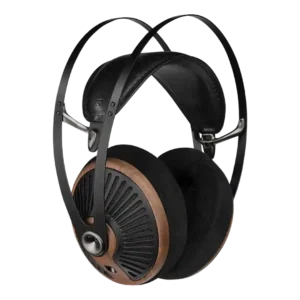
Choose the 105 Silva for beautiful, repairable construction, superb comfort, easy driveability, and an engaging spacious sound. Skip it if you need isolation, balanced connectivity, heavy sub-bass, or consistently smooth...
Pros: Design and Aesthetics, Overall recommendation
Cons: Noise isolation (passive), Connectivity options
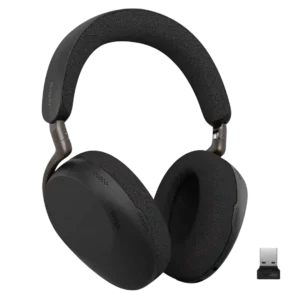
Choose it if your workday revolves around calls and you want exceptional mic isolation, huge battery life, all-day comfort, and a slim travel-friendly design. Skip it if music fidelity, class-leading...
Pros: Battery, Charging
Cons: Value for money, Codec support
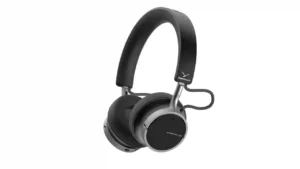
Choose the Aventho 100 for standout battery life, portable retro styling, strong ANC, and flexible wired/wireless use. Skip it if you dislike on-ear pressure or want a wide, consistently neutral...
Pros: Battery, Design and Aesthetics
Cons: Clamping force comfort, Soundstage width
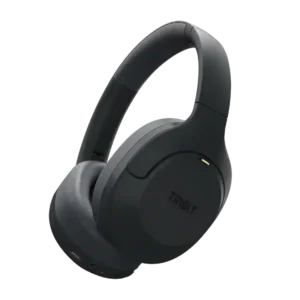
Best for exceptional battery life, useful ANC, flexible EQ, and strong budget value. Skip it if refined, detailed sound or polished controls matter more than price.
Pros: Value for money, Sound quality
Cons: Button control usability, App