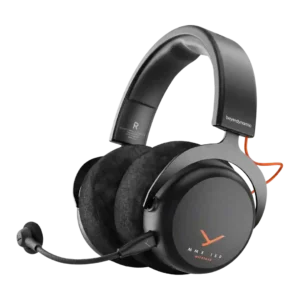
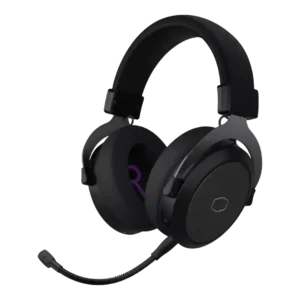
beyerdynamic MMX 150 Wireless Over-Ear Gaming Headset
Where It Has the Edge
No clear scored advantage over the other product.

Scorata scores summarize analyzed review evidence on a 1–5 scale; they are not laboratory measurements or a simple average of customer star ratings. Feature scores summarize the reviews covering that feature. The overall score averages feature scores within each review, then combines review averages. When both expert and customer evidence are available, those two groups receive equal weight. Products can have different review coverage, so small score gaps do not establish a winner.
Recommendations prioritize important features for the category, with a score of at least 3.5, a gap of at least 0.25 points and at least two supporting reviews per product. Features with widely varying scores or broad connectivity contexts are excluded from recommendations. These safeguards do not establish statistical significance.
Quick verdict
There is not enough consistent, comparable evidence for a clear recommendation. Use the feature details and supporting reviews to weigh the tradeoffs.
There is not enough comparable review evidence to recommend beyerdynamic MMX 150 Wireless Over-Ear Gaming Headset over the other product.
There is not enough comparable review evidence to recommend Cooler Master CH351 Gaming Headset over the other product.
No clear scored advantage over the other product.
No clear scored advantage over the other product.
Scores are out of 5. Missing scores mean missing review evidence, not a missing feature.
Overall sound quality is praised across reviews for clarity, richness, immersion, and balanced fundamentals, though bass and treble are common tradeoffs.
Core sound quality is praised, especially because games still sound great even without spatial audio enabled.
Positional audio is a major strength, with reviewers repeatedly praising accurate direction, footstep detection, and spatial placement in games.
Positional audio is excellent because the reviewer could judge footstep distance and direction while playing.
The Shooter preset is praised for making gunshots and footsteps more distinct, helping competitive awareness.
Footstep scaling is a standout because the reviewer could judge which footsteps were closest and farthest away.
Spatial presentation is praised in gaming, including PS5 3D audio, immersive soundscapes, and strong spatial awareness.
Spatial audio is one of the clearest strengths and is described as making games sound fantastic.
Mic noise reduction is repeatedly praised for suppressing typing, ambient sound, music, and surrounding noise while keeping the voice clear.
Microphone noise rejection is a strength because nearby background noise was not picked up.
Bass is the most split audio trait: some reviewers find it subdued without EQ, while others hear adequate, punchy, or even strong bass.
Game effects such as distant chatter, explosions and bangs are described as clear, supporting strong bass-impact performance in gameplay.
Soundstage is praised as wide, layered, and immersive, with strong depth for games and spatial scenes.
Soundstage is a strength, with the reviewer crediting its width for accurate sound reproduction.
Frequency response is praised by one reviewer as balanced and accurate, though other reviews criticize specific bass and treble tradeoffs.
Frequency accuracy is praised through the reviewer’s judgment that the headset produces nearly every sound accurately.
Preset EQ profiles are viewed as effective but subtle, especially for shooters and action games.
Preset EQ support is poor because the reviewer complains that the CH351 lacks Music, Movie or Game mode-style presets.
Volume output is criticized on analog controller connections, where one reviewer found console volume too low for immersion.
Volume output is strong for gameplay cues, with footsteps described as loud and clear.
Connectivity is versatile across USB, 3.5mm, Bluetooth, and dongle use, but reviews repeatedly note that some features depend on USB or platform.
Connectivity is mixed: the headset supports multiple connection options, but the reviewer says its strengths work best over aux.
Padding is widely praised as plush and soft, but one reviewer with larger ears criticized the earcups as too small and shallow.
The earcups are a positive comfort point, with protein leather pads described as comfy.
The detachable mic is consistently treated as useful, especially for streamlining the headset or positioning the boom exactly where needed.
The detachable mic is treated as convenient, particularly because it can be removed for easier transport.
Midrange clarity is a strength, with reviewers praising clear vocals, defined mids, and natural vocal reproduction.
Midrange dialogue clarity is praised because dialogue avoids the hollow or echoing character the reviewer dislikes elsewhere.
Microphone quality is one of the strongest themes, ranging from decent to exceptional, with several reviewers calling it unusually good for a headset.
The microphone is praised as working very well in the CH351-specific review.
Bluetooth pairing is described as easy and reliable in wireless reviews, including instant pairing and easy Bluetooth use.
Wireless connectivity is judged poorly because it did not work as intended and produced distracting static.
Setup simplicity is praised in wired reviews because the headset works without extra software and can be used out of the gate.
Software support is weak because there is no app for customization.
The app is viewed as reasonably useful, mainly because it offers presets, EQ, button settings, sidetone options, and other practical controls.
The CH351-specific review treats the missing companion app as a clear drawback because it prevents customization.
EQ support is mixed: wireless app EQ is useful, bass may need EQ, and the older wired review criticized the lack of software EQ.
Equalizer customization is poor because the reviewer specifically criticizes the lack of a companion app for EQ tweaking.
Controls are praised for simple volume, mute, and mode access, but criticized when the wheel feels clicky or loses function over 3.5mm.
Controls are criticized as cluttered and unreliable, with buttons sometimes failing to register commands.
Call and voice-chat usefulness is praised where discussed, including understandable chat, Zoom use, and positive reactions from other listeners.
Call or voice capture quality is strong, with the microphone described as loud and clear.
Low weight is consistently praised as helping comfort, with reviewers repeatedly describing the headset as light or not heavy.
Weight comfort is weak because the headset is described as being on the heavy side.
Comfort is a major strength for most reviewers, but two reviews warn that the round/shallow cups can become uncomfortable over longer sessions.
Long-session comfort is weak because the reviewer felt pressure on the top of the head after about an hour.
Design is polarizing, with some reviewers liking the subdued or two-tone look while another found it too gamer-styled for everyday use.
The design earns praise for fun colorways, especially the macaron teal-and-pink finish.
Build quality is generally solid, but reviewers split between sturdy/robust impressions and complaints about plasticky or less premium materials.
Build quality is praised, with the headset described as high-quality plastic with a soft-touch, premium finish.
Value is mixed: reviewers praise the balance of comfort, mic, and sound, but several note pricing pressure or cheaper alternatives.
Value is undermined because the reviewer still found it hard to recommend despite the low price.
One review treats Android and handheld compatibility as a useful bonus, but only in the broader context of analog/mobile support.
Cable impressions are mixed: the long/braided USB cable is praised, while one reviewer disliked cable noise from rubbing on clothing.
Console support is a notable caveat: PlayStation is more workable than Xbox, and one review warns that analog console volume is too low.
Detachable cable convenience is mixed because the removable cords help flexibility, but the short analog cable is criticized as less useful.
The low-latency dongle is praised for reliable pairing and gaming-focused wireless use.
Earcup movement is limited but useful: reviewers note tilt rather than swivel, and the tilt helps fit and positioning.
Headband adjustment is consistently praised as easy, practical, and broad enough for different head sizes.
Instrument and effect separation is praised, with reviewers describing clear distinction between channels, instruments, dialogue, and game sounds.
Loud effects are reported clearly, supporting good clarity during louder in-game moments.
Multi-platform support is useful but uneven: one review calls it a good all-rounder, while another says it is really best for PC-first buyers.
Portability is lightly positive in one review where the headset replaced the reviewer’s usual carry headphones.
Replaceable ear pads and other parts are praised as value-preserving, repair-friendly features.
Sidetone/augmented voice monitoring is mixed: convenient in wired USB use, but the wireless Sidetone mode is criticized for hiss.
Stability is praised where discussed, with reviewers saying the headset stays positioned securely during movement.
Transparency/augmented mode is useful in several reviews, but one wireless review strongly criticizes hiss in the mic transparency implementation.
Treble impressions are mixed: one reviewer hears distracting harshness/distortion, while another finds the highs natural and non-fatiguing.
USB-C/USB use is generally the best-supported mode, unlocking features and better platform behavior, though that dependence limits analog use.
Wireless latency is praised subjectively through the dongle, with reviewers noting low-latency claims and little perceived audio/video gap.
Xbox compatibility is a serious limitation in one review, especially because USB was not recognized and analog volume was too low.
Low-latency performance is praised subjectively, with one reviewer noticing very little gap between on-screen action and audio.
Passive isolation is consistently praised for reducing surrounding noise, though one review notes it does not handle droning noise like ANC.
Closed-back sound leakage control is praised in one review, especially for subway or shared-space listening.
Battery life earns strong praise in wireless reviews, with reviewers calling it a standout or generous feature beyond long-session needs.
Fast charging is treated as useful in wireless reviews, especially for quick top-ups before long sessions.
Clamp force is usually praised as secure and comfortable, though one long-use review found it a bit tight.
Fit and seal are praised where discussed, with reviewers noting easy sealing, snug earpads, and stable fit.
Multipoint is praised in one wireless review because it prevented the reviewer from needing to switch devices.
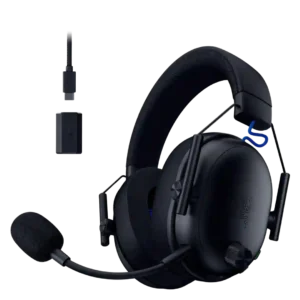
Best for excellent game audio, long-session comfort, clear voice chat, strong battery life, and low-latency wireless. Skip it if you need very high volume, flawless software, or zero tolerance for...
Pros: Overall satisfaction, Sound quality
Cons: Button control usability, Dongle
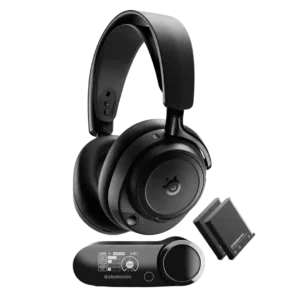
Choose the Arctis Nova Elite if you want top-tier wireless sound, ANC, hot-swap batteries, and multi-device mixing. Skip it if $600 feels excessive, you game on one console, or tight/heavy...
Pros: Sound quality, Connectivity versatility
Cons: Value for money, Carry case quality
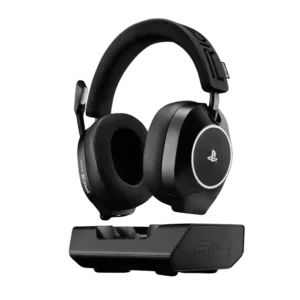
Best for sharp gaming audio, long battery life, an excellent dock, and strong value. Skip it if you need ANC, a detachable mic, maximum console volume, or seamless PS5/Xbox switching.
Pros: Sound quality, Included stand quality
Cons: Detachable microphone convenience
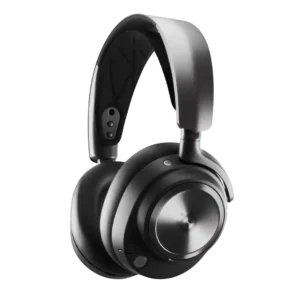
Choose the Arctis Nova Pro Wireless for premium gaming audio, hot-swappable batteries, broad device support, and deep EQ control. Skip it if the high price, mixed mic quality, or uneven...
Pros: Battery, Comfort during long use
Cons: Console compatibility limitations, USB-C