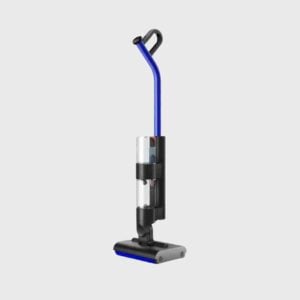
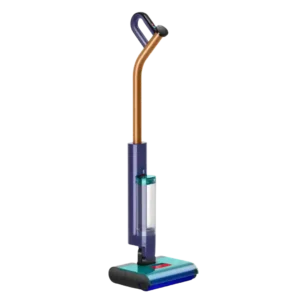
Dyson WashG1 Wet Cleaner
Where It Has the Edge
- Fresh Liquid Pickup Speed is 4.8 vs 4.2. Fresh spills, sticky liquids, tomatoes, cola, wine, and general wet messes are usually cleaned quickly and confidently.

Scorata scores summarize analyzed review evidence on a 1–5 scale; they are not laboratory measurements or a simple average of customer star ratings. Feature scores summarize the reviews covering that feature. The overall score averages feature scores within each review, then combines review averages. When both expert and customer evidence are available, those two groups receive equal weight. Products can have different review coverage, so small score gaps do not establish a winner.
Recommendations prioritize important features for the category, with a score of at least 3.5, a gap of at least 0.25 points and at least two supporting reviews per product. Features with widely varying scores or broad connectivity contexts are excluded from recommendations. These safeguards do not establish statistical significance.
Quick verdict
The review evidence points to a tradeoff: Fresh Liquid Pickup Speed versus Hair‑Wrap / Tangle Resistance and Under-Furniture Pickup. Choose according to which strengths matter more to you; the overall score alone does not settle that choice.
Choose Dyson WashG1 Wet Cleaner for Fresh Liquid Pickup Speed.
Choose Dyson Clean+Wash Hygiene for Hair‑Wrap / Tangle Resistance and Under-Furniture Pickup.
Scores are out of 5. Missing scores mean missing review evidence, not a missing feature.
Most reviewers find it straightforward and fast to use, with meaningful time savings during mopping.
Basic cleaning is easy and intuitive, with light steering, clear controls, and grab-and-go convenience. The biggest usability penalty comes after cleaning, when tank handling and maintenance can add extra steps.
Hair and tangles remain a weak point, with anti-tangle design and hand-removal concerns.
Hair-wrap resistance is excellent. The anti-tangle comb kept rollers clear in longer hands-on use, with one tester reporting no wrapped hair after two weeks.
Odor control depends heavily on careful cleaning; reviewers warn of smells or personally experienced lingering stink.
Odor prevention is a standout advantage. The filter-free waste path and heated roller drying reduce the damp, sour smell that can develop in conventional wet cleaners, although one test found the drying result inadequate.
The slim body was considered especially useful for a home with limited storage space.
The slim body stores well, but the floorhead itself can be awkward in genuinely tight rooms. Small bathroom gaps, corners, and light-traffic apartments may be better served by a narrower or simpler tool.
Under-furniture reach is limited by the bulky/thick head, though one reviewer found it decent for some furniture.
Under-furniture reach is exceptional. The handle lies almost completely flat and the head stays on the floor, making low sofas, beds, counters, and cabinets much easier to clean beneath.
Versatility is limited because it cleans hard floors well but cannot replace a traditional vacuum.
It is versatile within hard-floor cleaning, working as a quick companion to a normal vacuum and handling both wet messes and light debris. It is not a full vacuum replacement and cannot extend to carpet or above-floor jobs.
Weight is context-dependent: easy enough while gliding, but heavy or cumbersome when carrying and lifting.
Low weight is one of the clearest advantages. At roughly 8.4 pounds, it is noticeably lighter than many wet-dry cleaners and easier to steer, carry, and push for longer sessions.
Storage is mixed: the slim body helps in small spaces, but the tall/bulky form and visible dock can be awkward.
The cleaner and dock are compact enough to tuck into a cupboard or corner, and the dock gives the machine a dedicated charging/storage spot instead of leaving it loose against a wall.
One reviewer liked that the machine stops automatically when the wand is set upright.
Standing the machine upright automatically turns it off, a small but polished usability detail that avoids hunting for the power button.
One reviewer found it strong enough for a heavy-duty wildfire debris cleanup on hard surfaces.
The cleaner has enough capacity and speed for more than light household spot cleaning; one tester could see it working on small retail floors as well.
Maintenance is the biggest split: one comparison praises cleanability, but most reviewers find the routine tedious, grim, or more involved than expected.
Maintenance is easier in some ways because there are no dirty internal tubes or filters, and the dock handles roller washing and drying. The tradeoff is frequent tank care, tray rinsing, and a waste assembly that some found fiddly or leak-prone.
Runtime is generally adequate for many homes, but higher modes and large jobs can still require recharging or pacing.
Runtime is a major strength, with current ratings up to 70 minutes and multiple testers calling it more than enough for a whole-home clean. In practice, tank capacity is more likely to interrupt a session than the battery.
Large debris pickup is a major strength for crumbs, noodles, leaves, cereal bits, and other chunky messes.
Large-debris pickup is inconsistent. Oats and many crumbs can be collected quickly, but chunky solids and raw egg expose the limits of the mechanical roller and may need pre-sweeping or another tool.
Families with messy children may benefit, especially for mealtime spills, though one reviewer remained only mildly positive.
Family suitability depends on the kind of messes involved. One tester saw it as well suited to busy pet-and-kid homes, while another thought the poor handling of large, viscous food spills made it a weak choice for messy mealtimes.
Fresh spills, sticky liquids, tomatoes, cola, wine, and general wet messes are usually cleaned quickly and confidently.
Fresh spills are generally a strong use case, from sauces and mixed liquids to pet messes. Thin liquids clean quickly, while unusually viscous material such as raw egg can overwhelm the suctionless design.
Reviewers consistently like how little water remains and how quickly floors dry, often without puddles.
Floors usually finish only lightly damp and dry quickly, sometimes within about a minute. A few measurements found more leftover water than average, so drying performance is good rather than universally class-leading.
Packaging is praised as compact, low-plastic, recyclable, and less wasteful.
Packaging was easy to move and notably light on single-use plastic around the main unit, while leaving most of the cleaner preassembled.
Dried-on stain results are mostly strong, though a few reviewers found tougher sticky or dried marks still resisted it.
Dried-on stain performance ranges from good to merely average. Syrup and sticky spreads usually came up with Boost and repeated passes, but standardized stain testing landed below category averages and one harsh test found caked-on messes disappointing.
Water-tank feedback is mixed: some praise capacity and easy removal, while others say tanks are small, awkward, or need frequent changes.
Tank capacity is a recurring weak spot. It can cover a normal home on lower settings, but higher hydration levels and the water-hungry self-clean cycle can force refills well before the battery is exhausted.
Pet households benefit from wet-mess and pet-hair cleanup, especially for cat messes, dog accidents, and pet hair.
Homes with pets are a strong fit: muddy paw prints, tracked-in dirt, and dog hair were handled well in positive tests, and the cleaning solution was considered suitable around pets. The main caveat is that loose hair pickup was not equally strong in every test.
Grout and grooves are mixed: some reviewers saw acceptable grout cleaning, while another found grout-line pickup weak.
The roller does not clean deeply into tile cracks or grooves. Bristles help somewhat, but recessed debris remains a weakness compared with flat-surface pickup.
The liquid system is liked because it works with water or optional low-foaming cleaner without brand-specific formulas.
The liquid system works well with plain water or compatible low-foaming cleaner, and Dyson's probiotic solution was praised for deeper cleaning and a light scent. Inclusion varies by market, which drew criticism where no bottle was supplied.
The open roller-and-tray design is praised for reducing chances of internal jams.
Keeping solids and dirty water in the cleaner head avoids long internal tubes where grime can accumulate. This anti-clogging approach is one of the most consistently praised parts of the design.
Dirty-water emptying can be simple, but debris trays, leaks, drips, and soggy waste are repeated frustrations.
Emptying is the most repeated usability complaint. The separated waste concept is hygienic, but many testers found the tank/tray fiddly, prone to dripping, or in need of careful handling to avoid dirty-water spills.
Hard-floor hair pickup works, but one reviewer needed several sweeps while another saw quick pickup in a pet-hair area.
Hard-floor hair pickup is mixed. One pet-heavy test collected clumps of dog hair without trouble, while another found loose hair tended to get pushed around rather than decisively collected.
Residue and streaking are mixed: many report quick, streak-free drying, while one reviewer saw frequent streaking.
Most everyday cleaning leaves little streaking or sticky residue, and several messy tests finished clean. Standardized testing did find above-average residual water, while one very negative reviewer reported severe streaking.
Handling is a strength, with reviewers praising gliding, steering, self-propel feel, and maneuverability despite weight.
The cleaner is light, balanced, and easy to push, with several testers describing it as nimble or almost self-moving. A few found the square head less agile in tight turns or preferred the older WashG1's maneuverability.
One reviewer sees potential for the WashG1 to become a category game-changer if Dyson improves it.
The head-contained waste system and hot-air drying dock are genuinely distinctive upgrades over Dyson's earlier attempt. Even so, some tests felt the innovation did not translate into class-leading cleaning performance or value.
Tile cleaning left surfaces noticeably cleaner in one review, supporting fine-dirt pickup on hard floors.
Fine dust and ordinary grit are handled well on hard floors, often in a single pass. Dry pickup still trails a dedicated stick vacuum when debris becomes more demanding.
Overall opinions lean positive on cleaning performance but are tempered by price, maintenance, bulk, and limited versatility.
Overall sentiment is positive but far from unanimous. Many found it a major step forward for Dyson and a convenient hard-floor cleaner, while a smaller group considered the leaking waste system and premium price serious enough to return or reject it.
The self-propelled feel reduces effort and helps the heavy cleaner glide more easily.
The machine has no true powered self-propel system, but the light chassis and roller action can create a self-propelled feel. Several users barely missed motor assistance, while one comparison treated the missing feature as a premium-spec omission.
The machine is not truly low-profile because the thick head and front tanks interfere with low-clearance cleaning.
The low-profile body is a standout design win, flattening to roughly 113 mm and fitting under furniture that bulkier floor washers cannot reach.
Build confidence is mixed to weak, with fragile-feeling latches and a wobbly cord concern called below Dyson expectations.
Build quality is generally excellent, with solid materials, satisfying fit, and a more substantial feel than the previous generation. One sharply negative test questioned the engineering quality because of the leaking waste design.
The floorhead earns praise for rollers and cleaning design, but its bulk and uneven-floor or low-clearance limits are recurring drawbacks.
The cleaner head is the most divisive piece of hardware. Its low, integrated design helps reach and clog prevention, but repeated leaking, dripping, and multi-part reassembly complaints make waste handling a major downside.
Reviewers generally like the Dyson styling, calling it sleek, chic, futuristic, premium, and high-end.
Dyson's finish and industrial design are consistently praised. The slim shape, polished colorways, and premium feel make it one of the more attractive floor cleaners to leave visible.
One reviewer called it robust enough to be a good long-term investment despite the price.
The waste-in-head layout has a plausible long-term maintenance advantage because there are fewer dirty internal paths to gum up. Long-term ownership data is still limited.
Sanitizing is a limitation because reviewers wanted oxygenation or noted it cannot sanitize floors.
Hygiene is a core strength: clean and dirty water stay separated, waste remains out of internal pipes, and hot-air drying helps keep the roller sanitary. One strongly negative test disputed the hygiene claim because its unit still leaked and retained debris.
Ownership cost is a concern because rollers and spare mop heads need regular replacement and can be costly.
Filter-free operation removes some recurring filter maintenance and replacement burden. Cleaning solution is still consumed during normal cleaning and self-clean cycles, adding a small ongoing cost.
Edge cleaning ranges from excellent edge-to-edge results to frustration with one-sided edges, corners, and wall gaps.
Edge cleaning is very good, reaching close to baseboards from multiple sides. It can still leave a small margin at the wall, but most hands-on use found it substantially better than bulky older designs.
Noise is mixed: one reviewer measured average sound, while another found operation remarkably quiet.
Cleaning itself is notably quiet because there is no large suction motor. The loud part comes later on the dock rather than while moving across the floor.
Self-cleaning is useful and often quick, but reviewers also report noise, leftover bits, leakage, and hands-on drying needs.
Self-cleaning is one of the machine's best features in most tests, flushing the roller and then hot-air drying it on the dock. The drawbacks are high water use, noise, and occasional need for manual checking after heavy messes.
The self-clean cycle can be loud enough to hear from another floor of the house.
The dock's drying cycle is consistently audible and often plainly loud. It is usually tolerated because the hot-air drying is effective, but it is not something most people will want running beside a TV or sleeping area.
Hard-floor mopping performance is the clearest strength, with broad praise for effective cleaning on sealed floors.
Everyday wet cleaning is generally strong, especially on spills, paw prints, grease, and routine floor traffic. Results become more mixed on standardized stain tests and large, awkward debris, so it is better viewed as a polished electric mop than a no-compromise wet-dry vacuum.
Steam cleaning is absent, and reviewers compare that limitation unfavorably against alternatives with steam.
There is no steam-cleaning mode. At this price, several comparisons treated that omission as part of a broader shortage of flagship-level cleaning features.
Comparisons are mixed: it is preferred over or upgraded from some Dyson models, but Tineco is favored by one reviewer and Mach V1 is a better value for another.
Compared with Dyson's first-generation washer, this model is usually seen as a clear improvement. Against the wider premium field, the picture is more mixed because several rivals offer stronger cleaning scores, suction, steam, or smarter automation for similar money.
The lack of suction leaves some dry debris stragglers and limits its ability to replace a vacuum.
There is essentially no usable suction, so the machine depends on its roller and mechanical debris separation. That works for many wet messes and light dry debris, but several tests found it weaker than a true vacuum on heavier or loose material.
Battery behavior is mixed: charging can feel slow, while another reviewer found water ran out before battery.
Battery performance is strong overall, with whole-home endurance in normal use and convenient dock charging. Charging time was considered normal, and the battery is rarely the first limit because the water tank tends to empty sooner.
Smart features are a weak point: reviewers note no app connectivity, no dirt-detect capability, and no smart functionality.
The screen and app ecosystem are useful for guidance, status, and troubleshooting, but the machine is not especially smart for its price. It lacks dirt detection and automatic cleaning adjustment, and the app does not remotely control the cleaner.
The display and controls are consistently considered clear, intuitive, and easy to change during use.
The LCD and physical controls are a real strength: hydration modes are easy to change, battery and tank status are clear, and the screen gives useful maintenance prompts.
Setup ranges from quick and painless when instructions are clear to fiddly when the reviewer missed the printed guidance.
Setup is exceptionally easy. Multiple hands-on tests had the machine assembled and ready with only a few click-together parts and virtually no learning curve.
Price and value are consistently challenged, even by reviewers who like the cleaning performance.
Value is the biggest point of disagreement. Some felt the time savings, hygiene, and improved design justified the premium, while others thought the small tanks, leaks, missing smart features, or weaker mopping scores made similarly priced rivals a better buy.
Review evidence says the lack of a separate attachment limits cleaning awkward low spots and corners.
The debris container is a mixed experience: some found the removable tray simple, while others thought the multi-piece waste assembly was needlessly complicated and messy to handle.
The charger cord length is considered adequate, giving some placement flexibility.
Cordless operation is singled out as one of the product's best convenience advantages.
Cord management is criticized because excess charging cord has no tidy storage.
Tank-status alerts are clear and useful. The screen reliably tells the user when the dirty-water tank needs attention rather than making them guess.
The filter-free, head-contained waste design is one of the strongest hygiene wins. It avoids washable filters and keeps wet grime from being pulled through internal tubing.
Long hair can wrap around inner brush bars and require manual removal.
Reviewers criticize the absence of LED/headlight illumination for finding debris.
Docking is inconsistent across tests. One owner found the revised base solid and easy to seat, while another had to jostle the machine because the connector did not always engage on the first try.
One specialist flagged a real scratch risk: the clear plastic near the recline point is likely to be marked over time because the user has to put a foot on it.
Roller and debris-tray changes are straightforward and tool-free, with simple click-and-slide releases that make routine part removal easy.
Water prompts are helpful and timely, warning about refills during cleaning or self-cleaning. They reduce guesswork even though the frequent alerts can expose how quickly the smaller tank is consumed.
Stair handling is weak because carrying the unit upstairs feels cumbersome.
Support reliability is questioned by one reviewer who reported not hearing back after contacting Dyson.
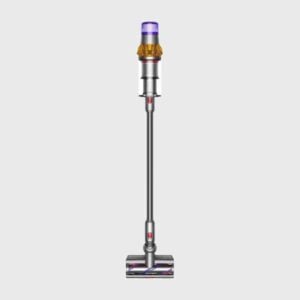
Choose the Dyson V15 Detect for elite suction, laser-guided hard-floor cleaning, and strong pet-hair tools. Skip it if price, full-power noise, trigger fatigue, high-pile carpets, or long whole-home runtime matter...
Pros: Debris illumination, Runtime
Cons: Noise level, Area Rug Handling
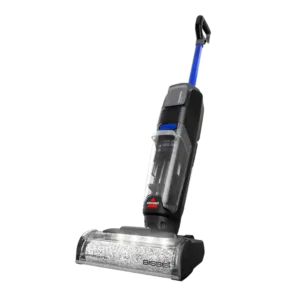
Choose the Bissell CrossWave OmniFind if you need an easy cordless vacuum mop for pet hair, hard floors, rugs, spills, and kid messes. Skip it if you need dry-only vacuuming,...
Pros: Overall opinion, Mopping performance
Cons: Edge and Baseboard Cleaning (Hard Floors), Water tank
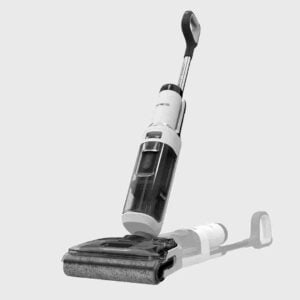
Choose the Tineco Floor One S6 for easy hard-floor mopping, lay-flat reach, and self-cleaning convenience. Skip it if you need quiet dock drying, deep carpet suction, or the lowest price.
Pros: Price and Value, Mopping performance
Cons: Noise level, Storage footprint and upright-stand stability
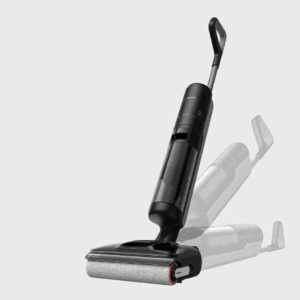
Choose the Dreame H13 Pro for powerful hard-floor mopping, fast brush drying, LEDs and easier powered rolling. Skip it if price, loud drying, app controls, or cleaning under low furniture...
Pros: Self-propel feature, Self-cleaning cycle
Cons: AI, Smart, App and Automation, Heating element