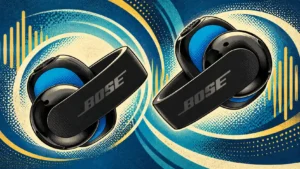

Bose Sport Open Earbuds
Where It Has the Edge
- Battery is 4.3 vs 4.1. Runtime attracts consistent approval, with one user going a week or more between case charges. Reported capacity figures...

Scorata scores summarize analyzed review evidence on a 1–5 scale; they are not laboratory measurements or a simple average of customer star ratings. Feature scores summarize the reviews covering that feature. The overall score averages feature scores within each review, then combines review averages. When both expert and customer evidence are available, those two groups receive equal weight. Products can have different review coverage, so small score gaps do not establish a winner.
Recommendations prioritize important features for the category, with a score of at least 3.5, a gap of at least 0.25 points and at least two supporting reviews per product. Features with widely varying scores or broad connectivity contexts are excluded from recommendations. These safeguards do not establish statistical significance.
Quick verdict
The review evidence points to a tradeoff: Battery versus Sound quality and Integrated microphone. Choose according to which strengths matter more to you; the overall score alone does not settle that choice.
Choose Bose Sport Open Earbuds for Battery.
Choose Soundcore Anker AeroClip 2 for Sound quality and Integrated microphone.
Scores are out of 5. Missing scores mean missing review evidence, not a missing feature.
Sound is often clear and enjoyable for an open design, particularly after tuning. The weakest assessment finds it adequate for workout music but compromised for focused listening, with bass fading outdoors or at higher volumes.
Clear vocals, spacious presentation, and useful tuning make the sound enjoyable for an open design. Some listeners hear only a modest upgrade, and one finds the tuning average and reverberant.
Active noise cancellation is absent by design. Keeping outside sound audible is viewed as more appropriate for the open-ear purpose than canceling it.
The absence of active noise cancellation is a real limitation for listeners who want quiet in busy offices or on transport. Some would welcome an optional cancellation mode even with the open fit.
Wind rejection is inconsistent across tests: one comparison finds a meaningful improvement, while another finds speech hard to hear in wind.
Voice extraction removes an unusually large amount of background chatter, traffic, and household noise. Heavy processing can soften the voice in extreme conditions, but intelligibility usually remains strong.
Wind performance splits opinion in call tests. One tester finds clear improvement over the original Ultra, while another struggles to hear speech through wind noise.
Most call tests suppress wind impressively while keeping speech clear. Fast scooter riding causes some microphone breakup in one assessment, showing that wind performance still has limits.
Very little isolation keeps the surroundings audible but also lets traffic and other noise compete with music.
The open fit offers little protection from surrounding noise. It works best when hearing the environment matters more than creating a quiet listening space.
Bass can sound punchy at lower levels but lacks deep extension. Traffic and higher playback levels make the low end less convincing.
Bass ranges from surprisingly punchy to disappointingly light, depending on fit, volume, and tuning. Deep sub-bass remains limited, and boosting the lows can make mid-bass overpowering.
Tonal accuracy draws opposing reactions. One listener praises precise mids and highs, while another highlights a bass-light, treble-heavy balance against its preferred target.
Many listeners enjoy a balanced or neutral signature with clear musical parts. A less favorable assessment finds the tuning insufficiently refined and overly reverberant.
Drums spread convincingly from left to right, giving rock tracks a pleasing sense of stereo width.
The open presentation gives music a wide, airy stage with room around instruments. Even assessments that criticize the tuning generally find the staging spacious.
Privacy depends on volume and surroundings. One user could listen in bed without disturbing a partner, while another found that nearby people could hear leakage at higher levels in a quiet room.
Leakage is often restrained for an open design, but it does not disappear. Nearby people can hear playback in a quiet room once volume rises, making discreet office use conditional.
Omitting Immersive Audio and Cinema Mode feels reasonable for exercise-focused listening. These spatial features are absent rather than an available strength.
Spatial processing can add welcome bass, volume, and immersion for films or live recordings. Music listeners are divided, with some preferring the more natural EQ presentation and others hearing little benefit.
Personalizing the sound is useful and can improve satisfaction over the default settings. Available adjustment is straightforward but limited to broad tonal changes.
Personalized tuning and manual audio settings provide useful control over the presentation. Channel balance is a welcome option for uneven hearing, while some listeners want finer or more effective manual EQ control.
One user reports a distant, nasal, high-pitched voice on calls. Speech remains understandable, but it does not sound natural.
Noise processing generally preserves a recognizable, natural voice rather than a robotic sound. Extremely loud backgrounds can still make speech slightly muffled.
Call quality ranges from a clear improvement over the original Ultra to merely serviceable. Wind and an unnaturally thin voice presentation remain concerns in some tests.
Call clarity is the most consistent standout, with intelligible speech in traffic, crowds, and other loud surroundings. Multiple assessments place the microphones among the best open-ear options tested.
Volume adjustment would be easier to track with audible feedback for each step.
A gentle recurring tone helps remind you when the call microphone is muted. The reminder is appreciated as a useful cue during conversations.
Dismissing the first pairing prompt can make initial setup awkward. Once that hurdle is cleared, subsequent pairing is straightforward.
Basic pairing and app navigation are generally quick and straightforward. HearID’s sound comparisons can be harder to complete confidently, and one dual-device setup needed a retry.
Connections are generally reliable after pairing, but one tester encountered brief downtown dropouts. Another had trouble restarting initial pairing after dismissing the first prompt.
Bluetooth performance is generally smooth and reliable, including testing in busy stations and between rooms. Fast connection and responsive switching strengthen the wireless experience.
The Bose app covers the essentials with a fairly basic interface and feature set. Sound tuning can make a worthwhile difference without requiring a complicated setup.
The companion app is generally polished, approachable, and rich in customization. EQ, controls, and additional listening modes add useful flexibility beyond basic playback.
Three-band adjustment provides enough freedom for useful tuning, and one user found the results excellent. The controls remain basic rather than offering detailed frequency-by-frequency adjustment.
HearID often makes a substantial improvement to bass, clarity, or treble energy. The manual EQ is less satisfying for some listeners, and the preference test can be hard to judge or too restrictive.
Textured physical buttons are widely praised for easy operation with sweaty fingers and full playback control. Volume adjustment divides opinion, with one tester regularly reaching for a phone instead.
Physical buttons are a widely welcomed upgrade, offering reliable feedback and fewer accidental inputs than touch controls. Long-press volume adjustment can feel slow, and repeated presses take a little care.
A weak distortion-quality result pulls down one lab-based audio assessment, limiting confidence in overall sonic refinement.
Several assessments find minimal distortion, including a fix for the original model’s subtle bass-track buzzing. One still hears treble distortion at higher volume.
The built-in microphones produce mixed results, from an improvement over the original Ultra to a thin and unnatural voice. Wind remains a weakness in one detailed test.
The integrated microphones are a major reason to consider these clips. They repeatedly deliver clear calls despite the open design and distance from the mouth.
Maximum output is more than sufficient even in a noisy environment, where the open design lets outside sound compete.
Output splits opinion: several listeners find ample loudness at moderate settings, while others struggle with spoken audio around traffic or trains. Ear position and the surrounding noise make a practical difference.
IP54 protection is generally considered adequate for sweat, splashes, and dusty workout conditions. One tester wanted a stronger IP57 rating at this price.
Sweat and rain protection is a welcome strength for workouts and outdoor use. The improved resistance is also valued as insurance against accidental water exposure.
Side-lying comfort depends on placing the projecting bridge carefully against the pillow.
Small changes in ear position can noticeably alter bass and stereo balance. Finding the right spot is worthwhile before judging the sound.
The case grows slightly in size but stays compact enough for pocket storage.
The small charging case takes up little room in a pocket, bag, or running belt. Its reduced footprint is repeatedly praised as a practical improvement over the original.
Most testers report secure attachment during runs and workouts. Fit can vary by ear, and one user lost a bud while bending and scrubbing a car.
The clips usually stay secure during runs, workouts, and vigorous head shaking. Intense movement can cause small shifts, and thinner ears may get less grip from the lighter clamp.
Clarity can remain good as volume rises, but the balance becomes less satisfying as bass weakens. One test also finds a sharp edge to cymbals at higher levels.
Several listeners hear clean, controlled sound at louder settings, including an improvement over the original. Others notice sharper highs or treble distortion as volume rises.
Fit can differ between ears, with one side staying snug while the other moves more. A personal fit check matters before relying on them for active use.
Many different wearers obtain an easy, comfortable fit, but the one-size design has limits. Thin or small ears and vigorous movement can make positioning less consistent.
Some enjoy the bright, crisp top end and direct presentation. Another tester finds cymbals shrill when turning the volume up.
Most assessments favor the clean, detailed highs, though some find the default treble too relaxed. Occasional sibilance and a report of distortion at louder settings keep the praise from being universal.
The open loops are easy to grasp, helping users handle and put on the buds without fiddling with tiny parts.
The flexible bridge is generally easy to put on and remove after a little practice. Fixed left and right orientation and an unfamiliar case layout can add small handling frustrations.
Most impressions are positive about comfortable open listening and exercise use. The strongest reservation is whether those benefits justify the price when less expensive alternatives exist.
The overall response is strongly favorable, led by exceptional calls, comfortable open listening, and better controls. Less enthusiastic assessments still recognize the calling strength while questioning sound improvements, fit, or price.
Vocals retain good presence and clarity, with precise mids and enough definition to keep instruments intelligible.
Vocals are repeatedly praised for being clear, forward, and easy to distinguish. Full mids give music and speech much of their appeal even when low-end impact is limited.
The case remains easy to pocket despite being slightly larger than the original Ultra’s case.
The compact case is easy to pocket and noticeably easier to carry than the original. Its smaller dimensions are one of the most consistently appreciated design changes.
Either bud can connect independently, making it convenient to grab just one for listening in bed.
Using either earbud on its own is a welcome addition, including mono playback. Alternating buds can extend listening through a long workday while the other charges.
The slightly thicker Sport case still keeps a practical pocket-friendly shape.
The small case and strong retention magnets are useful, but inserting the crossed-over earbuds takes practice. Build impressions range from sturdy and premium to rattly or underwhelming for the price.
Busy mixes remain easy to follow, with distorted guitars clearly separated from the rest of the instruments.
Distinct vocals and well-spaced instruments help busy tracks remain easy to follow. Stereo separation is often described as a strength and an improvement over the original.
The absence of wearing detection disappoints a tester who expects more convenience at premium prices.
Missing wear detection is a recurring disappointment at this price. Playback must be paused manually, although some consider that a tolerable compromise for an open fit.
Keeping traffic and nearby activity audible is the most consistent strength. The open design lets music accompany exercise without sealing off the surrounding environment.
Hearing traffic, colleagues, and household activity is a central benefit of the open fit. Louder music can reduce that awareness, so some users keep volume moderate.
One user likes being able to move a bud between ears for side sleeping, with some repositioning needed to aim the sound.
Fixed left and right orientation adds an extra check when wearing or storing the clips. One assessment appreciates that the case prevents putting a bud on the wrong side.
Most find the cuff comfortable for hours, sometimes easy to forget. Ear shape matters: one tester found it persistently bothersome, and others preferred a competitor’s fit.
Most wearers find the clips comfortable enough to forget over several hours. A minority develop pressure or soreness after roughly one to five hours, so all-day comfort depends on ear shape.
The buds feel light on the ears, helping the cuff avoid a heavy or cumbersome sensation.
The light feel is a recurring strength, and many wearers quickly stop noticing the clips. One comparison finds them noticeably bulkier than a lighter rival.
One user calls the product high quality, while another expects better longevity than a cheaper rival. That durability advantage is an expectation rather than a demonstrated long-term result.
Most assessments find the construction sturdy and durable, including the flexible bridge. One finds the charging case less solid and more prone to rattling than the original.
A balanced, relatively light clamp gives the Sport a comfortable hold without excessive pressure.
The flexible, soft bridge usually balances a secure grip with gentle pressure. Individual experiences differ, including firmer clamping than the predecessor and pressure from the rear housing.
Sleek styling and playful color options make the design appealing without changing its familiar cuff format.
The refined clips, coordinated colors, and small case look stylish without much visual bulk. Matte finishes and subtle accents help the design feel polished.
Value is divisive: some appreciate the premium features, lower price than Ultra, or expected support. Others see too few standout benefits over cheaper clip-on rivals, and a missing cable adds frustration.
Strong calls, comfort, and useful controls can justify the premium price, especially against more expensive clip-ons. The case is less compelling when cheaper models already meet your needs or music quality is the priority.
Basic codec support is considered an acceptable compromise when outside noise already limits the benefits of higher-quality transmission.
The extra codec choices are welcome, particularly to listeners who value higher-resolution or low-energy playback. Others hear little practical difference during ordinary open-ear listening.
Runtime attracts consistent approval, with one user going a week or more between case charges. Reported capacity figures vary, but the practical judgments describe enough power for repeated listening sessions.
Endurance usually covers everyday listening comfortably, with around eight hours commonly cited for music. Frequent calls, LDAC, high volume, and forgotten playback can shorten that considerably.
One hands-on account calls wireless case charging handy, but another supplied test says the Sport lacks it. Confirm the case’s charging capability before relying on this convenience.
Wireless charging is a much-appreciated convenience in such a small case. Compatible pads and reverse charging from a phone make quick top-ups easier.
Wireless case charging is praised as convenient in one account. Another test says the Sport has no wireless charging, leaving that convenience disputed.
Fast top-ups are a practical strength, often praised for restoring several hours of listening during a short break. Several users find the quicker charging more useful than a larger battery claim.
Translation is considered useful for simple exchanges and multilingual situations. A brief practical test works surprisingly well, with the caution that it cannot replace a professional interpreter.
Google Fast Pair makes initial Android connection quicker and easier. The favorable setup experience complements the broader wireless feature set.
Higher-resolution wireless playback can reveal extra vocal and instrumental detail. The audible improvement ranges from modest to worthwhile; these assessments concern playback quality rather than a separate DAC feature.
Connection across phone ecosystems is described as quick and smooth. The compatible-device experience is a positive part of daily use.
Dust protection is a welcome upgrade for outdoor activities, beaches, and dirty work environments. It adds reassurance beyond the sweat and splash resistance expected of exercise earbuds.
One wearer finds the clips comfortable with earrings and other ear jewelry. The outside-ear design works alongside those accessories without spoiling the fit.
The locator tone can help find a misplaced earbud in a quiet room. Loudness impressions differ, and one assessment warns that a crowded environment can mask the beep.
The clip design generally works well with glasses because it avoids a bulky hook behind the ear. Eyewear users find this arrangement easier to live with than conventional ear hooks.
The clip shape can avoid the long-hair tangles associated with ear hooks. Another wearer hears distracting transmitted noise when hair rubs the earbuds while walking or turning.
The missing charging cable disappoints a buyer who expects one at this price.
Some listeners hear finer detail with LDAC, while others notice little or only a small improvement. Battery drain and a reported multipoint tradeoff reduce its importance as a buying reason.
The earbuds attract each other strongly enough to stay together outside the case. One assessment values this as a simple way to avoid hunting for a loose bud.
The cross-platform experience is praised for offering comparable functionality on Android and iPhone. Connections feel smoother and quicker than on earlier models.
Local white-noise playback is a welcome extra for short rests and relaxation without a phone connection. It takes over normal playback, and the available sounds and controls have some restrictions.
The packaging is described as clean and premium-looking. Thoughtful presentation adds to the initial impression of a more expensive product.
The default signature sounds balanced and enjoyable to several listeners, while others find it short on bass or less revealing than personalized tuning. Vocal-focused presets are useful, though fewer preset choices disappoint one listener.
One wearer notices an unpleasant rubber-and-plastic smell from the bridge out of the box. It takes about two days of ventilation to fade.
The matte case finish is praised for resisting fingerprints. It keeps the charging case looking clean during everyday handling.
Low-delay playback works well for games and video, with one movie test finding audio and picture fully synchronized. Gaming mode provides a useful further reduction in delay.
Voice recordings benefit from the same clear pickup and background suppression praised during calls. Speech stays unobscured even when surrounding sounds would otherwise be distracting.
One tester encounters brief glitches that collapse stereo playback toward mono before it recovers. The faults are occasional but noticeable during outdoor use.
Seeing separate case and earbud charge levels makes planning top-ups easier. Audible low-battery prompts also help wearers who forget the clips are still on.
Confidence in Bose standing behind its products adds appeal for one buyer. That confidence comes from earlier replacement experiences rather than a support claim tested on this pair.
Phone-to-laptop takeover is repeatedly praised for its speed and reliability. The choice between automatic takeover and manual switching is useful, although one setup required a retry.
Several wearers do well with the single fit, but losing the former adjustment sleeves reduces flexibility. People with especially small or thin ears have more reason to try the fit before committing.
Biodegradable tray materials and a paper protective sticker earn praise for reducing plastic packaging. The extra effort gives the unboxing a more thoughtful feel.
ANKA can adjust settings and answer general questions, but its usefulness divides opinion. Limited music choices and weak handling of more advanced requests make it feel unfinished to one listener.
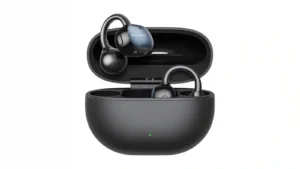
Choose the UU2 for unusually full open-ear sound, all-day comfort, strong battery life and excellent value. Skip it if you need sealed-bud isolation, consistently strong calls, or zero tolerance for...
Pros: Overall satisfaction, Sound quality
Cons: Spatial audio
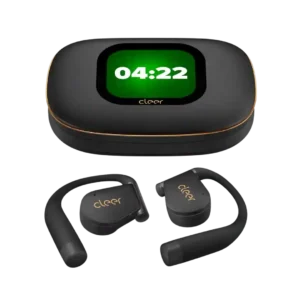
Best for all-day comfort, secure open-ear awareness, long battery life, and a genuinely useful touchscreen case. Skip it if deep bass, strong isolation, compact size, or consistently premium music quality...
Pros: Overall satisfaction, Carry case quality
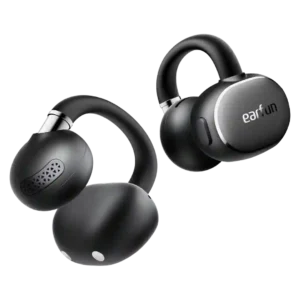
Best for lightweight all-day comfort, outstanding battery life, dependable physical controls, and premium features at a budget price. Skip it if you need deep bass, noise isolation, flawless high-volume sound,...
Pros: Overall satisfaction, Sound quality
Cons: Maximum volume clarity, Noise isolation (passive)
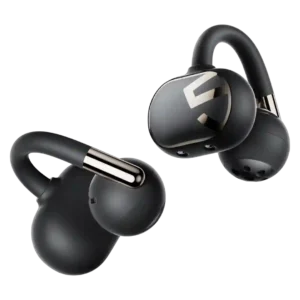
Best for featherlight all-day comfort, secure workout fit, strong open-ear sound, and unusually rich features for the price. Skip it if you need ANC, deep sub-bass, high volume in noisy...
Pros: Comfort during long use, Sound quality
Cons: Carry case quality, Touch control responsiveness